Jilin Confucian Temple
⭐ 4.20
No. 15, Jiefang Road, Changyi District, Jilin City, Jilin Province, China
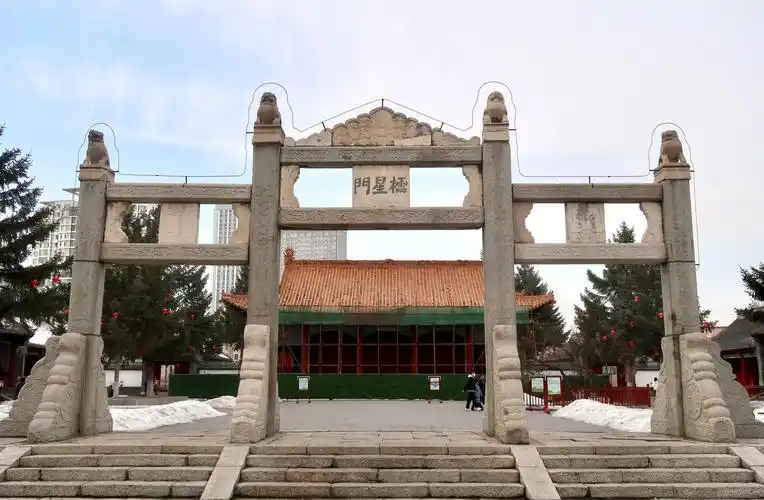 Jilin Confucian Temple traces its origins to 1736, during the reign of the Qianlong Emperor, when it was first established as a modest shrine honoring the ancient philosopher Confucius (551–479 BCE), whose ideas shaped East Asian civilization for over two millennia. After falling into disrepair, it was completely rebuilt in 1909 on its present site, just as the Qing dynasty was entering its final, turbulent years. Designated a nationally protected heritage site in 2006, it ranks alongside Confucius's birthplace temple in Qufu, the Nanjing Confucius Temple, and the Beijing Confucius Temple as one of China's four sacred Confucian sites—often compared in cultural weight to European cathedrals that anchored medieval learning.
The architecture is the temple's most striking feature. Modeled on imperial palace regulations, the layout unfolds across three sequential courtyards enclosed by three-meter-high red walls. The magnificent Hall of Great Achievement (Dacheng Dian) boasts a double-eaved hip roof crowned with imperial yellow glazed tiles—a privilege rarely granted to provincial temples, signaling its exceptional status. Its eleven-bay facade rises nearly twenty meters high, making it one of the grandest Confucian halls outside Qufu. Visitors pass through ceremonial gates, cross the semicircular Pan Pool and the arched Top Scholar's Bridge, and arrive at halls adorned with intricate painted beams and carved brackets, representing some of the finest preserved Qing official-style architecture in Northeast China.
Beyond its physical grandeur, the temple functions as a living museum of Confucian culture. The eastern and western side halls host permanent exhibitions on the life of Confucius, the imperial examination system that selected China's bureaucrats for over a thousand years, and the Jilin Stele Forest, which preserves centuries of regional calligraphy. Each year on September 28, the temple erupts in ceremony as monks, scholars, and officials gather for a solemn Confucius birthday ritual, including the restored Eight-Row Dance—an ancient court music performance dating to the Zhou dynasty—offering visitors a rare glimpse into the Confucian ritual tradition that underpinned imperial China for centuries.
Visiting is refreshingly accessible. The temple opens free of charge from Tuesday to Sunday, 8:30 a.m. to 4:30 p.m., with extended evening hours until 8:30 p.m. in summer; the main south gate remains closed, so enter through the western side gate. Located at No. 2 Wenmiao Hutong in the Changyi District near the Songhua River, it is easily reached by bus routes 13 and 56. Photography enthusiasts will find the red walls, yellow roofs, and Top Scholar's Bridge ideal for hanfu-style shoots, while the stone-paved grounds invite slow, contemplative exploration. Visitors should wear flat shoes, keep voices low inside the main hall, and avoid flash photography near the Confucius statues.
This is more than a temple visit—it is a journey into the philosophical heart of traditional China, set within architectural surroundings that rival the stateliness of any European Renaissance palace. Whether you come for history, architecture, photography, or quiet reflection on one of the world's oldest educational philosophies, Jilin Confucian Temple rewards a thoughtful half-day visit just as richly as it has rewarded scholars and pilgrims for over a century.
Jilin Confucian Temple traces its origins to 1736, during the reign of the Qianlong Emperor, when it was first established as a modest shrine honoring the ancient philosopher Confucius (551–479 BCE), whose ideas shaped East Asian civilization for over two millennia. After falling into disrepair, it was completely rebuilt in 1909 on its present site, just as the Qing dynasty was entering its final, turbulent years. Designated a nationally protected heritage site in 2006, it ranks alongside Confucius's birthplace temple in Qufu, the Nanjing Confucius Temple, and the Beijing Confucius Temple as one of China's four sacred Confucian sites—often compared in cultural weight to European cathedrals that anchored medieval learning.
The architecture is the temple's most striking feature. Modeled on imperial palace regulations, the layout unfolds across three sequential courtyards enclosed by three-meter-high red walls. The magnificent Hall of Great Achievement (Dacheng Dian) boasts a double-eaved hip roof crowned with imperial yellow glazed tiles—a privilege rarely granted to provincial temples, signaling its exceptional status. Its eleven-bay facade rises nearly twenty meters high, making it one of the grandest Confucian halls outside Qufu. Visitors pass through ceremonial gates, cross the semicircular Pan Pool and the arched Top Scholar's Bridge, and arrive at halls adorned with intricate painted beams and carved brackets, representing some of the finest preserved Qing official-style architecture in Northeast China.
Beyond its physical grandeur, the temple functions as a living museum of Confucian culture. The eastern and western side halls host permanent exhibitions on the life of Confucius, the imperial examination system that selected China's bureaucrats for over a thousand years, and the Jilin Stele Forest, which preserves centuries of regional calligraphy. Each year on September 28, the temple erupts in ceremony as monks, scholars, and officials gather for a solemn Confucius birthday ritual, including the restored Eight-Row Dance—an ancient court music performance dating to the Zhou dynasty—offering visitors a rare glimpse into the Confucian ritual tradition that underpinned imperial China for centuries.
Visiting is refreshingly accessible. The temple opens free of charge from Tuesday to Sunday, 8:30 a.m. to 4:30 p.m., with extended evening hours until 8:30 p.m. in summer; the main south gate remains closed, so enter through the western side gate. Located at No. 2 Wenmiao Hutong in the Changyi District near the Songhua River, it is easily reached by bus routes 13 and 56. Photography enthusiasts will find the red walls, yellow roofs, and Top Scholar's Bridge ideal for hanfu-style shoots, while the stone-paved grounds invite slow, contemplative exploration. Visitors should wear flat shoes, keep voices low inside the main hall, and avoid flash photography near the Confucius statues.
This is more than a temple visit—it is a journey into the philosophical heart of traditional China, set within architectural surroundings that rival the stateliness of any European Renaissance palace. Whether you come for history, architecture, photography, or quiet reflection on one of the world's oldest educational philosophies, Jilin Confucian Temple rewards a thoughtful half-day visit just as richly as it has rewarded scholars and pilgrims for over a century.