Dizang Temple
⭐ 4.20
Mount Jiuhua Scenic Area, Qingyang County, Chizhou City, Anhui Province, China
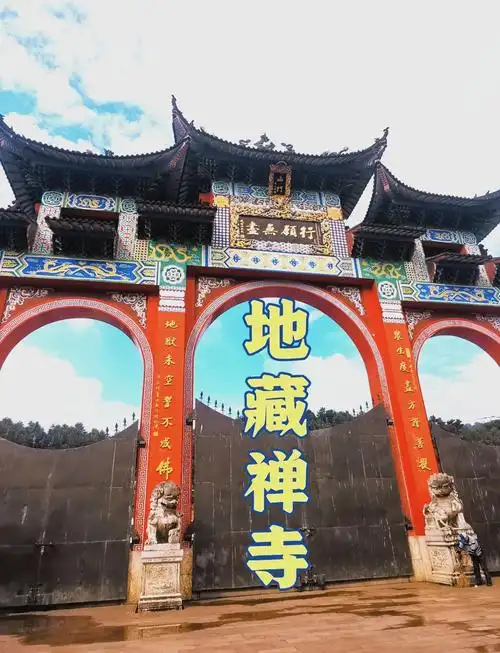 Founded during the Southern Song dynasty roughly 800 years ago—a period contemporary with St. Francis of Assisi's preaching in Italy and the Magna Carta in England—Dizang Chan Temple ranks among Mount Jiuhua's earliest religious structures. The mountain's Buddhist roots stretch further back to the 8th century, when a Korean prince from the Silla Kingdom named Kim Qiaojue (later honored as "Golden Ksitigarbha") arrived in an era when Charlemagne ruled Europe. Today Mount Jiuhua ranks among China's four sacred Buddhist mountains, paralleling Jerusalem for Christianity or Santiago de Compostela for medieval pilgrims. The temple received national recognition in 1983 as a Key National Buddhist Temple.
Built to harmonize with the contours of Tiantai Peak's summit, the temple follows a traditional three-hall layout facing south: the Ten Thousand Buddha Hall, the central Dizang Hall, and the Mahavira Hall behind. This arrangement echoes imperial Chinese palace logic and resembles, in spirit, the terraced monastic complexes of Mount Athos in Greece, where sacred space climbs the mountainside. Current structures largely date from late Qing and Republican-era restorations, with a major renovation completed in 1998. Inside rest precious relics including a Ming-dynasty "Dizang Lisheng Treasure Seal," while nearby the Pengri Pavilion marks the historic viewing point for "Tiantai Dawn Sunlight," one of the mountain's classical scenic wonders.
Dizang Chan Temple embodies the devotional heart of Ksitigarbha worship across East Asia. Ksitigarbha, the Bodhisattva who vowed to save all beings in hell, occupies a place in Buddhist devotion analogous to that of Catholic guardian saints—a figure to whom pilgrims turn in times of despair. The legend of Kim Qiaojue, the Silla prince who meditated in surrounding caves, transformed this mountain into a pan-Asian pilgrimage destination drawing devotees from China, Korea, and Japan. Unlike many Chinese tourist sites, the temple retains genuine sanctity: incense burns continuously, traditional rituals are observed, and contemplative quietude is preserved for serious spiritual inquiry.
The temple is included with the Mount Jiuhua scenic area ticket, which costs 160 yuan in peak season (about 140 yuan off-peak) and remains valid for three days; no separate admission is required. From Jiuhua Street village, visitors transfer to a scenic shuttle to the lower cable car station, then ascend by cable car—or on foot via a challenging 2.5-hour hike. The temple generally opens from 7:00 to 17:00. Visitors should dress modestly, maintain silence within the halls, and refrain from photography inside. Standard etiquette applies: do not point at statues, and step over—not on—threshold wooden boards at doorways.
For travelers seeking natural wonder combined with profound spiritual atmosphere, Dizang Chan Temple offers one of China's most rewarding high-altitude pilgrimages. Visit at dawn to witness the celebrated sea of clouds, or on a clear afternoon for vistas that occasionally reach the peaks of Mount Huangshan, a UNESCO site roughly 100 kilometers away, and the Yangtze River to the north. Hikers should wear sturdy non-slip footwear and carry water and snacks, as summit refreshments are limited and expensive. Casual visitors are advised to take the cable car; trekkers will find the 2.5-hour ascent deeply rewarding. Bring a wide-angle lens for photography. Foggy conditions demand caution.
Founded during the Southern Song dynasty roughly 800 years ago—a period contemporary with St. Francis of Assisi's preaching in Italy and the Magna Carta in England—Dizang Chan Temple ranks among Mount Jiuhua's earliest religious structures. The mountain's Buddhist roots stretch further back to the 8th century, when a Korean prince from the Silla Kingdom named Kim Qiaojue (later honored as "Golden Ksitigarbha") arrived in an era when Charlemagne ruled Europe. Today Mount Jiuhua ranks among China's four sacred Buddhist mountains, paralleling Jerusalem for Christianity or Santiago de Compostela for medieval pilgrims. The temple received national recognition in 1983 as a Key National Buddhist Temple.
Built to harmonize with the contours of Tiantai Peak's summit, the temple follows a traditional three-hall layout facing south: the Ten Thousand Buddha Hall, the central Dizang Hall, and the Mahavira Hall behind. This arrangement echoes imperial Chinese palace logic and resembles, in spirit, the terraced monastic complexes of Mount Athos in Greece, where sacred space climbs the mountainside. Current structures largely date from late Qing and Republican-era restorations, with a major renovation completed in 1998. Inside rest precious relics including a Ming-dynasty "Dizang Lisheng Treasure Seal," while nearby the Pengri Pavilion marks the historic viewing point for "Tiantai Dawn Sunlight," one of the mountain's classical scenic wonders.
Dizang Chan Temple embodies the devotional heart of Ksitigarbha worship across East Asia. Ksitigarbha, the Bodhisattva who vowed to save all beings in hell, occupies a place in Buddhist devotion analogous to that of Catholic guardian saints—a figure to whom pilgrims turn in times of despair. The legend of Kim Qiaojue, the Silla prince who meditated in surrounding caves, transformed this mountain into a pan-Asian pilgrimage destination drawing devotees from China, Korea, and Japan. Unlike many Chinese tourist sites, the temple retains genuine sanctity: incense burns continuously, traditional rituals are observed, and contemplative quietude is preserved for serious spiritual inquiry.
The temple is included with the Mount Jiuhua scenic area ticket, which costs 160 yuan in peak season (about 140 yuan off-peak) and remains valid for three days; no separate admission is required. From Jiuhua Street village, visitors transfer to a scenic shuttle to the lower cable car station, then ascend by cable car—or on foot via a challenging 2.5-hour hike. The temple generally opens from 7:00 to 17:00. Visitors should dress modestly, maintain silence within the halls, and refrain from photography inside. Standard etiquette applies: do not point at statues, and step over—not on—threshold wooden boards at doorways.
For travelers seeking natural wonder combined with profound spiritual atmosphere, Dizang Chan Temple offers one of China's most rewarding high-altitude pilgrimages. Visit at dawn to witness the celebrated sea of clouds, or on a clear afternoon for vistas that occasionally reach the peaks of Mount Huangshan, a UNESCO site roughly 100 kilometers away, and the Yangtze River to the north. Hikers should wear sturdy non-slip footwear and carry water and snacks, as summit refreshments are limited and expensive. Casual visitors are advised to take the cable car; trekkers will find the 2.5-hour ascent deeply rewarding. Bring a wide-angle lens for photography. Foggy conditions demand caution.