Sandalwood Grove
⭐ 4.20
Mount Jiuhua Scenic Area, Qingyang County, Chizhou City, Anhui Province, China
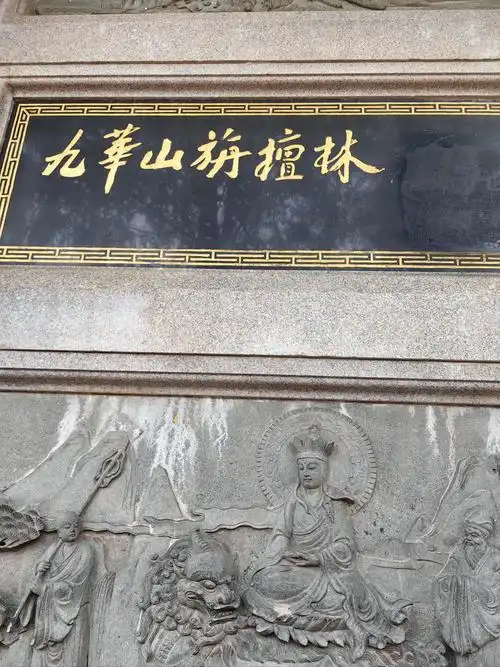 Zhantanlin traces its origins to the Kangxi era of the Qing Dynasty (1662–1722), a period contemporary with the late Baroque age of Louis XIV's Versailles and Handel's early compositions. The temple was ravaged during conflicts of the 1850s and 1860s—the same years as Europe's Crimean War and America's Civil War—when the Taiping Rebellion swept through Anhui. Restoration came in 1886 during China's Guangxu reign, an era paralleling Europe's Victorian Gothic Revival. A major expansion from the 1990s through 2001, led by Master Huishen, transformed the complex into the imposing layout visitors see today, blending historical reverence with contemporary devotion.
The temple's most striking feature is its unusual "three halls standing side by side" configuration—a radical departure from the conventional axial plan of Chinese Buddhist monasteries, which typically progress through sequential courtyards. Instead, three grand halls rise in a row: the Dabei Bao Dian enshrining the Thousand-Armed Guanyin, the relocated Daxiong Bao Dian housing the principal Buddhas, and the Dayuan Bao Dian dedicated to Ksitigarbha. This parallel arrangement recalls Western basilicas with multiple side naves. Exquisite wooden carvings depicting Buddhist parables and the Journey to the West adorn every beam and door—comparable to the master woodwork of medieval European cathedral choirs.
As one of China's designated National Key Buddhist Temples, Zhantanlin holds an important place within the spiritual fabric of Mount Jiuhua—one of China's Four Sacred Buddhist Mountains, parallel in significance to pilgrimage sites like Santiago de Compostela for Catholics or Varanasi for Hindus. The Dayuan Bao Dian's dedication to Ksitigarbha (Dizang), the Bodhisattva who vowed to liberate all beings from hell, makes the temple a focal point for pilgrims who travel to Mount Jiuhua specifically to venerate this beloved figure. Beyond religion, it serves as a vital cultural resource, offering scholars a tangible window into late-Qing and contemporary Buddhist architecture, ritual practice, and devotional art.
No separate admission ticket is required—Zhantanlin is included in the main Mount Jiuhua entry ticket. The temple generally opens from 6:30 AM to 5:00 PM, with slight seasonal variations. Plan to spend 30 to 45 minutes here, allowing time for quiet contemplation and photography. Visitors should observe a few courtesies: no flash photography of the Buddha statues, maintain silence inside the halls, walk clockwise when circumambulating, and avoid stepping on door thresholds. Comfortable shoes are recommended, as you'll be walking before and after your visit through Jiuhua Street's lively lanes.
A visit to Zhantanlin offers an accessible slice of Chinese Buddhist heritage within Mount Jiuhua's bustling pilgrimage town. Pair it with neighboring Huacheng Temple and Qiyuan Temple to form a compact circuit of Jiuhua Street's most significant religious architecture. Early morning or late afternoon visits reward travelers with softer light, smaller crowds, and the evocative atmosphere of monastic bells drifting through surrounding lanes. Staying overnight in one of Jiuhua Street's many guesthouses transforms a quick stop into a deeper immersion in Buddhist culture, allowing travelers to experience mountain monastery life beyond the usual day-tripper perspective.
Zhantanlin traces its origins to the Kangxi era of the Qing Dynasty (1662–1722), a period contemporary with the late Baroque age of Louis XIV's Versailles and Handel's early compositions. The temple was ravaged during conflicts of the 1850s and 1860s—the same years as Europe's Crimean War and America's Civil War—when the Taiping Rebellion swept through Anhui. Restoration came in 1886 during China's Guangxu reign, an era paralleling Europe's Victorian Gothic Revival. A major expansion from the 1990s through 2001, led by Master Huishen, transformed the complex into the imposing layout visitors see today, blending historical reverence with contemporary devotion.
The temple's most striking feature is its unusual "three halls standing side by side" configuration—a radical departure from the conventional axial plan of Chinese Buddhist monasteries, which typically progress through sequential courtyards. Instead, three grand halls rise in a row: the Dabei Bao Dian enshrining the Thousand-Armed Guanyin, the relocated Daxiong Bao Dian housing the principal Buddhas, and the Dayuan Bao Dian dedicated to Ksitigarbha. This parallel arrangement recalls Western basilicas with multiple side naves. Exquisite wooden carvings depicting Buddhist parables and the Journey to the West adorn every beam and door—comparable to the master woodwork of medieval European cathedral choirs.
As one of China's designated National Key Buddhist Temples, Zhantanlin holds an important place within the spiritual fabric of Mount Jiuhua—one of China's Four Sacred Buddhist Mountains, parallel in significance to pilgrimage sites like Santiago de Compostela for Catholics or Varanasi for Hindus. The Dayuan Bao Dian's dedication to Ksitigarbha (Dizang), the Bodhisattva who vowed to liberate all beings from hell, makes the temple a focal point for pilgrims who travel to Mount Jiuhua specifically to venerate this beloved figure. Beyond religion, it serves as a vital cultural resource, offering scholars a tangible window into late-Qing and contemporary Buddhist architecture, ritual practice, and devotional art.
No separate admission ticket is required—Zhantanlin is included in the main Mount Jiuhua entry ticket. The temple generally opens from 6:30 AM to 5:00 PM, with slight seasonal variations. Plan to spend 30 to 45 minutes here, allowing time for quiet contemplation and photography. Visitors should observe a few courtesies: no flash photography of the Buddha statues, maintain silence inside the halls, walk clockwise when circumambulating, and avoid stepping on door thresholds. Comfortable shoes are recommended, as you'll be walking before and after your visit through Jiuhua Street's lively lanes.
A visit to Zhantanlin offers an accessible slice of Chinese Buddhist heritage within Mount Jiuhua's bustling pilgrimage town. Pair it with neighboring Huacheng Temple and Qiyuan Temple to form a compact circuit of Jiuhua Street's most significant religious architecture. Early morning or late afternoon visits reward travelers with softer light, smaller crowds, and the evocative atmosphere of monastic bells drifting through surrounding lanes. Staying overnight in one of Jiuhua Street's many guesthouses transforms a quick stop into a deeper immersion in Buddhist culture, allowing travelers to experience mountain monastery life beyond the usual day-tripper perspective.