Tiantai Peak
⭐ 4.60
Tiantai Peak, Mount Jiuhua Scenic Area, Qingyang County, Chizhou City, Anhui Province, China
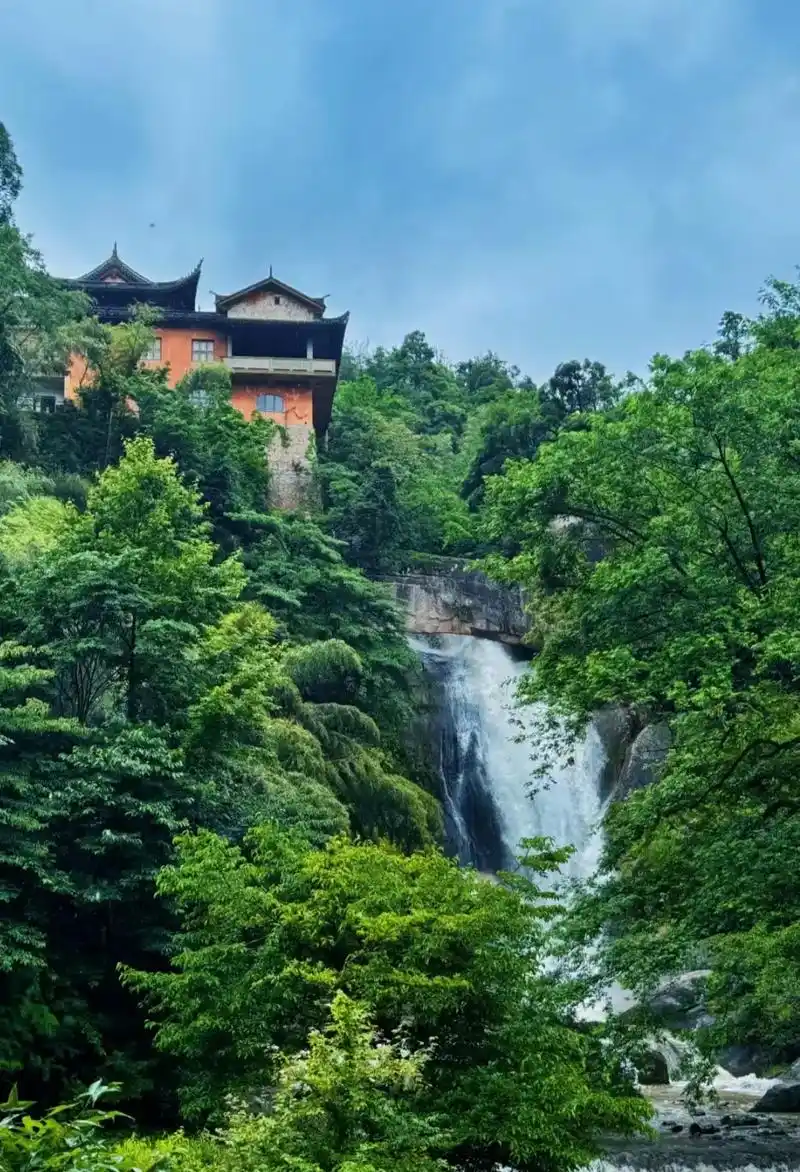 Tiantai Peak is the cradle of Mount Jiuhua's Buddhist legacy. In the Tang Dynasty—contemporary with Charlemagne's coronation as Holy Roman Emperor—a Korean prince from the Silla Kingdom named Kim Qiaojue retreated here to meditate, founding a hermitage that evolved into today's temple complex. This Korean-Chinese spiritual bond predates most modern cross-cultural exchanges in Asia and continues drawing pilgrims from Korea, Japan, and beyond. Tiantai Peak remains a living bridge between East Asian Buddhist civilizations, much as Canterbury links the English-speaking Christian world to its medieval roots.
The temple complex clings dramatically to the summit platform, its halls rising in tiered harmony with the granite terrain. Tiantai Temple itself, dating to the Tang era, includes the Dizang Chanlin meditation hall and the striking Pengrui Pavilion, whose name literally means "Hugging the Sun." The ancient scripture-worshipping platform and the Crossing-Immortals Bridge—inscribed with the bold characters "Central Heavenly Realm"—have survived over a thousand winters, offering visitors a rare glimpse of Tang-era religious architecture set against one of China's most theatrical mountain skylines.
Scattered across the cliffs are hundreds of Ming and Qing dynasty inscriptions—poems, prayers, philosophical reflections—carved into stone in regular, running, and clerical scripts. This open-air gallery functions as a "stone history book" of Chinese literati devotion, paralleling pilgrim inscriptions found at sacred sites from Mount Athos to Santiago de Compostela. For scholars of East Asian calligraphy and religious art, the cliff faces of Tiantai form one of China's most significant outdoor epigraphic collections, where brushwork and belief converge on the same stone surface.
The peak's Yanshan-period granite, weathered over millions of years, has sculpted a surreal gallery of rock formations. The Dragon's Back ridge resembles a colossal stone wall running along the mountain's spine, while the One-Line Sky cleft squeezes visitors through a passage barely wide enough for a shoulder. The Candle Peak and the Dapeng Listening-to-Sutra Rock evoke the same fantastical geology found in places like Cappadocia or Italy's Dolomites. From the 1,306-meter summit, the famed "ninety-nine peaks" of Jiuhua roll toward the horizon like a petrified sea.
Begin at Mount Jiuhua's visitor center to purchase entrance and mandatory shuttle bus tickets—private cars are prohibited inside the scenic area. Take the shuttle to Minyuan or the lower Tiantai cable car station. The cable car ride to the upper station takes roughly ten minutes, followed by a 1.2-kilometer climb of stone steps (30-40 minutes) to the summit. Round-trip cable car tickets cost approximately 120 yuan per person, with service typically running 07:00-17:00. Always check the official scenic area website before your visit for current conditions.
April and May bring spectacular rhododendron blooms across the alpine slopes, while September through November offers crisp autumn air and the highest probability of spectacular cloud seas. August is wetter but delivers the most dramatic cloud formations—bring rain gear and sturdy non-slip footwear. For sunrise viewing, stay overnight at the summit or in Jiuhua Street and make your way to Pengrui Pavilion before dawn. Maintain quiet reverence inside the temple and avoid photographing Buddha statues. Photographers should target three signature compositions: the Dragon's Back ridge, the One-Line Sky cleft, and the cloud sea at sunrise.
Tiantai Peak is the cradle of Mount Jiuhua's Buddhist legacy. In the Tang Dynasty—contemporary with Charlemagne's coronation as Holy Roman Emperor—a Korean prince from the Silla Kingdom named Kim Qiaojue retreated here to meditate, founding a hermitage that evolved into today's temple complex. This Korean-Chinese spiritual bond predates most modern cross-cultural exchanges in Asia and continues drawing pilgrims from Korea, Japan, and beyond. Tiantai Peak remains a living bridge between East Asian Buddhist civilizations, much as Canterbury links the English-speaking Christian world to its medieval roots.
The temple complex clings dramatically to the summit platform, its halls rising in tiered harmony with the granite terrain. Tiantai Temple itself, dating to the Tang era, includes the Dizang Chanlin meditation hall and the striking Pengrui Pavilion, whose name literally means "Hugging the Sun." The ancient scripture-worshipping platform and the Crossing-Immortals Bridge—inscribed with the bold characters "Central Heavenly Realm"—have survived over a thousand winters, offering visitors a rare glimpse of Tang-era religious architecture set against one of China's most theatrical mountain skylines.
Scattered across the cliffs are hundreds of Ming and Qing dynasty inscriptions—poems, prayers, philosophical reflections—carved into stone in regular, running, and clerical scripts. This open-air gallery functions as a "stone history book" of Chinese literati devotion, paralleling pilgrim inscriptions found at sacred sites from Mount Athos to Santiago de Compostela. For scholars of East Asian calligraphy and religious art, the cliff faces of Tiantai form one of China's most significant outdoor epigraphic collections, where brushwork and belief converge on the same stone surface.
The peak's Yanshan-period granite, weathered over millions of years, has sculpted a surreal gallery of rock formations. The Dragon's Back ridge resembles a colossal stone wall running along the mountain's spine, while the One-Line Sky cleft squeezes visitors through a passage barely wide enough for a shoulder. The Candle Peak and the Dapeng Listening-to-Sutra Rock evoke the same fantastical geology found in places like Cappadocia or Italy's Dolomites. From the 1,306-meter summit, the famed "ninety-nine peaks" of Jiuhua roll toward the horizon like a petrified sea.
Begin at Mount Jiuhua's visitor center to purchase entrance and mandatory shuttle bus tickets—private cars are prohibited inside the scenic area. Take the shuttle to Minyuan or the lower Tiantai cable car station. The cable car ride to the upper station takes roughly ten minutes, followed by a 1.2-kilometer climb of stone steps (30-40 minutes) to the summit. Round-trip cable car tickets cost approximately 120 yuan per person, with service typically running 07:00-17:00. Always check the official scenic area website before your visit for current conditions.
April and May bring spectacular rhododendron blooms across the alpine slopes, while September through November offers crisp autumn air and the highest probability of spectacular cloud seas. August is wetter but delivers the most dramatic cloud formations—bring rain gear and sturdy non-slip footwear. For sunrise viewing, stay overnight at the summit or in Jiuhua Street and make your way to Pengrui Pavilion before dawn. Maintain quiet reverence inside the temple and avoid photographing Buddha statues. Photographers should target three signature compositions: the Dragon's Back ridge, the One-Line Sky cleft, and the cloud sea at sunrise.