Wanshou Garden
⭐ 3.60
No. 90, Jingdi Road, Shashi District, Jingzhou City, Hubei Province, China
 The garden's history reaches back to the Southern Song dynasty of the 12th century, when the strategic Guan Yin Ji river bastion was constructed—roughly contemporaneous with the building of Europe's great Gothic cathedrals at Chartres and Amiens. The bastion, praised as "the finest jetty under heaven," has guarded the treacherous Jingjiang bend of the Yangtze for nearly eight centuries, much like medieval river fortresses along the Rhine defended Europe's trade arteries. In 1541, during the Ming dynasty—an era when Michelangelo was completing the Sistine Chapel and the Tudors ruled England—officials commissioned the Wanshou Pagoda to pacify the river's devastating floods.
The octagonal, seven-story brick pagoda rises over 40 meters in an elegant silhouette reminiscent of Italian Renaissance bell towers or the tiered cupolas of Russian Orthodox churches. Its exterior features 87 finely carved white-marble Buddhas, comparable in devotional intent to the sculpted portals of Europe's Romanesque cathedrals. A stone staircase climbs to the upper stories, rewarding visitors with sweeping panoramas of the Yangtze and Jingzhou's historic ramparts. The adjacent Guan Yin Ji bastion is constructed from massive stone blocks in the manner of Dutch dikes or Venetian sea walls—an enduring testament to classical Chinese hydraulic engineering.
Designated a national key cultural heritage site in 2006, Wanshou Garden carries layers of historical and contemporary meaning. The site commemorates the catastrophic 1998 Yangtze floods—China's worst in modern memory, which claimed over 1,500 lives and mobilized millions in a relief effort sometimes compared to Europe's post-war reconstruction. A memorial honors soldiers who perished defending the dikes, while markers record historic flood levels. A stele forest displays hundreds of calligraphic inscriptions, and an extraordinary collection of 2,347 relief bricks showcases Jingchu cultural motifs, offering a window into the artistic heritage of the Yangtze heartland.
The garden is located at 90 Jingdi Road, Shashi District, Jingzhou, and is open daily from 9:00 a.m. to 5:00 p.m., with final entry at 4:30 p.m. Admission to the grounds is free; a modest 10-yuan fee grants access to climb the pagoda. Allow 1 to 2 hours for a comfortable visit. Early morning and late afternoon offer the softest light for photography, particularly capturing the pagoda framed against the river. Mosquitoes can be persistent in summer, so bring repellent and water.
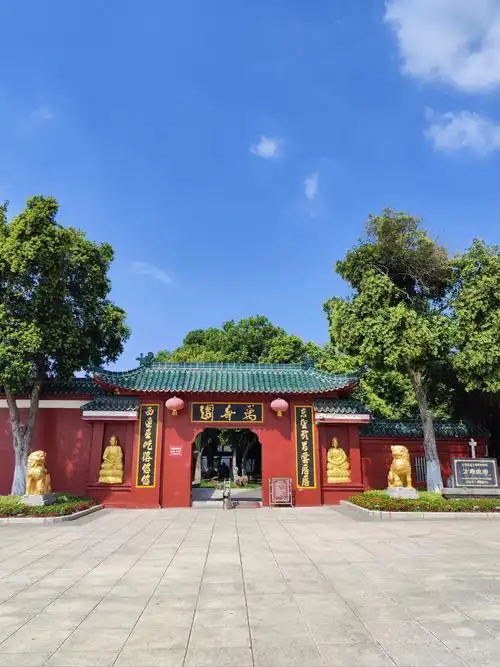
For travelers seeking an off-the-beaten-path experience away from China's mass-tourism circuits, Wanshou Garden offers remarkable historical depth without the crowds. Begin at the main entrance to admire the Nine-Dragon Wall and stele forest, then approach the pagoda to witness the rare "pagoda-sunk-into-the-dike" phenomenon up close. Continue to the Guan Yin Ji bastion for sweeping river views, and conclude with a leisurely walk along the riverside corridor. Combine the visit with Jingzhou's ancient city walls—the best-preserved in southern China—and the atmospheric lanes of old Shashi for a fuller appreciation of this historic gateway between the middle Yangtze and the North China plain.
The garden's history reaches back to the Southern Song dynasty of the 12th century, when the strategic Guan Yin Ji river bastion was constructed—roughly contemporaneous with the building of Europe's great Gothic cathedrals at Chartres and Amiens. The bastion, praised as "the finest jetty under heaven," has guarded the treacherous Jingjiang bend of the Yangtze for nearly eight centuries, much like medieval river fortresses along the Rhine defended Europe's trade arteries. In 1541, during the Ming dynasty—an era when Michelangelo was completing the Sistine Chapel and the Tudors ruled England—officials commissioned the Wanshou Pagoda to pacify the river's devastating floods.
The octagonal, seven-story brick pagoda rises over 40 meters in an elegant silhouette reminiscent of Italian Renaissance bell towers or the tiered cupolas of Russian Orthodox churches. Its exterior features 87 finely carved white-marble Buddhas, comparable in devotional intent to the sculpted portals of Europe's Romanesque cathedrals. A stone staircase climbs to the upper stories, rewarding visitors with sweeping panoramas of the Yangtze and Jingzhou's historic ramparts. The adjacent Guan Yin Ji bastion is constructed from massive stone blocks in the manner of Dutch dikes or Venetian sea walls—an enduring testament to classical Chinese hydraulic engineering.
Designated a national key cultural heritage site in 2006, Wanshou Garden carries layers of historical and contemporary meaning. The site commemorates the catastrophic 1998 Yangtze floods—China's worst in modern memory, which claimed over 1,500 lives and mobilized millions in a relief effort sometimes compared to Europe's post-war reconstruction. A memorial honors soldiers who perished defending the dikes, while markers record historic flood levels. A stele forest displays hundreds of calligraphic inscriptions, and an extraordinary collection of 2,347 relief bricks showcases Jingchu cultural motifs, offering a window into the artistic heritage of the Yangtze heartland.
The garden is located at 90 Jingdi Road, Shashi District, Jingzhou, and is open daily from 9:00 a.m. to 5:00 p.m., with final entry at 4:30 p.m. Admission to the grounds is free; a modest 10-yuan fee grants access to climb the pagoda. Allow 1 to 2 hours for a comfortable visit. Early morning and late afternoon offer the softest light for photography, particularly capturing the pagoda framed against the river. Mosquitoes can be persistent in summer, so bring repellent and water.
For travelers seeking an off-the-beaten-path experience away from China's mass-tourism circuits, Wanshou Garden offers remarkable historical depth without the crowds. Begin at the main entrance to admire the Nine-Dragon Wall and stele forest, then approach the pagoda to witness the rare "pagoda-sunk-into-the-dike" phenomenon up close. Continue to the Guan Yin Ji bastion for sweeping river views, and conclude with a leisurely walk along the riverside corridor. Combine the visit with Jingzhou's ancient city walls—the best-preserved in southern China—and the atmospheric lanes of old Shashi for a fuller appreciation of this historic gateway between the middle Yangtze and the North China plain.