Jade Terrace Scenic Area
⭐ 4.50
Jiangwan Town, Wuyuan County, Shangrao City, Jiangxi Province, China
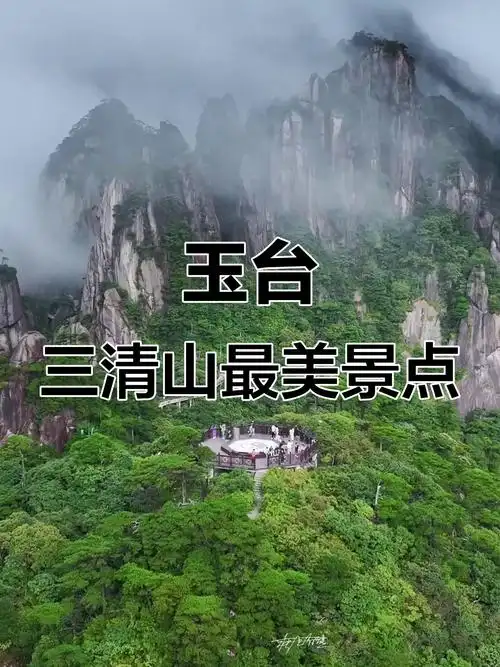 Mount Sanqing, a sacred Taoist mountain in northeastern Jiangxi Province, was inscribed as a UNESCO World Natural Heritage site in 2008, recognized for its exceptional granite peak forest geology. The dramatic needle-like spires and bizarre rock formations rising from the mist recall the jagged silhouette of Italy's Dolomites, though here the cultural layer is distinctly Chinese: the mountain's name honors the Three Pure Ones (Sanqing), the highest deities of the Taoist pantheon, and it has drawn hermits and pilgrims for over a thousand years. The geological story is equally ancient—the granite was laid down some 1.4 billion years ago and sculpted by tectonic uplift and erosion into the fantastical shapes seen today.
Jade Terrace is not a temple or pavilion in the traditional sense but a natural stone platform at the apex of the Southern Qingyuan loop. Standing at its edge, visitors command an uninterrupted 360-degree view: to the north, the main summit Yujing Peak rises to 1,817 meters, while below, the celebrated "Giant Python Emerging from the Mountain" pillar and the delicate profile of the "Eastern Goddess" granite statue are both within sight. The viewing experience is comparable to standing on a balcony over a colossal sculpture garden, only this one was carved by wind, frost, and time.
Seasonal and daily conditions transform the terrace dramatically. In late May and early June, the high-altitude rhododendrons burst into crimson and pink bloom, creating vivid color contrasts against the grey granite. After summer rains, the valleys fill with roiling cloud seas, and the peaks emerge like islands—a phenomenon that rivals the cloud-watching traditions of China's Huangshan but with fewer crowds. At dawn, the platform fulfills its reputation as the mountain's premier sunrise vantage: the first light ignites the eastern peaks in molten gold before spilling across the entire range, an experience on par with watching dawn from Japan's Mount Koya or the alpine Horns of Andorra.
Reaching Jade Terrace requires a practical commitment. Visitors first purchase a Mount Sanqing entrance ticket (around 120 RMB) and a round-trip cable car ticket (around 140 RMB), then ascend by gondola to the upper station. From there, the trail to the summit is approximately one hour of stone steps and boardwalks—manageable for reasonably fit travelers but steep and sometimes slick in places. Sturdy hiking shoes with good grip are essential. Those determined to witness sunrise must book accommodation on the mountain the night before, typically at the Goddess Hotel (女神宾馆) or the Sunrise Villa (日上山庄), as the first cable car does not run early enough.
Climate and timing deserve careful attention. The summit averages 5–8°C cooler than the valley below, and even August mornings can require a windproof jacket. The prime visiting windows are April through June and September through November, which avoid both the summer thunderstorm season and the icy conditions of winter that can close the upper trails. Travelers should check weather forecasts obsessively during the wetter months—summit visits in electrical storms are genuinely dangerous and strictly inadvisable. Spring and autumn offer the most reliable visibility for cloud seas and photographic conditions.
For itinerary planning, Jade Terrace works best as the climax of a half-day Southern Qingyuan circuit beginning at the Goddess Peak, passing the Giant Python and the narrow crevice of "Thread of Sky," and culminating at the terrace itself. Photography enthusiasts should pack a wide-angle lens to capture the scale of the cloud-filled valleys and the layered silhouettes of the peaks. Those with extra time can extend westward along the spectacular West Coast Highwalk—a kilometer-long plank path bolted to cliffs at 1,600 meters—or descend toward Sanqing Taoist Palaces to explore the mountain's religious heritage. For the truly devoted, an overnight stay adds a second chapter to the experience: after sunset, the absence of light pollution reveals a canopy of stars as dense as any seen from the Atacama or the Austrian Tyrol, completing a journey that moves from the geological sublime to the cosmic.
Night & Star Experience
The night sky above Jade Terrace is, in many ways, the terrace's hidden second act. Because Mount Sanqing lies far from any major city and the cable car zone keeps light pollution to a minimum, a clear evening reveals a Milky Way dense enough to rival the desert skies of Chile or Namibia. Couples and photographers often describe the transition from sunset gold to deep stellar blue as the most emotionally powerful part of a Mount Sanqing visit, an experience impossible to replicate in Europe's more accessible alpine regions.
Mount Sanqing, a sacred Taoist mountain in northeastern Jiangxi Province, was inscribed as a UNESCO World Natural Heritage site in 2008, recognized for its exceptional granite peak forest geology. The dramatic needle-like spires and bizarre rock formations rising from the mist recall the jagged silhouette of Italy's Dolomites, though here the cultural layer is distinctly Chinese: the mountain's name honors the Three Pure Ones (Sanqing), the highest deities of the Taoist pantheon, and it has drawn hermits and pilgrims for over a thousand years. The geological story is equally ancient—the granite was laid down some 1.4 billion years ago and sculpted by tectonic uplift and erosion into the fantastical shapes seen today.
Jade Terrace is not a temple or pavilion in the traditional sense but a natural stone platform at the apex of the Southern Qingyuan loop. Standing at its edge, visitors command an uninterrupted 360-degree view: to the north, the main summit Yujing Peak rises to 1,817 meters, while below, the celebrated "Giant Python Emerging from the Mountain" pillar and the delicate profile of the "Eastern Goddess" granite statue are both within sight. The viewing experience is comparable to standing on a balcony over a colossal sculpture garden, only this one was carved by wind, frost, and time.
Seasonal and daily conditions transform the terrace dramatically. In late May and early June, the high-altitude rhododendrons burst into crimson and pink bloom, creating vivid color contrasts against the grey granite. After summer rains, the valleys fill with roiling cloud seas, and the peaks emerge like islands—a phenomenon that rivals the cloud-watching traditions of China's Huangshan but with fewer crowds. At dawn, the platform fulfills its reputation as the mountain's premier sunrise vantage: the first light ignites the eastern peaks in molten gold before spilling across the entire range, an experience on par with watching dawn from Japan's Mount Koya or the alpine Horns of Andorra.
Reaching Jade Terrace requires a practical commitment. Visitors first purchase a Mount Sanqing entrance ticket (around 120 RMB) and a round-trip cable car ticket (around 140 RMB), then ascend by gondola to the upper station. From there, the trail to the summit is approximately one hour of stone steps and boardwalks—manageable for reasonably fit travelers but steep and sometimes slick in places. Sturdy hiking shoes with good grip are essential. Those determined to witness sunrise must book accommodation on the mountain the night before, typically at the Goddess Hotel (女神宾馆) or the Sunrise Villa (日上山庄), as the first cable car does not run early enough.
Climate and timing deserve careful attention. The summit averages 5–8°C cooler than the valley below, and even August mornings can require a windproof jacket. The prime visiting windows are April through June and September through November, which avoid both the summer thunderstorm season and the icy conditions of winter that can close the upper trails. Travelers should check weather forecasts obsessively during the wetter months—summit visits in electrical storms are genuinely dangerous and strictly inadvisable. Spring and autumn offer the most reliable visibility for cloud seas and photographic conditions.
For itinerary planning, Jade Terrace works best as the climax of a half-day Southern Qingyuan circuit beginning at the Goddess Peak, passing the Giant Python and the narrow crevice of "Thread of Sky," and culminating at the terrace itself. Photography enthusiasts should pack a wide-angle lens to capture the scale of the cloud-filled valleys and the layered silhouettes of the peaks. Those with extra time can extend westward along the spectacular West Coast Highwalk—a kilometer-long plank path bolted to cliffs at 1,600 meters—or descend toward Sanqing Taoist Palaces to explore the mountain's religious heritage. For the truly devoted, an overnight stay adds a second chapter to the experience: after sunset, the absence of light pollution reveals a canopy of stars as dense as any seen from the Atacama or the Austrian Tyrol, completing a journey that moves from the geological sublime to the cosmic.
Night & Star Experience
The night sky above Jade Terrace is, in many ways, the terrace's hidden second act. Because Mount Sanqing lies far from any major city and the cable car zone keeps light pollution to a minimum, a clear evening reveals a Milky Way dense enough to rival the desert skies of Chile or Namibia. Couples and photographers often describe the transition from sunset gold to deep stellar blue as the most emotionally powerful part of a Mount Sanqing visit, an experience impossible to replicate in Europe's more accessible alpine regions.