Sanqing Palace
⭐ 3.80
Mount Sanqing Scenic Area, Wuyuan County, Shangrao City, Jiangxi Province, China
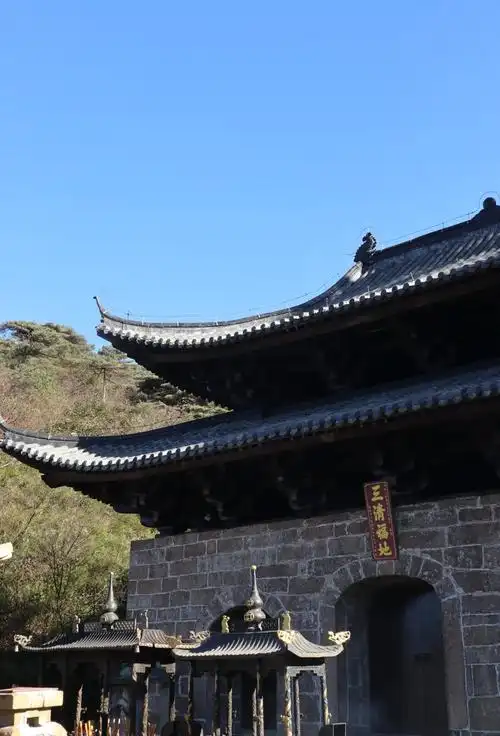 Historical context: Sanqing Palace traces its origins to the Eastern Jin Dynasty (4th century CE), roughly contemporary with the fall of Rome's western provinces. The surviving structures, however, date chiefly from the Ming era, with major expansion between 1450 and 1464 during the Jingtai and Tianshun reigns. In 2013 the site was added to China's seventh batch of National Key Cultural Relic Protection Units, placing it alongside renowned Taoist centres such as the White Cloud Temple in Beijing and the Purple Cloud Temple of Mount Wudang. For Western visitors, think of it as a sacred counterpart to the granite monastic ensembles of the Pyrenees or the cliff-built churches of Cappadocia.
Architecture: The entire complex was raised from local granite without a single nail or beam, employing dry-stacking and mortise-tenon joinery, a technique that also defines the cyclopean walls of Mycenae and the Inca citadel of Sacsayhuamán. Facing south to north, the layout arranges shrines for the Three Pure Ones (Jade Pure, Supreme Pure and Grand Pure) along a precise Bagua diagram, reflecting the Taoist principle of "following nature." More than 230 buildings, including the Wind-Thunder Tower and Dragon-Tiger Hall, rise in measured harmony with the surrounding ridge.
Cultural significance: Sanqing Palace transcends religion, functioning as an open textbook of Chinese cosmology, geomancy and stonemasonry. Scholars of feng shui compare its mountain alignment to the siting of Florence's cathedral complex, while the integration of structures, groves and natural pools embodies the Taoist conviction that sacred space must breathe with the landscape. Its undisturbed skies once guided Taoist astronomers, making it a vital site for understanding classical Chinese metaphysical thinking.
Practical visit info: Entrance is included in the Mount Sanqing ticket; no separate fee is required. The palace is typically open 08:00–17:00 and warrants 30 to 60 minutes of exploration. Visitors usually ride the Jinsha cable car upward, pass through the South Clear Garden and West Coast boardwalks to reach the palace, then descend via the Sunshine Coast, a six-to-seven-hour circuit. Bring water, layered clothing and sturdy non-slip shoes; altitude brings sharp temperature drops.
Why visit: Mornings after rainfall reveal a sea of clouds drifting beneath the granite pavilions, an experience reminiscent of the misty visions painted by Caspar David Friedrich. Pilgrims descend each year for the first-day-of-the-eighth-lunar-month temple fair, when incense smoke and mountain haze blend into one. Whether you arrive for quiet contemplation, architectural curiosity or simply the romance of high-altitude stonework, Sanqing Palace rewards the traveller seeking China's spiritual landscape in its purest form.
Historical context: Sanqing Palace traces its origins to the Eastern Jin Dynasty (4th century CE), roughly contemporary with the fall of Rome's western provinces. The surviving structures, however, date chiefly from the Ming era, with major expansion between 1450 and 1464 during the Jingtai and Tianshun reigns. In 2013 the site was added to China's seventh batch of National Key Cultural Relic Protection Units, placing it alongside renowned Taoist centres such as the White Cloud Temple in Beijing and the Purple Cloud Temple of Mount Wudang. For Western visitors, think of it as a sacred counterpart to the granite monastic ensembles of the Pyrenees or the cliff-built churches of Cappadocia.
Architecture: The entire complex was raised from local granite without a single nail or beam, employing dry-stacking and mortise-tenon joinery, a technique that also defines the cyclopean walls of Mycenae and the Inca citadel of Sacsayhuamán. Facing south to north, the layout arranges shrines for the Three Pure Ones (Jade Pure, Supreme Pure and Grand Pure) along a precise Bagua diagram, reflecting the Taoist principle of "following nature." More than 230 buildings, including the Wind-Thunder Tower and Dragon-Tiger Hall, rise in measured harmony with the surrounding ridge.
Cultural significance: Sanqing Palace transcends religion, functioning as an open textbook of Chinese cosmology, geomancy and stonemasonry. Scholars of feng shui compare its mountain alignment to the siting of Florence's cathedral complex, while the integration of structures, groves and natural pools embodies the Taoist conviction that sacred space must breathe with the landscape. Its undisturbed skies once guided Taoist astronomers, making it a vital site for understanding classical Chinese metaphysical thinking.
Practical visit info: Entrance is included in the Mount Sanqing ticket; no separate fee is required. The palace is typically open 08:00–17:00 and warrants 30 to 60 minutes of exploration. Visitors usually ride the Jinsha cable car upward, pass through the South Clear Garden and West Coast boardwalks to reach the palace, then descend via the Sunshine Coast, a six-to-seven-hour circuit. Bring water, layered clothing and sturdy non-slip shoes; altitude brings sharp temperature drops.
Why visit: Mornings after rainfall reveal a sea of clouds drifting beneath the granite pavilions, an experience reminiscent of the misty visions painted by Caspar David Friedrich. Pilgrims descend each year for the first-day-of-the-eighth-lunar-month temple fair, when incense smoke and mountain haze blend into one. Whether you arrive for quiet contemplation, architectural curiosity or simply the romance of high-altitude stonework, Sanqing Palace rewards the traveller seeking China's spiritual landscape in its purest form.