Dashushan Cultural Cemetery
⭐ 3.50
Dashushan Cultural Cemetery, High-tech District, Hefei, Anhui, China
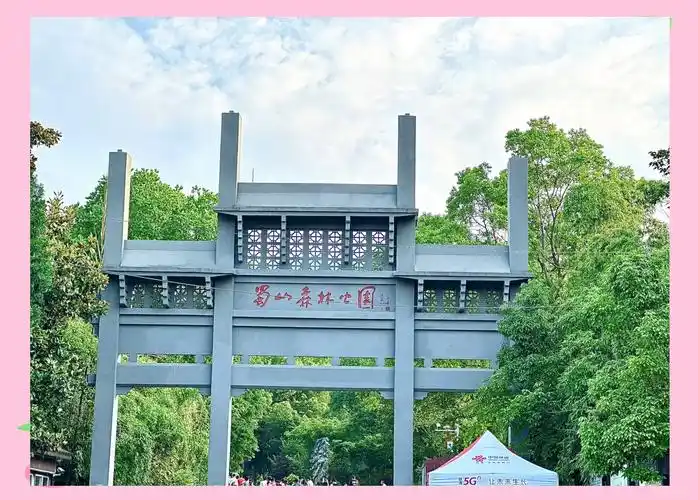 The park's origins trace to 1965, when local authorities established the Dashushan Revolutionary Cemetery during the final years of the Mao era, a period when Chinese cities were building commemorative sites for revolutionary martyrs. Like the Soviet pantheons of the Cold War or the military cemeteries that proliferated across twentieth-century Europe, the site served both grief and ideology. The 2002 redesign, approved by Anhui's civil affairs bureau and now operated by the Fu Shou Yuan International Group, Asia's largest cemetery operator with holdings in Shanghai, Melbourne, and Tokyo, transformed it into something closer in spirit to a Western memorial garden, where remembrance coexists with civic education.
Built on a hillside terrace with Mount Dashushan as its green backdrop, the 132-acre site follows the Chinese principle of harmony with terrain. Walkways curve past traditional burial plots, flower-bed interments, and eco-friendly forest burials, a layout that has earned the park a reputation as a model for cemetery-to-park conversions across China. Sculptures marking notable interments are crafted with deliberate artistry, and the manicured trees, ponds, and pavilions create an atmosphere closer to a classical Chinese garden than to a graveyard. The result has been compared, by Chinese design critics, to aspects of Recoleta in Buenos Aires or Highgate West in London.
Two monuments anchor the park's symbolic heart: the Martyrs' Memorial, dedicated to revolutionaries and war dead, and a memorial to organ and body donors, a relatively recent but increasingly significant feature in modern China. A humanities museum on-site explores land-efficient and ecological burial, promoting green funerary practices as urbanization claims farmland across the country. The park functions as both an Anhui Province patriotic education base and a life-education center, where school groups learn about sacrifice, civic duty, and mortality, a role that parallels how Western schools visit Verdun, the Somme, or the Normandy beaches.
The park welcomes visitors year-round, free of charge, between roughly 9:00 a.m. and 5:00 p.m. The easiest arrival is via Metro Line 2 to Shushan West Station, Exit C, followed by a 1.1-kilometer walk along a leafy greenway. Drivers should note that during the Qingming Tomb-Sweeping Festival in early April and at the winter solstice, traffic controls operate and free shuttle buses replace private vehicles. Calling 0551-62844444 ahead of your visit is recommended, particularly during peak memorial seasons.
Allow 60 to 90 minutes for a respectful visit. Visitors should dress modestly, speak quietly, and refrain from running or photographing grave markers or memorial plaques. The experience is less about sightseeing than reflection, whether you come for the history, the architecture, or the unusual chance to observe how modern China negotiates memory, ecology, and civic ritual. Afterward, the trailhead to Mount Dashushan National Forest Park lies just outside the gates, offering a striking shift from quiet contemplation to panoramic views over Hefei, a satisfying coda of natural beauty to a thought-provoking cultural stop.
The park's origins trace to 1965, when local authorities established the Dashushan Revolutionary Cemetery during the final years of the Mao era, a period when Chinese cities were building commemorative sites for revolutionary martyrs. Like the Soviet pantheons of the Cold War or the military cemeteries that proliferated across twentieth-century Europe, the site served both grief and ideology. The 2002 redesign, approved by Anhui's civil affairs bureau and now operated by the Fu Shou Yuan International Group, Asia's largest cemetery operator with holdings in Shanghai, Melbourne, and Tokyo, transformed it into something closer in spirit to a Western memorial garden, where remembrance coexists with civic education.
Built on a hillside terrace with Mount Dashushan as its green backdrop, the 132-acre site follows the Chinese principle of harmony with terrain. Walkways curve past traditional burial plots, flower-bed interments, and eco-friendly forest burials, a layout that has earned the park a reputation as a model for cemetery-to-park conversions across China. Sculptures marking notable interments are crafted with deliberate artistry, and the manicured trees, ponds, and pavilions create an atmosphere closer to a classical Chinese garden than to a graveyard. The result has been compared, by Chinese design critics, to aspects of Recoleta in Buenos Aires or Highgate West in London.
Two monuments anchor the park's symbolic heart: the Martyrs' Memorial, dedicated to revolutionaries and war dead, and a memorial to organ and body donors, a relatively recent but increasingly significant feature in modern China. A humanities museum on-site explores land-efficient and ecological burial, promoting green funerary practices as urbanization claims farmland across the country. The park functions as both an Anhui Province patriotic education base and a life-education center, where school groups learn about sacrifice, civic duty, and mortality, a role that parallels how Western schools visit Verdun, the Somme, or the Normandy beaches.
The park welcomes visitors year-round, free of charge, between roughly 9:00 a.m. and 5:00 p.m. The easiest arrival is via Metro Line 2 to Shushan West Station, Exit C, followed by a 1.1-kilometer walk along a leafy greenway. Drivers should note that during the Qingming Tomb-Sweeping Festival in early April and at the winter solstice, traffic controls operate and free shuttle buses replace private vehicles. Calling 0551-62844444 ahead of your visit is recommended, particularly during peak memorial seasons.
Allow 60 to 90 minutes for a respectful visit. Visitors should dress modestly, speak quietly, and refrain from running or photographing grave markers or memorial plaques. The experience is less about sightseeing than reflection, whether you come for the history, the architecture, or the unusual chance to observe how modern China negotiates memory, ecology, and civic ritual. Afterward, the trailhead to Mount Dashushan National Forest Park lies just outside the gates, offering a striking shift from quiet contemplation to panoramic views over Hefei, a satisfying coda of natural beauty to a thought-provoking cultural stop.