Anhui Museum
⭐ 4.50
No. 122, Changjiang West Road, Shushan District, Hefei City, Anhui Province, China
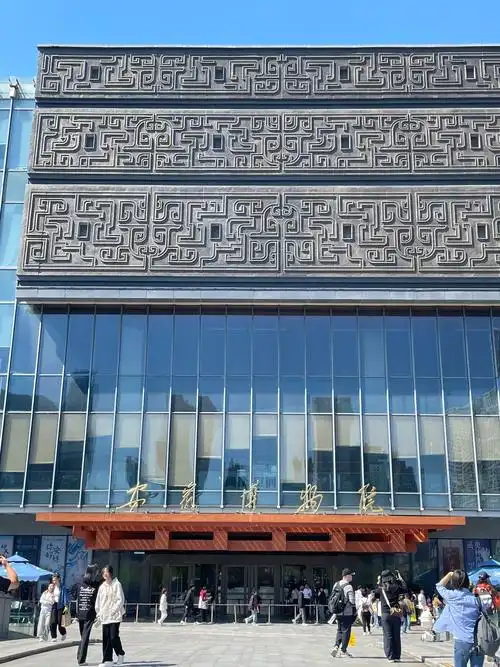 Standing as Hefei's premier cultural institution, the Anhui Museum traces its origins to a provincial museum once personally inspected by Chairman Mao Zedong, now elevated to national first-class status. Its 300,000-strong collection charts a remarkable 5,000-year arc from the Neolithic Lingjiatan culture through the Ming and Qing dynasties, contextualizing the region's contribution to Chinese civilization. Western visitors familiar with the British Museum or the Louvre's encyclopedic approach will recognize a similar ambition here—a single institution telling the story of an entire region's cultural evolution from prehistoric jade workshops to refined Hui merchant traditions.
The Shushan Hall, the museum's modern flagship, draws directly on the Hui architectural principle of "four waters returning to the hall," where rainwater traditionally drains inward from sloped roofs. Whitewashed walls and dark grey tiles—hallmarks of historic Huizhou villages—merge with contemporary steel and glass across five interconnected pavilions. The result recalls how the Musée d'Orsay transforms a former railway station into cultural space, though here traditional courtyard aesthetics inform every angle of natural light within the galleries.
The chronological "Ancient Civilization of Anhui" exhibition unfolds across multiple halls, showcasing treasures that bridge the gap between academic history and human storytelling. The Zhuke Da Ding, weighing over 400 kilograms, ranks as the largest known circular bronze cauldron from the Eastern Zhou period, predating the Roman Empire by centuries. The Ejun Qi Gold Tallies functioned essentially as 2,300-year-old tax exemption documents issued by the Chu king—imagine Roman imperial customs receipts rendered in precious metal. Meanwhile, the Wu Wang Guang Basin, with its ingenious double-walled ice compartment, has earned comparisons to an ancient "Spring and Autumn refrigerator," revealing how Chu nobility chilled their wines at elaborate banquets.
Admission is free, though weekend and holiday visitors must book through the "Anbo Yuyue" mini-program. The Shushan Hall operates 9:00-18:00 on summer weekends and 9:00-17:00 Tuesday through Thursday, closing Mondays. The museum sits directly accessible via Metro Line 2 to the Museum Station, though parking is notoriously scarce—public transit is strongly advised. Photography is prohibited throughout exhibition halls.
Plan at least three to four hours for a meaningful visit; audio guides or docent tours (¥118-480) unlock details invisible to casual viewing, particularly for bronzeware inscriptions and jade craftsmanship. August visitors should pack a light jacket, as air conditioning runs cold against Hefei's sweltering heat. After touring, the adjacent Shushan Park offers shaded walking paths along historic imperial temple grounds—an ideal cool-down before exploring the surrounding university district's cafes and restaurants.
Standing as Hefei's premier cultural institution, the Anhui Museum traces its origins to a provincial museum once personally inspected by Chairman Mao Zedong, now elevated to national first-class status. Its 300,000-strong collection charts a remarkable 5,000-year arc from the Neolithic Lingjiatan culture through the Ming and Qing dynasties, contextualizing the region's contribution to Chinese civilization. Western visitors familiar with the British Museum or the Louvre's encyclopedic approach will recognize a similar ambition here—a single institution telling the story of an entire region's cultural evolution from prehistoric jade workshops to refined Hui merchant traditions.
The Shushan Hall, the museum's modern flagship, draws directly on the Hui architectural principle of "four waters returning to the hall," where rainwater traditionally drains inward from sloped roofs. Whitewashed walls and dark grey tiles—hallmarks of historic Huizhou villages—merge with contemporary steel and glass across five interconnected pavilions. The result recalls how the Musée d'Orsay transforms a former railway station into cultural space, though here traditional courtyard aesthetics inform every angle of natural light within the galleries.
The chronological "Ancient Civilization of Anhui" exhibition unfolds across multiple halls, showcasing treasures that bridge the gap between academic history and human storytelling. The Zhuke Da Ding, weighing over 400 kilograms, ranks as the largest known circular bronze cauldron from the Eastern Zhou period, predating the Roman Empire by centuries. The Ejun Qi Gold Tallies functioned essentially as 2,300-year-old tax exemption documents issued by the Chu king—imagine Roman imperial customs receipts rendered in precious metal. Meanwhile, the Wu Wang Guang Basin, with its ingenious double-walled ice compartment, has earned comparisons to an ancient "Spring and Autumn refrigerator," revealing how Chu nobility chilled their wines at elaborate banquets.
Admission is free, though weekend and holiday visitors must book through the "Anbo Yuyue" mini-program. The Shushan Hall operates 9:00-18:00 on summer weekends and 9:00-17:00 Tuesday through Thursday, closing Mondays. The museum sits directly accessible via Metro Line 2 to the Museum Station, though parking is notoriously scarce—public transit is strongly advised. Photography is prohibited throughout exhibition halls.
Plan at least three to four hours for a meaningful visit; audio guides or docent tours (¥118-480) unlock details invisible to casual viewing, particularly for bronzeware inscriptions and jade craftsmanship. August visitors should pack a light jacket, as air conditioning runs cold against Hefei's sweltering heat. After touring, the adjacent Shushan Park offers shaded walking paths along historic imperial temple grounds—an ideal cool-down before exploring the surrounding university district's cafes and restaurants.