Bao Park
⭐ 4.20
Bao Park, Baohe District, Hefei City, Anhui Province, China
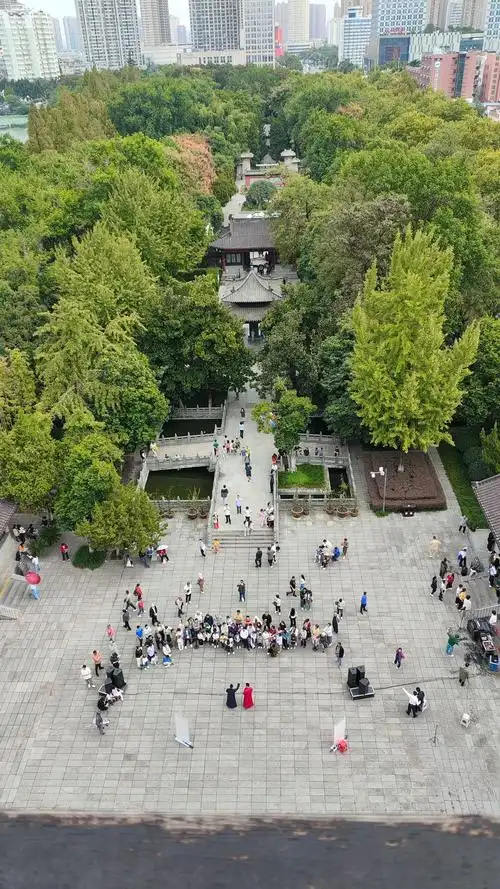 Set in the political awakening of China's Northern Song Dynasty (960–1127)—a period broadly contemporary with the Norman Conquest and the decline of Anglo-Saxon England—this memorial complex honors Bao Zheng, known to generations as "Judge Bao," whose fearsome impartiality echoes through the centuries. While medieval Europeans navigated feudal justice under monarchs like William the Conqueror, Bao was already developing a reputation for judging the powerful without favor, regardless of rank. His cult of integrity has fueled Chinese literature, opera, and television for a millennium, granting the park roughly the cultural weight that medieval cathedrals dedicated to patron saints of justice and mercy carry in the West.
The park's architectural ensemble reads like a visual biography unfolding across four distinct monuments. The Memorial Temple anchors the experience, housing a sculpted Bao flanked by the dramatic three executioners' axes—dragon-head, tiger-head, and dog-head—that symbolize his willingness to judge even royalty. The showstopper is Qingfeng Pavilion, a 42-meter Song-style tiered pagoda whose soaring silhouette recalls the vertical ambition of medieval European bell towers, though here rendered in redwood columns and glazed ceramic tiles. Inside, opera-themed murals and multimedia tableaux dramatize the magistrate's most famous cases for contemporary audiences seeking vivid storytelling.
Beneath an unassuming earthen mound lies Bao's reconstructed tomb, built to Northern Song specifications for a second-rank official—a rare surviving example of an authentic Song dynasty burial complex, complete with a gilt nanmu coffin and inscribed epitaph stones on display. Nearby, the Floating Isle occupies its own lake-bound landmass in a Huizhou-school garden tradition that shares aesthetic DNA with the Ming-era water gardens of Suzhou and finds Western echoes in the island pavilions of Fontainebleau. Arched stone bridges cross lotus-choked ponds, while tiled pavilions invite quiet reflection away from the surrounding city.
The park operates daily from 9:00 a.m. to 5:00 p.m., with final entry at 4:30 p.m., and offers completely free admission through timed reservations made via the WeChat "Hefei Bao Park" official account or major Chinese booking platforms. Reaching the south gate is refreshingly simple: Metro Line 1 drops you directly at Bao Park Station, Exit D, followed by a 700-meter stroll. A recommended clockwise circuit—Memorial Temple, Floating Isle, Qingfeng Pavilion, then the Tomb—takes roughly two-and-a-half to three hours, with comfortable shaded benches along the way.
Consider pre-booking a Mandarin-speaking human guide, since most interpretive signage appears only in Chinese, but the visual storytelling through sculpture, calligraphy, and wax-figure tableaux remains engaging even without translation. Summer transforms the central lake into a spectacle of blooming lotus comparable to Monet's Giverny water gardens—though the same humid conditions invite mosquitoes, so pack repellent. Whether you arrive as a scholar tracing the philosophical roots of Chinese legal ethics, a parent introducing children to moral heroes across civilizations, or simply a curious traveler seeking respite from modern Hefei's glass towers, Bao Park offers a contemplative encounter with a man whose sterling reputation has outlasted a thousand years of dynastic upheaval.
Set in the political awakening of China's Northern Song Dynasty (960–1127)—a period broadly contemporary with the Norman Conquest and the decline of Anglo-Saxon England—this memorial complex honors Bao Zheng, known to generations as "Judge Bao," whose fearsome impartiality echoes through the centuries. While medieval Europeans navigated feudal justice under monarchs like William the Conqueror, Bao was already developing a reputation for judging the powerful without favor, regardless of rank. His cult of integrity has fueled Chinese literature, opera, and television for a millennium, granting the park roughly the cultural weight that medieval cathedrals dedicated to patron saints of justice and mercy carry in the West.
The park's architectural ensemble reads like a visual biography unfolding across four distinct monuments. The Memorial Temple anchors the experience, housing a sculpted Bao flanked by the dramatic three executioners' axes—dragon-head, tiger-head, and dog-head—that symbolize his willingness to judge even royalty. The showstopper is Qingfeng Pavilion, a 42-meter Song-style tiered pagoda whose soaring silhouette recalls the vertical ambition of medieval European bell towers, though here rendered in redwood columns and glazed ceramic tiles. Inside, opera-themed murals and multimedia tableaux dramatize the magistrate's most famous cases for contemporary audiences seeking vivid storytelling.
Beneath an unassuming earthen mound lies Bao's reconstructed tomb, built to Northern Song specifications for a second-rank official—a rare surviving example of an authentic Song dynasty burial complex, complete with a gilt nanmu coffin and inscribed epitaph stones on display. Nearby, the Floating Isle occupies its own lake-bound landmass in a Huizhou-school garden tradition that shares aesthetic DNA with the Ming-era water gardens of Suzhou and finds Western echoes in the island pavilions of Fontainebleau. Arched stone bridges cross lotus-choked ponds, while tiled pavilions invite quiet reflection away from the surrounding city.
The park operates daily from 9:00 a.m. to 5:00 p.m., with final entry at 4:30 p.m., and offers completely free admission through timed reservations made via the WeChat "Hefei Bao Park" official account or major Chinese booking platforms. Reaching the south gate is refreshingly simple: Metro Line 1 drops you directly at Bao Park Station, Exit D, followed by a 700-meter stroll. A recommended clockwise circuit—Memorial Temple, Floating Isle, Qingfeng Pavilion, then the Tomb—takes roughly two-and-a-half to three hours, with comfortable shaded benches along the way.
Consider pre-booking a Mandarin-speaking human guide, since most interpretive signage appears only in Chinese, but the visual storytelling through sculpture, calligraphy, and wax-figure tableaux remains engaging even without translation. Summer transforms the central lake into a spectacle of blooming lotus comparable to Monet's Giverny water gardens—though the same humid conditions invite mosquitoes, so pack repellent. Whether you arrive as a scholar tracing the philosophical roots of Chinese legal ethics, a parent introducing children to moral heroes across civilizations, or simply a curious traveler seeking respite from modern Hefei's glass towers, Bao Park offers a contemplative encounter with a man whose sterling reputation has outlasted a thousand years of dynastic upheaval.