Qingcheng Ancient Town
⭐ 3.80
No. 1, Xiaochang Road, Qingcheng Village, Qingcheng Town, Yuzhong County, Lanzhou City, Gansu Province, China
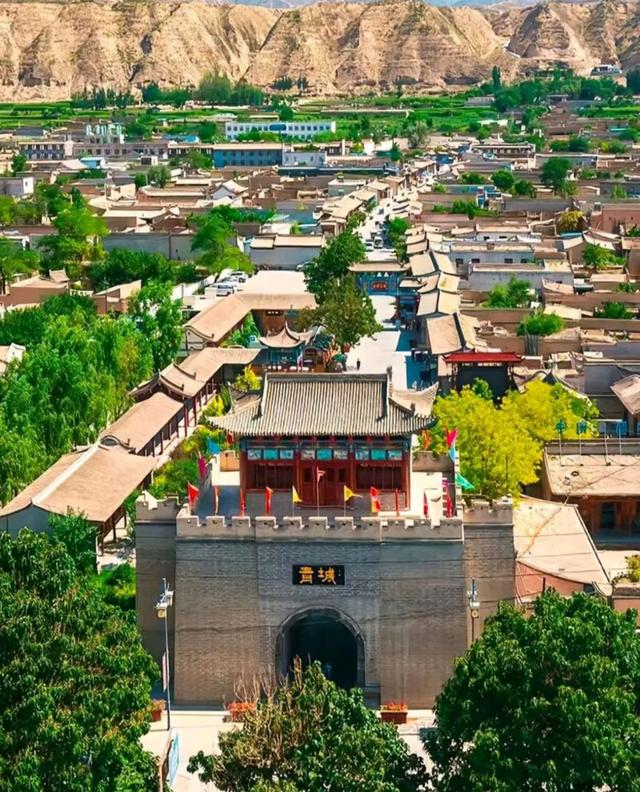 Qingcheng traces its origins to the Northern Song dynasty in 1038–39, when the celebrated general Di Qing reinforced an older Tang-era fortification called "Yitiaocheng" (Single-Wall City) to guard a vital Yellow River crossing. At roughly the same period that William the Conqueror was completing his hold over Norman England, this strategic river gateway anchored frontier defense and trade along the Silk Road's eastern reaches. The town's name was later changed to honor Di Qing, and for centuries it served as a bustling outpost where soldiers, merchants, and farmers converged, much like the medieval Rhine toll-cities of Cologne or Mainz.
The town contains more than fifty surviving courtyard residences from the Ming, Qing, and Republican eras, including one Ming, thirty-three Qing, and fifteen early twentieth-century homes, with twelve complete siheyuan (four-sided courtyard compounds). Local builders blended Shanxi merchant style with Beijing official architecture and rugged northwestern craftsmanship, producing richly carved brick gateways, timber lattice screens, and stone reliefs reminiscent of Burgundy half-timbered manors or Tuscan farm estates. Highlights include the imperially bestowed plaques of the Gao Ancestral Hall, the still-hushed halls of Qingcheng Academy, the Town God's Temple theater, and the atmospheric water-tobacco workshops of the Luo Family Compound.
Qingcheng is more than a museum of architecture: it remains a living cultural treasury. The painstaking craft of water-tobacco processing, known locally as shuixi, is recognized as a provincial intangible heritage, and visitors can still watch artisans pressing fragrant tobacco into rose-shaped pouches. Folk performances such as Qingcheng minor tunes, martial drum processions, and the acrobatic Daotai lion dance keep traditions alive, while the town's long scholarly tradition—rooted in its classical academy—evokes the literary atmosphere of an English cathedral town or a Florentine humanist circle, making it a rewarding stop for travelers interested in China's enduring agrarian-intellectual heritage.
Practically, the town is an easy day trip from Lanzhou. From April 1 to October 31 admission is 30 yuan per person, while entry is free in the off-season. Drivers should allow 1.5 to 2 hours via the expressway from central Lanzhou, or travelers can take the Lanzhou–Shichuan–Qingcheng tourist shuttle from Xiaoxihu bus station. Aim to arrive before 9:30 a.m. to enjoy the soft morning light over the Gao Ancestral Hall, Qingcheng Academy, and Luo Family Compound, then linger until dusk when the hundred-acre East Beach lotus pond glows beneath the setting sun. Allow three to four hours for a comfortable, unhurried visit.
What makes Qingcheng genuinely special is its improbable blend of frontier grit and pastoral grace. Set against the broad, tawny sweep of the Yellow River—an artery of Chinese civilization since the Neolithic age—the town offers a window onto a way of life that has all but vanished from the modern Chinese coast. Few places allow visitors to step from a thousand-year-old fortress wall directly into a working tobacco workshop, a functioning academy, and a lotus-filled wetland within a single morning. For travelers seeking an authentic, uncrowded glimpse of northwestern China's deep history, Qingcheng rewards curiosity generously.
Qingcheng traces its origins to the Northern Song dynasty in 1038–39, when the celebrated general Di Qing reinforced an older Tang-era fortification called "Yitiaocheng" (Single-Wall City) to guard a vital Yellow River crossing. At roughly the same period that William the Conqueror was completing his hold over Norman England, this strategic river gateway anchored frontier defense and trade along the Silk Road's eastern reaches. The town's name was later changed to honor Di Qing, and for centuries it served as a bustling outpost where soldiers, merchants, and farmers converged, much like the medieval Rhine toll-cities of Cologne or Mainz.
The town contains more than fifty surviving courtyard residences from the Ming, Qing, and Republican eras, including one Ming, thirty-three Qing, and fifteen early twentieth-century homes, with twelve complete siheyuan (four-sided courtyard compounds). Local builders blended Shanxi merchant style with Beijing official architecture and rugged northwestern craftsmanship, producing richly carved brick gateways, timber lattice screens, and stone reliefs reminiscent of Burgundy half-timbered manors or Tuscan farm estates. Highlights include the imperially bestowed plaques of the Gao Ancestral Hall, the still-hushed halls of Qingcheng Academy, the Town God's Temple theater, and the atmospheric water-tobacco workshops of the Luo Family Compound.
Qingcheng is more than a museum of architecture: it remains a living cultural treasury. The painstaking craft of water-tobacco processing, known locally as shuixi, is recognized as a provincial intangible heritage, and visitors can still watch artisans pressing fragrant tobacco into rose-shaped pouches. Folk performances such as Qingcheng minor tunes, martial drum processions, and the acrobatic Daotai lion dance keep traditions alive, while the town's long scholarly tradition—rooted in its classical academy—evokes the literary atmosphere of an English cathedral town or a Florentine humanist circle, making it a rewarding stop for travelers interested in China's enduring agrarian-intellectual heritage.
Practically, the town is an easy day trip from Lanzhou. From April 1 to October 31 admission is 30 yuan per person, while entry is free in the off-season. Drivers should allow 1.5 to 2 hours via the expressway from central Lanzhou, or travelers can take the Lanzhou–Shichuan–Qingcheng tourist shuttle from Xiaoxihu bus station. Aim to arrive before 9:30 a.m. to enjoy the soft morning light over the Gao Ancestral Hall, Qingcheng Academy, and Luo Family Compound, then linger until dusk when the hundred-acre East Beach lotus pond glows beneath the setting sun. Allow three to four hours for a comfortable, unhurried visit.
What makes Qingcheng genuinely special is its improbable blend of frontier grit and pastoral grace. Set against the broad, tawny sweep of the Yellow River—an artery of Chinese civilization since the Neolithic age—the town offers a window onto a way of life that has all but vanished from the modern Chinese coast. Few places allow visitors to step from a thousand-year-old fortress wall directly into a working tobacco workshop, a functioning academy, and a lotus-filled wetland within a single morning. For travelers seeking an authentic, uncrowded glimpse of northwestern China's deep history, Qingcheng rewards curiosity generously.