SM Mall
⭐ 3.80
SM Mall, Siming District, Xiamen City, Fujian Province, China
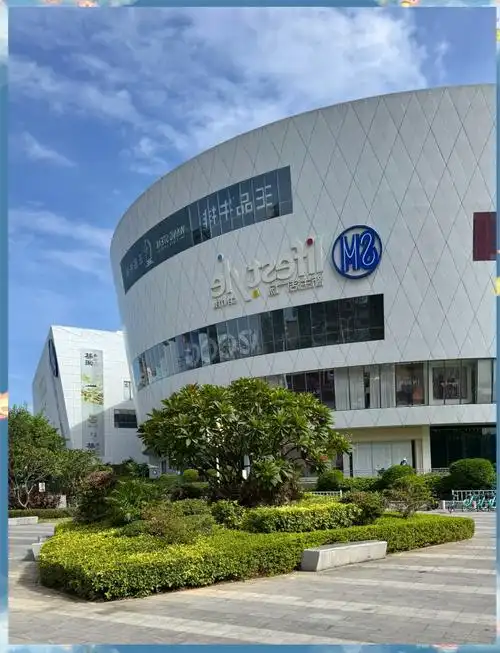 The SM behind the name stands for Shoe Mart, founded in 1956 by Henry Sy, a Chinese-Filipino immigrant who built one of Southeast Asia's great retail empires from a single Manila shoe stall. His enterprise parallels other immigrant-founded retail dynasties such as Selfridges or Marks & Spencer, both of which transformed their host cities' commercial landscapes. When SM Group invested in Xiamen in 2001, the city was already a special economic zone and former treaty port, opening to overseas capital decades earlier. The mall's first phase that year marked Xiamen's leap from neighbourhood street markets to the era of climate-controlled shopping cathedrals.
Like London's Westfield or Paris's Les Quatre Temps at La Défense, SM City Plaza has expanded through successive phases rather than as a single grand design. Phase One concentrates flagship fashion and electronics; Phase Two (2009) added a Wanda IMAX cinema and family entertainment zones; Phase Three (2022) introduced contemporary art installations and trend-focused retail; Phase Four and an adjoining hotel are slated for 2024–2025. The interconnected atriums host rotating exhibitions, lending the complex the feel of a permanent trade fair as much as a shopping centre.
For Xiamen residents, the plaza functions as a "city living room," a concept familiar to anyone who has watched a Parisian brasserie or a Viennese coffeehouse evolve into a social institution. It draws daily crowds of office workers, students on dates, and multi-generational families, particularly during summer evenings and festivals when pop-up markets and anime conventions fill its courtyards. The mall also serves as a case study in how Southeast Asian capital has reshaped China's coastal cities, much as British trading houses once reshaped Shanghai's Bund.
Beneath Phase One, the Wang Street food court is the soul of the place, an underground hawker hall reminiscent of Singapore's hawker centres or London's Borough Market, but specialising in Minnan staples. Visitors can sample satay-scented noodles, sea-worm jelly, and oyster omelettes alongside bubble tea and Japanese ramen. International brands from Uniqlo to Starbucks fill the upper levels, while the rooftop "Star Food Street" on Phase Three offers evening views and photographable interiors with the whole complex spread below.
The complex sits at 468 Jiahe Road (Phase One) and 399 Jiahe Road (Phase Two) in Huli District, accessible directly from Exit 4 of Wushipu Station on Metro Line 1, roughly twenty minutes by taxi from Xiamen Gaoqi International Airport. Standard opening hours run 10:00 to 22:00, extended to 23:00 on weekends and holidays. Major stores accept foreign bank cards and cash, though some smaller stalls and food vendors prefer Alipay or WeChat Pay, so carrying a small amount of renminbi is wise.
For first-time visitors, the smartest route starts underground at Wang Street for a quick Fujian snack crawl, then rises through Phase Two for a cinema break or a session at the MELAND indoor playground, before finishing on Phase Three's rooftop for dinner and skyline photos. Aim for weekday mornings between 10:00 and noon to avoid the dense weekend crowds. It is less a sight to tick off than a place to absorb how contemporary Xiamen works, shops, and socialises, a working cross-section of coastal China's commercial present.
The SM behind the name stands for Shoe Mart, founded in 1956 by Henry Sy, a Chinese-Filipino immigrant who built one of Southeast Asia's great retail empires from a single Manila shoe stall. His enterprise parallels other immigrant-founded retail dynasties such as Selfridges or Marks & Spencer, both of which transformed their host cities' commercial landscapes. When SM Group invested in Xiamen in 2001, the city was already a special economic zone and former treaty port, opening to overseas capital decades earlier. The mall's first phase that year marked Xiamen's leap from neighbourhood street markets to the era of climate-controlled shopping cathedrals.
Like London's Westfield or Paris's Les Quatre Temps at La Défense, SM City Plaza has expanded through successive phases rather than as a single grand design. Phase One concentrates flagship fashion and electronics; Phase Two (2009) added a Wanda IMAX cinema and family entertainment zones; Phase Three (2022) introduced contemporary art installations and trend-focused retail; Phase Four and an adjoining hotel are slated for 2024–2025. The interconnected atriums host rotating exhibitions, lending the complex the feel of a permanent trade fair as much as a shopping centre.
For Xiamen residents, the plaza functions as a "city living room," a concept familiar to anyone who has watched a Parisian brasserie or a Viennese coffeehouse evolve into a social institution. It draws daily crowds of office workers, students on dates, and multi-generational families, particularly during summer evenings and festivals when pop-up markets and anime conventions fill its courtyards. The mall also serves as a case study in how Southeast Asian capital has reshaped China's coastal cities, much as British trading houses once reshaped Shanghai's Bund.
Beneath Phase One, the Wang Street food court is the soul of the place, an underground hawker hall reminiscent of Singapore's hawker centres or London's Borough Market, but specialising in Minnan staples. Visitors can sample satay-scented noodles, sea-worm jelly, and oyster omelettes alongside bubble tea and Japanese ramen. International brands from Uniqlo to Starbucks fill the upper levels, while the rooftop "Star Food Street" on Phase Three offers evening views and photographable interiors with the whole complex spread below.
The complex sits at 468 Jiahe Road (Phase One) and 399 Jiahe Road (Phase Two) in Huli District, accessible directly from Exit 4 of Wushipu Station on Metro Line 1, roughly twenty minutes by taxi from Xiamen Gaoqi International Airport. Standard opening hours run 10:00 to 22:00, extended to 23:00 on weekends and holidays. Major stores accept foreign bank cards and cash, though some smaller stalls and food vendors prefer Alipay or WeChat Pay, so carrying a small amount of renminbi is wise.
For first-time visitors, the smartest route starts underground at Wang Street for a quick Fujian snack crawl, then rises through Phase Two for a cinema break or a session at the MELAND indoor playground, before finishing on Phase Three's rooftop for dinner and skyline photos. Aim for weekday mornings between 10:00 and noon to avoid the dense weekend crowds. It is less a sight to tick off than a place to absorb how contemporary Xiamen works, shops, and socialises, a working cross-section of coastal China's commercial present.