Liberation Square
⭐ 2.50
No. 1, Jiefang Road, Qingxiu District, Nanning City, Guangxi Zhuang Autonomous Region, China
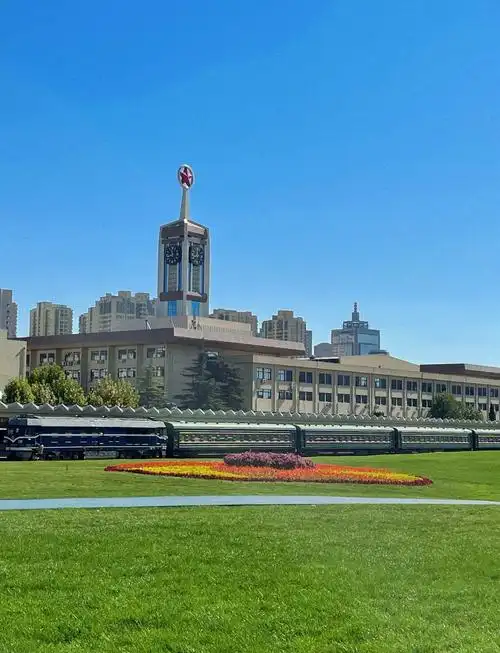 Liberation Square was raised in the early 1950s to honor the PLA soldiers who entered Nanning in December 1949, one of the closing chapters of the Chinese Civil War as Communist forces swept southward through Guangxi. The towering martyrs' monument at its heart inscribes the names and deeds of those who fell during the campaign. Like Berlin's Soviet War Memorial or Sofia's Monument to Freedom, the square belongs to a wave of post-1945 socialist-era commemorative landscapes that doubled as civic hearts for their cities. It remains an official patriotism-education site and a touchstone of Nanning's collective memory.
The layout is open and ceremonial, organized along a clear central axis that draws the eye to the soaring white obelisk. Surrounding it, vermilion walls and jade-green tiled pavilions echo the color palette of the Forbidden City, lending a distinctly Chinese classical character to what could otherwise feel austere. Curving bluestone paths wind through groves of subtropical palms and banyans, while morning light filters through the canopy in soft shafts. The effect recalls a smaller-scale Tiananmen Square, but softened by garden landscaping—a contemplative rather than purely martial mood.
Beyond its political symbolism, Liberation Square pulses with daily life. At dawn, retirees fan out across the plaza to practice tai chi, sword forms, and ballroom dancing; by mid-morning, amateur choirs gather to sing revolutionary classics and folk favorites beneath the trees. During Qingming and other commemorative dates, wreath-laying ceremonies draw schoolchildren, veterans, and officials. This living layer gives the space a warmth that purely ceremonial squares elsewhere can lack—a reminder that in Nanning, revolutionary heritage is not frozen in bronze but woven into the rhythm of ordinary citizens.
The square is free and open to the public around the clock, tucked inside People's Park in central Nanning. From Metro Line 1, alight at Xinmin Road Station and walk roughly ten minutes; alternatively, several bus lines stop at People's Park. Right next door stands the Guangxi Museum (also free, advance reservation recommended), while the historic lanes of Zhongshan Road and the restored Sanjie Liangxiang district are within easy walking distance. Toilets, convenience stores, and casual eateries ring the perimeter.
Aim to arrive between 7:30 and 10:00 AM, when the light is golden and the plaza hums with morning activity—a window most travelers miss at busier memorial sites elsewhere in China. Allow 30 to 60 minutes to absorb the atmosphere, then continue to the Guangxi Museum and Minzu Cultural Park for a "revolutionary heritage plus ethnic cultures" theme day. As evening falls, drift toward Zhongshan Road or Sanjie Liangxiang to sample Nanning signatures such as laoyou rice noodles and jiantong rice-noodle rolls, closing the day in true local style.
Liberation Square was raised in the early 1950s to honor the PLA soldiers who entered Nanning in December 1949, one of the closing chapters of the Chinese Civil War as Communist forces swept southward through Guangxi. The towering martyrs' monument at its heart inscribes the names and deeds of those who fell during the campaign. Like Berlin's Soviet War Memorial or Sofia's Monument to Freedom, the square belongs to a wave of post-1945 socialist-era commemorative landscapes that doubled as civic hearts for their cities. It remains an official patriotism-education site and a touchstone of Nanning's collective memory.
The layout is open and ceremonial, organized along a clear central axis that draws the eye to the soaring white obelisk. Surrounding it, vermilion walls and jade-green tiled pavilions echo the color palette of the Forbidden City, lending a distinctly Chinese classical character to what could otherwise feel austere. Curving bluestone paths wind through groves of subtropical palms and banyans, while morning light filters through the canopy in soft shafts. The effect recalls a smaller-scale Tiananmen Square, but softened by garden landscaping—a contemplative rather than purely martial mood.
Beyond its political symbolism, Liberation Square pulses with daily life. At dawn, retirees fan out across the plaza to practice tai chi, sword forms, and ballroom dancing; by mid-morning, amateur choirs gather to sing revolutionary classics and folk favorites beneath the trees. During Qingming and other commemorative dates, wreath-laying ceremonies draw schoolchildren, veterans, and officials. This living layer gives the space a warmth that purely ceremonial squares elsewhere can lack—a reminder that in Nanning, revolutionary heritage is not frozen in bronze but woven into the rhythm of ordinary citizens.
The square is free and open to the public around the clock, tucked inside People's Park in central Nanning. From Metro Line 1, alight at Xinmin Road Station and walk roughly ten minutes; alternatively, several bus lines stop at People's Park. Right next door stands the Guangxi Museum (also free, advance reservation recommended), while the historic lanes of Zhongshan Road and the restored Sanjie Liangxiang district are within easy walking distance. Toilets, convenience stores, and casual eateries ring the perimeter.
Aim to arrive between 7:30 and 10:00 AM, when the light is golden and the plaza hums with morning activity—a window most travelers miss at busier memorial sites elsewhere in China. Allow 30 to 60 minutes to absorb the atmosphere, then continue to the Guangxi Museum and Minzu Cultural Park for a "revolutionary heritage plus ethnic cultures" theme day. As evening falls, drift toward Zhongshan Road or Sanjie Liangxiang to sample Nanning signatures such as laoyou rice noodles and jiantong rice-noodle rolls, closing the day in true local style.