Nanhu Park
⭐ 4.20
Nanhu Park, Qingxiu District, Nanning City, Guangxi Zhuang Autonomous Region, China
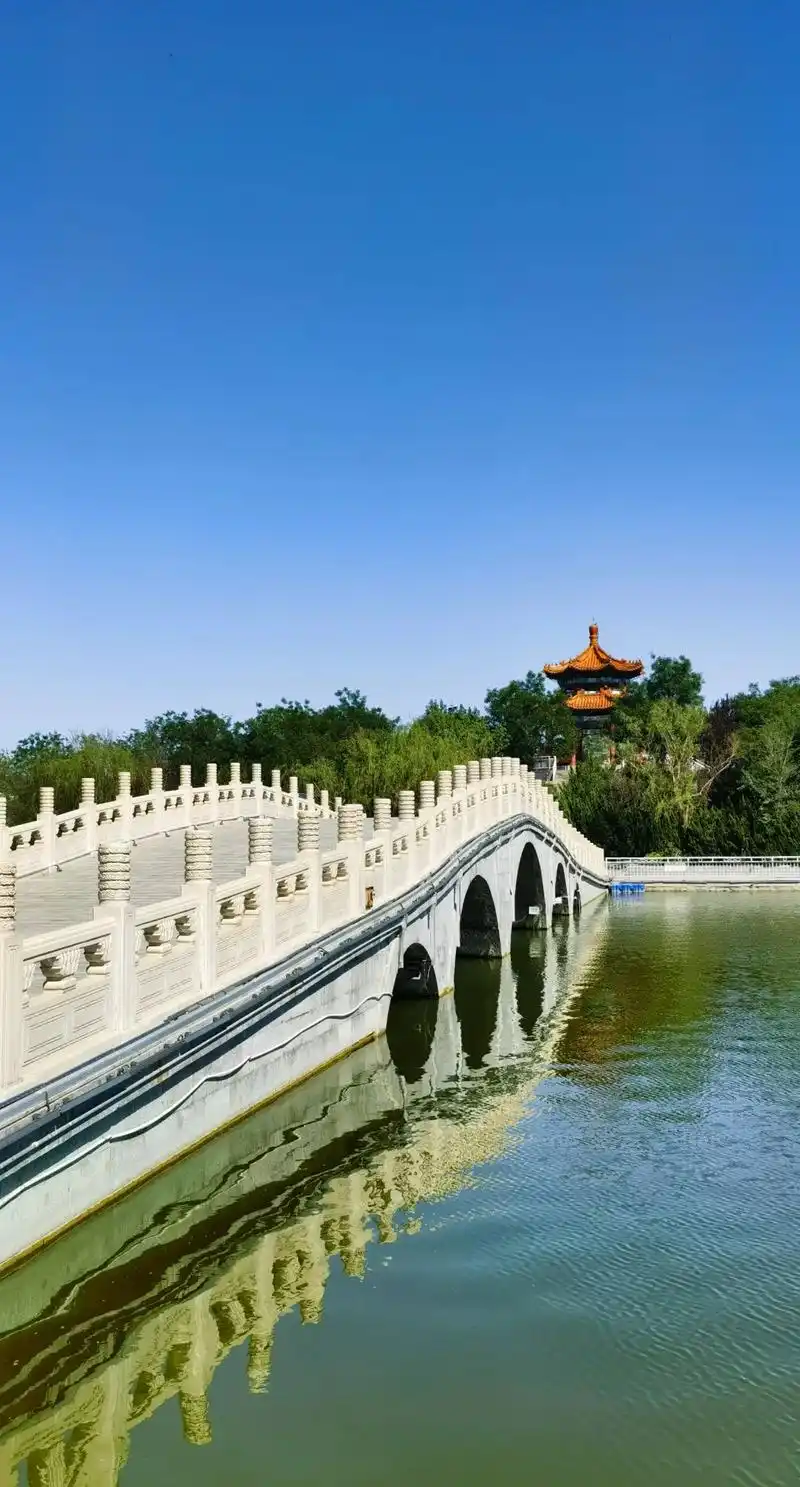 Built in 1973, Nanhu Park emerged during China's post-Cultural Revolution reconstruction, when cities across the country were reclaiming green public spaces for their citizens—comparable to how London's Victorian-era Hyde Park or New York's 19th-century Central Park provided urban lungs for industrial-era metropolises. The park's iconic Nine-Arch Bridge, completed in 1977 and stretching 305 meters across the lake, became an instant city landmark, much as the Pont Neuf signified Paris or the Rialto defined Venice. Today, free admission and metro connectivity keep it firmly in the public realm.
The Nine-Arch Bridge employs a continuous arch design that echoes the classical engineering of European stone bridges, though built with modern reinforced concrete. After dusk, LED illumination transforms it into a luminous ribbon—the reflection through its arches creating the illusion of a full moon floating on the water, a favorite composition for photographers. The bridge anchors a wider ensemble that includes the Zhuang-inspired Memorial Hall, whose sweeping rooflines nod to traditional southern Chinese vernacular styles, and a lakeside fountain plaza with choreographed light shows on weekends and holidays.
Beyond leisure, the park carries deep historical weight through the Li Mingrui and Wei Baqun Memorial Hall, honoring two martyrs of the Left and Right River Revolution (1929–1930)—an uprising often compared in regional significance to other early 20th-century peasant revolts. Free to enter and closed only on Mondays, the hall blends solemn remembrance with regional identity through its Zhuang ethnic architectural motifs. Meanwhile, the Famous Trees Garden showcases over 150 ancient specimens, including bodhi and Buddha-belly trees, surrounded by mist generators that produce rainbows on sunny mornings—a distinctly subtropical experience.
Nanhu's 108-hectare lake anchors an ecosystem where manicured paths meet lush subtropical growth. An 8-kilometer lakeside greenway, shaded by dense broadleaf canopy, invites joggers, cyclists, and leisurely walkers. In summer, lotus ponds and the bonsai garden add botanical layers, while the mist system generates cloud-forest effects reminiscent of Southeast Asian highlands—quite unlike the manicured formality of European parks. The integration of revolutionary commemoration, ancient trees, and recreational facilities within a single landscape reflects the modern Chinese approach to public space.
Reach the park via Metro Line 1, exiting at Nanhu Station Exit B1, which deposits you directly at the lakeside plaza. The optimal visiting window is 7–9 AM for cool mornings or 17:30–19:30, when sunset transitions into the bridge's light show. A quick highlights tour takes 1.5–2 hours; a full lakeside circuit requires 3–4 hours. Don't miss the free water-screen film every Friday from 8:30–9:00 PM, combining lasers, fountains, and music. Summer visitors should pack repellent, sunscreen, and a light layer.
For Western travelers seeking an unscripted slice of contemporary Chinese urban life, Nanhu Park offers rare accessibility: it's free, central, and used daily by locals practicing tai chi, ballroom dancing, and kite-flying. Few European or American parks combine a 9-arch illuminated bridge, a revolutionary memorial, ancient subtropical trees, and a weekly multimedia fountain spectacular in one walkable loop. Whether you're a photographer chasing reflections, a parent needing space to roam, or a curious traveler wanting to see how a Chinese metropolis breathes, Nanhu delivers an authentic, gentle encounter with modern Guangxi.
Built in 1973, Nanhu Park emerged during China's post-Cultural Revolution reconstruction, when cities across the country were reclaiming green public spaces for their citizens—comparable to how London's Victorian-era Hyde Park or New York's 19th-century Central Park provided urban lungs for industrial-era metropolises. The park's iconic Nine-Arch Bridge, completed in 1977 and stretching 305 meters across the lake, became an instant city landmark, much as the Pont Neuf signified Paris or the Rialto defined Venice. Today, free admission and metro connectivity keep it firmly in the public realm.
The Nine-Arch Bridge employs a continuous arch design that echoes the classical engineering of European stone bridges, though built with modern reinforced concrete. After dusk, LED illumination transforms it into a luminous ribbon—the reflection through its arches creating the illusion of a full moon floating on the water, a favorite composition for photographers. The bridge anchors a wider ensemble that includes the Zhuang-inspired Memorial Hall, whose sweeping rooflines nod to traditional southern Chinese vernacular styles, and a lakeside fountain plaza with choreographed light shows on weekends and holidays.
Beyond leisure, the park carries deep historical weight through the Li Mingrui and Wei Baqun Memorial Hall, honoring two martyrs of the Left and Right River Revolution (1929–1930)—an uprising often compared in regional significance to other early 20th-century peasant revolts. Free to enter and closed only on Mondays, the hall blends solemn remembrance with regional identity through its Zhuang ethnic architectural motifs. Meanwhile, the Famous Trees Garden showcases over 150 ancient specimens, including bodhi and Buddha-belly trees, surrounded by mist generators that produce rainbows on sunny mornings—a distinctly subtropical experience.
Nanhu's 108-hectare lake anchors an ecosystem where manicured paths meet lush subtropical growth. An 8-kilometer lakeside greenway, shaded by dense broadleaf canopy, invites joggers, cyclists, and leisurely walkers. In summer, lotus ponds and the bonsai garden add botanical layers, while the mist system generates cloud-forest effects reminiscent of Southeast Asian highlands—quite unlike the manicured formality of European parks. The integration of revolutionary commemoration, ancient trees, and recreational facilities within a single landscape reflects the modern Chinese approach to public space.
Reach the park via Metro Line 1, exiting at Nanhu Station Exit B1, which deposits you directly at the lakeside plaza. The optimal visiting window is 7–9 AM for cool mornings or 17:30–19:30, when sunset transitions into the bridge's light show. A quick highlights tour takes 1.5–2 hours; a full lakeside circuit requires 3–4 hours. Don't miss the free water-screen film every Friday from 8:30–9:00 PM, combining lasers, fountains, and music. Summer visitors should pack repellent, sunscreen, and a light layer.
For Western travelers seeking an unscripted slice of contemporary Chinese urban life, Nanhu Park offers rare accessibility: it's free, central, and used daily by locals practicing tai chi, ballroom dancing, and kite-flying. Few European or American parks combine a 9-arch illuminated bridge, a revolutionary memorial, ancient subtropical trees, and a weekly multimedia fountain spectacular in one walkable loop. Whether you're a photographer chasing reflections, a parent needing space to roam, or a curious traveler wanting to see how a Chinese metropolis breathes, Nanhu delivers an authentic, gentle encounter with modern Guangxi.