Coral Museum
⭐ 3.80
No. 10, Zhongshan Road, Haicheng District, Beihai City, Guangxi Zhuang Autonomous Region, China
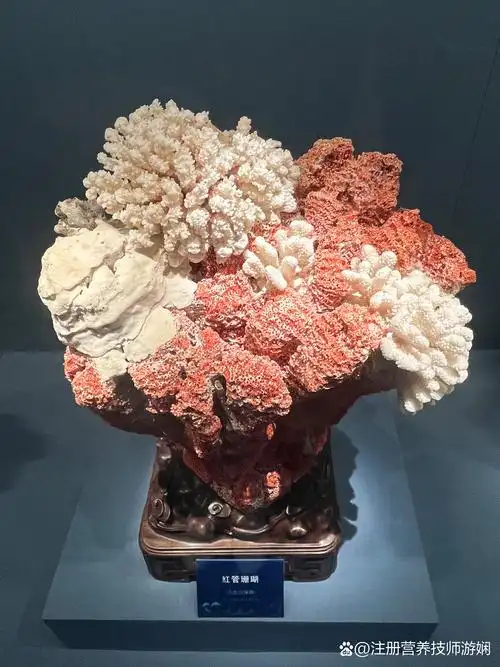 Rising from a legacy institution that merged the former World Shell and Coral Museum with the historic Huanzhu Hall, the Ocean Window opened as part of China's broader push to develop marine science tourism along the Gulf of Tonkin. Much like Monaco's venerable Oceanographic Museum, founded by Prince Albert I in 1910 to foster oceanographic research, this facility serves as both a public aquarium and a national science education base. The connection feels apt: Beihai has been a maritime gateway since antiquity, and the museum honors that heritage through a dedicated Maritime Silk Road cultural zone linking visitors to the trade routes that once carried Chinese silks and porcelain to Mediterranean ports like Venice and Alexandria.
Architecturally, the venue reads as a journey rather than a static collection. Visitors descend through a "Time Tunnel" that traces ecological zones from intertidal shallows down into the deep ocean, echoing the layered storytelling approach used at the Oceanogràfic in Valencia. The undisputed showpiece is the 28-meter ring-shaped coral ecosystem tank—a feat of marine engineering requiring sophisticated life-support technology to sustain living corals in captivity. Few institutions worldwide have mastered this art; the display rivals the living coral exhibits at London's Sea Life centres and Australia's Cairns Aquarium, presenting a dazzling underwater panorama of pulsing anemones, darting reef fish, and countless invertebrates.
Cultural significance runs deeper than marine biology here. Beihai served as one of the ancient starting points of the Maritime Silk Road, and the museum weaves this history into its narrative, connecting modern visitors to a 2,000-year-old tradition of seafaring exchange that shaped civilizations from Southeast Asia to East Africa. The shell collection itself, with over 600 specimens, traces humanity's long fascination with mollusks—from cowrie currencies used across the Indian Ocean trade to the conch shells of Pacific island cultures. Together, these elements transform a simple aquarium visit into a meditation on humanity's intertwined fate with the sea.
Practical planning is straightforward. The museum sits centrally in Yinhai District along South Sichuan Road near Xinshiji Avenue, easily reached by taxi or local bus from central Beihai. Adult admission runs 90 to 110 yuan, covering main exhibits; the 4D cinema and select performances carry surcharges. Plan for 1.5 to 2.5 hours, ideally visiting weekday mornings or after 3 p.m. to avoid school and tour group crowds. One critical note for international travelers: natural coral and wild shell products are strictly prohibited from export under CITES regulations, so purchase only certified cultured items and retain receipts. The venue is air-conditioned, a welcome relief during humid summer months.
For Western travelers, the Ocean Window offers a refreshing counterpoint to the more famous reefs of Southeast Asia or Australia's Great Barrier Reef. It delivers the visual splendor of a tropical coral ecosystem without requiring a boat trip or scuba certification, making it accessible to families, seniors, and anyone with limited mobility. Combined with performances like the shark dance and mermaid show, plus the immersive 4D theater, the museum captures that rare balance of education and entertainment that defines the world's best aquariums—from Osaka's Kaiyukan to California's Monterey Bay.
Rising from a legacy institution that merged the former World Shell and Coral Museum with the historic Huanzhu Hall, the Ocean Window opened as part of China's broader push to develop marine science tourism along the Gulf of Tonkin. Much like Monaco's venerable Oceanographic Museum, founded by Prince Albert I in 1910 to foster oceanographic research, this facility serves as both a public aquarium and a national science education base. The connection feels apt: Beihai has been a maritime gateway since antiquity, and the museum honors that heritage through a dedicated Maritime Silk Road cultural zone linking visitors to the trade routes that once carried Chinese silks and porcelain to Mediterranean ports like Venice and Alexandria.
Architecturally, the venue reads as a journey rather than a static collection. Visitors descend through a "Time Tunnel" that traces ecological zones from intertidal shallows down into the deep ocean, echoing the layered storytelling approach used at the Oceanogràfic in Valencia. The undisputed showpiece is the 28-meter ring-shaped coral ecosystem tank—a feat of marine engineering requiring sophisticated life-support technology to sustain living corals in captivity. Few institutions worldwide have mastered this art; the display rivals the living coral exhibits at London's Sea Life centres and Australia's Cairns Aquarium, presenting a dazzling underwater panorama of pulsing anemones, darting reef fish, and countless invertebrates.
Cultural significance runs deeper than marine biology here. Beihai served as one of the ancient starting points of the Maritime Silk Road, and the museum weaves this history into its narrative, connecting modern visitors to a 2,000-year-old tradition of seafaring exchange that shaped civilizations from Southeast Asia to East Africa. The shell collection itself, with over 600 specimens, traces humanity's long fascination with mollusks—from cowrie currencies used across the Indian Ocean trade to the conch shells of Pacific island cultures. Together, these elements transform a simple aquarium visit into a meditation on humanity's intertwined fate with the sea.
Practical planning is straightforward. The museum sits centrally in Yinhai District along South Sichuan Road near Xinshiji Avenue, easily reached by taxi or local bus from central Beihai. Adult admission runs 90 to 110 yuan, covering main exhibits; the 4D cinema and select performances carry surcharges. Plan for 1.5 to 2.5 hours, ideally visiting weekday mornings or after 3 p.m. to avoid school and tour group crowds. One critical note for international travelers: natural coral and wild shell products are strictly prohibited from export under CITES regulations, so purchase only certified cultured items and retain receipts. The venue is air-conditioned, a welcome relief during humid summer months.
For Western travelers, the Ocean Window offers a refreshing counterpoint to the more famous reefs of Southeast Asia or Australia's Great Barrier Reef. It delivers the visual splendor of a tropical coral ecosystem without requiring a boat trip or scuba certification, making it accessible to families, seniors, and anyone with limited mobility. Combined with performances like the shark dance and mermaid show, plus the immersive 4D theater, the museum captures that rare balance of education and entertainment that defines the world's best aquariums—from Osaka's Kaiyukan to California's Monterey Bay.