Beihai Old Street
⭐ 3.80
Zhongshan Road Subdistrict, Haicheng District, Beihai City, Guangxi Zhuang Autonomous Region, China
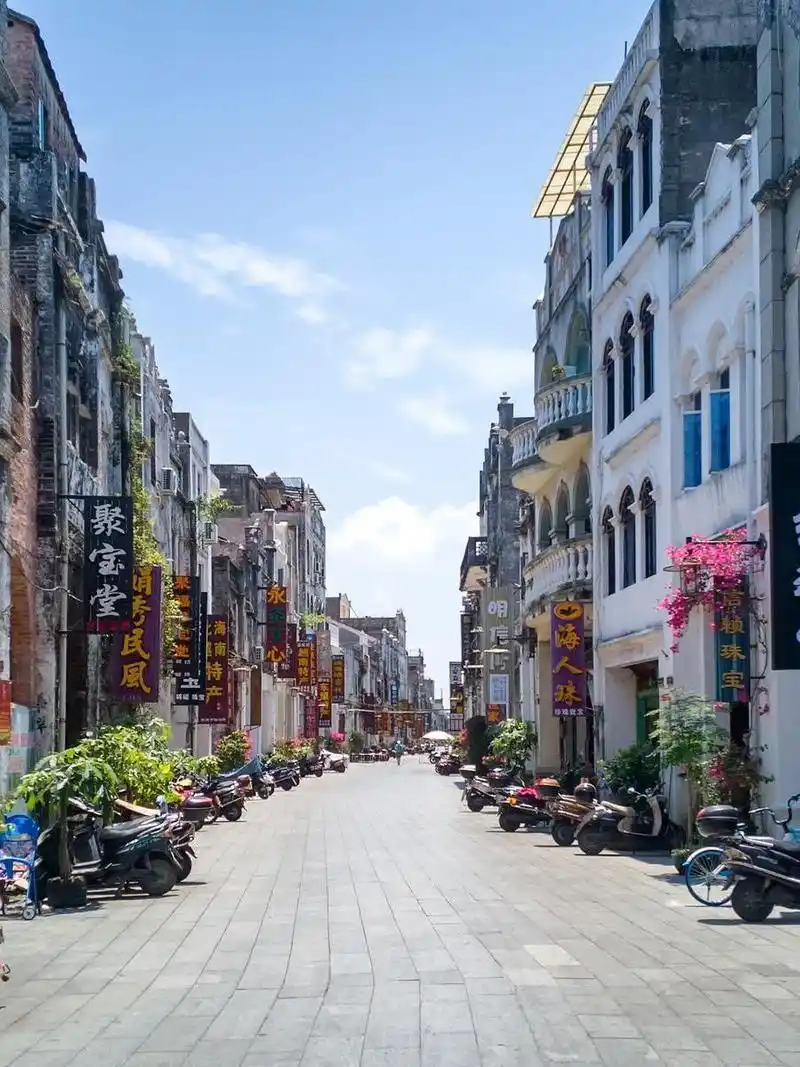 Beihai Old Street, known locally as Zhuhai Road, traces its origins to the late Qing dynasty under the Jiaqing Emperor, when it was first laid out as Shengping Street in 1821. Following the opening of the treaty ports in the late nineteenth century, this stretch of the Gulf of Tonkin coast became South China's leading commercial harbor, once nicknamed the Premier Trading Port of Southern China. European powers established consulates, trading houses, and post offices here, leaving architectural footprints comparable to those found in Shanghai's Bund or Macau's historic center. The district thus offers a tangible window into China's uneasy nineteenth-century engagement with Western commerce.
The street's 1.27-kilometer ribbon of arcade buildings represents the best-preserved fusion of Lingnan and Southeast Asian architectural styles in China. Designers drew on traditional southern Chinese covered walkways, then layered in European Baroque ornament, Greek-style columns, and tropical relief carvings brought by overseas Chinese traders returning from Malaya and Vietnam. Faded plaster walls, traditional signboards in classical characters, latticed windows, and Roman pilasters stand shoulder to shoulder, creating a streetscape that feels part Marseille, part Havana, part Penang. Photographers will find endless compositions in the interplay of peeling paint, shadowed colonnades, and golden late-afternoon light.
Beyond the architecture, the lane functions as an open-air archive of Beihai's maritime past. Visitors can drop into the restored branch office of the Imperial Qing Post, the imposing former Customs House, the Seng Bao Foreign Trading Company, and the humble Double Well landmark, several of which operate as free micro-museums. These modest buildings anchor the street in the wider history of China's southwestern coastal trade routes, comparable to Liverpool's Albert Dock in charting a port's global commercial reach. At the lane's eastern end, the walkway opens directly onto Waisha Fishing Harbor, linking heritage architecture with the working fishing fleet in one seamless route from street to sea.
The street is open daily and free of charge. Visitors should aim to arrive after 5:30 PM, when tropical heat eases, paper lanterns flicker to life, and the colonnades glow in soft amber tones ideal for atmospheric photography. Allow two to three hours for a leisurely stroll, punctuated by snacks at family-run stalls selling freshly fried shrimp cakes, bouncy cuttlefish balls, and Vietnamese-style steamed rice rolls, a legacy of the area's historical ties to Indochina. Wear light, breathable clothing in summer, bring sun protection for midday hours when a few stretches of the arcade offer limited shade, and consider a pale-colored or Republican-era outfit to blend with the vintage setting.
While the main lane has grown noticeably commercialized, with pearl jewelry and dried seafood commanding steep markups, careful shoppers can still find reasonable prices by stepping into smaller side alleys or comparing several vendors. The street rewards visitors who slow down, lingering over a bowl of noodles, photographing carved window frames, or chatting with elderly shopkeepers who recall the district's bustling port-town heyday. Pair the walk with a sunset seafood dinner at Waisha Harbor for a complete Beihai experience that captures both the romance of the treaty-port era and the everyday rhythm of contemporary southern Chinese coastal life.
Beihai Old Street, known locally as Zhuhai Road, traces its origins to the late Qing dynasty under the Jiaqing Emperor, when it was first laid out as Shengping Street in 1821. Following the opening of the treaty ports in the late nineteenth century, this stretch of the Gulf of Tonkin coast became South China's leading commercial harbor, once nicknamed the Premier Trading Port of Southern China. European powers established consulates, trading houses, and post offices here, leaving architectural footprints comparable to those found in Shanghai's Bund or Macau's historic center. The district thus offers a tangible window into China's uneasy nineteenth-century engagement with Western commerce.
The street's 1.27-kilometer ribbon of arcade buildings represents the best-preserved fusion of Lingnan and Southeast Asian architectural styles in China. Designers drew on traditional southern Chinese covered walkways, then layered in European Baroque ornament, Greek-style columns, and tropical relief carvings brought by overseas Chinese traders returning from Malaya and Vietnam. Faded plaster walls, traditional signboards in classical characters, latticed windows, and Roman pilasters stand shoulder to shoulder, creating a streetscape that feels part Marseille, part Havana, part Penang. Photographers will find endless compositions in the interplay of peeling paint, shadowed colonnades, and golden late-afternoon light.
Beyond the architecture, the lane functions as an open-air archive of Beihai's maritime past. Visitors can drop into the restored branch office of the Imperial Qing Post, the imposing former Customs House, the Seng Bao Foreign Trading Company, and the humble Double Well landmark, several of which operate as free micro-museums. These modest buildings anchor the street in the wider history of China's southwestern coastal trade routes, comparable to Liverpool's Albert Dock in charting a port's global commercial reach. At the lane's eastern end, the walkway opens directly onto Waisha Fishing Harbor, linking heritage architecture with the working fishing fleet in one seamless route from street to sea.
The street is open daily and free of charge. Visitors should aim to arrive after 5:30 PM, when tropical heat eases, paper lanterns flicker to life, and the colonnades glow in soft amber tones ideal for atmospheric photography. Allow two to three hours for a leisurely stroll, punctuated by snacks at family-run stalls selling freshly fried shrimp cakes, bouncy cuttlefish balls, and Vietnamese-style steamed rice rolls, a legacy of the area's historical ties to Indochina. Wear light, breathable clothing in summer, bring sun protection for midday hours when a few stretches of the arcade offer limited shade, and consider a pale-colored or Republican-era outfit to blend with the vintage setting.
While the main lane has grown noticeably commercialized, with pearl jewelry and dried seafood commanding steep markups, careful shoppers can still find reasonable prices by stepping into smaller side alleys or comparing several vendors. The street rewards visitors who slow down, lingering over a bowl of noodles, photographing carved window frames, or chatting with elderly shopkeepers who recall the district's bustling port-town heyday. Pair the walk with a sunset seafood dinner at Waisha Harbor for a complete Beihai experience that captures both the romance of the treaty-port era and the everyday rhythm of contemporary southern Chinese coastal life.