Waterwheel Park
⭐ 3.60
No. 4, South Binhe Middle Road, Qilihe District, Lanzhou, Gansu, China
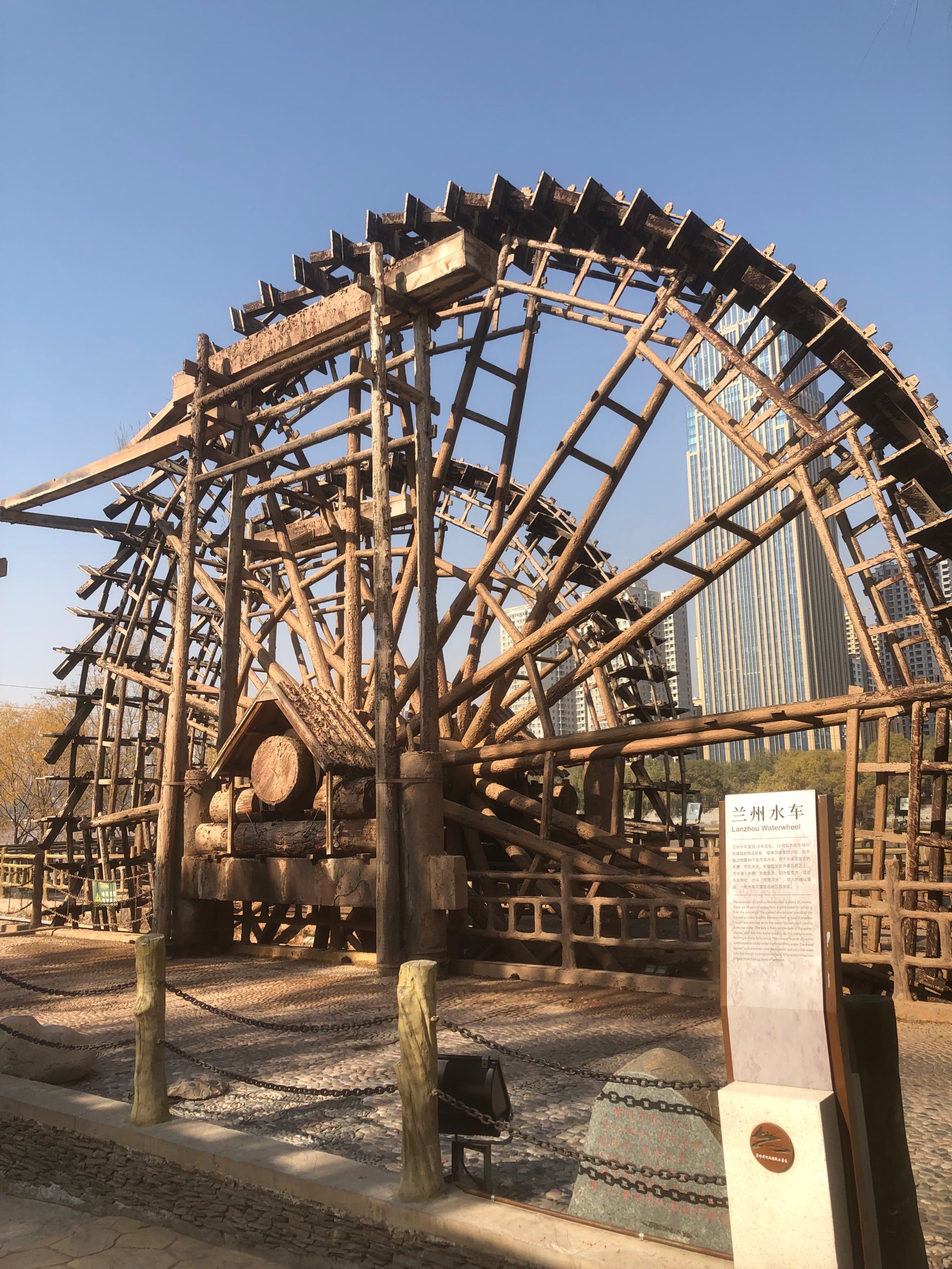 The waterwheel tradition showcased here was revived in 1994 by the Lanzhou Tourism Bureau to honour Duan Xu, a Ming-dynasty scholar who, in the 16th century, adapted southern Chinese wheel designs to the powerful currents of the Yellow River. His oversized wheels allowed farmers to lift river water onto terraced fields, fuelling agriculture in an arid region. Comparable in ambition to the Persian norias of Hama or the noria of Alcázar de San Juan in Spain—giant wheels that harnessed rivers to irrigate parched landscapes—Lanzhou's wheels turned their city into a regional granary and earned it a lasting reputation as the "Waterwheel Capital of China." Understanding this lineage helps visitors appreciate how widely separated civilisations converged on similar solutions to the same problem: coaxing life-giving water from a powerful but unruly river.
The park's two great wheels dominate the site, their timber spokes and buckets plunging into the rushing current with a rhythmic groan. During high-water months, the river's force alone keeps the wheels turning; in the dry season, engineers redirect flow through a small weir to maintain the spectacle. Nearby, a reconstructed watermill demonstrates how grain was traditionally ground, its wooden housings weathered to a soft silver-grey. The ensemble is rustic and unpretentious, evoking the utilitarian beauty of pre-industrial waterworks rather than ornamental gardens—closer in spirit to a working Dutch polder mill than to a manicured European park.
In 2006, the craft of building Lanzhou-style Yellow River waterwheels was inscribed on China's National Intangible Cultural Heritage list, recognising both the engineering knowledge and the community traditions tied to it. The park brings this heritage to life through working demonstrations rather than static displays, allowing visitors to watch the wheels lift buckets of silty water and pour them into elevated channels in real time. A small dock for sheepskin coracles, the lightest traditional craft of the upper Yellow River, adds another living element to the cultural mix and offers rides for a separate fee.
Entry is free, the gates open daily from around 08:00 to 21:00, and a relaxed visit takes between thirty minutes and an hour. Summer is the prime season, when the river runs high and the wheels turn fastest; evenings are especially atmospheric, with soft lighting reflecting off the wet timber. Sunscreen and water are essential at midday, as shade is limited. Combine the park with the adjacent Zhongshan Bridge, a 1909 German-built iron span sometimes called "the First Bridge over the Yellow River," and the nearby Mother of the Yellow River sculpture for a satisfying half-day cultural walk along the riverfront.
Note that this Waterwheel Park is distinct from the larger Waterwheel Expo Park in Lanzhou's Chengguan District, which displays more than a dozen wheels of varied designs across a broader landscape. Time permitting, visiting both offers a richer picture of how a single humble machine shaped life along the upper Yellow River for half a millennium.
The waterwheel tradition showcased here was revived in 1994 by the Lanzhou Tourism Bureau to honour Duan Xu, a Ming-dynasty scholar who, in the 16th century, adapted southern Chinese wheel designs to the powerful currents of the Yellow River. His oversized wheels allowed farmers to lift river water onto terraced fields, fuelling agriculture in an arid region. Comparable in ambition to the Persian norias of Hama or the noria of Alcázar de San Juan in Spain—giant wheels that harnessed rivers to irrigate parched landscapes—Lanzhou's wheels turned their city into a regional granary and earned it a lasting reputation as the "Waterwheel Capital of China." Understanding this lineage helps visitors appreciate how widely separated civilisations converged on similar solutions to the same problem: coaxing life-giving water from a powerful but unruly river.
The park's two great wheels dominate the site, their timber spokes and buckets plunging into the rushing current with a rhythmic groan. During high-water months, the river's force alone keeps the wheels turning; in the dry season, engineers redirect flow through a small weir to maintain the spectacle. Nearby, a reconstructed watermill demonstrates how grain was traditionally ground, its wooden housings weathered to a soft silver-grey. The ensemble is rustic and unpretentious, evoking the utilitarian beauty of pre-industrial waterworks rather than ornamental gardens—closer in spirit to a working Dutch polder mill than to a manicured European park.
In 2006, the craft of building Lanzhou-style Yellow River waterwheels was inscribed on China's National Intangible Cultural Heritage list, recognising both the engineering knowledge and the community traditions tied to it. The park brings this heritage to life through working demonstrations rather than static displays, allowing visitors to watch the wheels lift buckets of silty water and pour them into elevated channels in real time. A small dock for sheepskin coracles, the lightest traditional craft of the upper Yellow River, adds another living element to the cultural mix and offers rides for a separate fee.
Entry is free, the gates open daily from around 08:00 to 21:00, and a relaxed visit takes between thirty minutes and an hour. Summer is the prime season, when the river runs high and the wheels turn fastest; evenings are especially atmospheric, with soft lighting reflecting off the wet timber. Sunscreen and water are essential at midday, as shade is limited. Combine the park with the adjacent Zhongshan Bridge, a 1909 German-built iron span sometimes called "the First Bridge over the Yellow River," and the nearby Mother of the Yellow River sculpture for a satisfying half-day cultural walk along the riverfront.
Note that this Waterwheel Park is distinct from the larger Waterwheel Expo Park in Lanzhou's Chengguan District, which displays more than a dozen wheels of varied designs across a broader landscape. Time permitting, visiting both offers a richer picture of how a single humble machine shaped life along the upper Yellow River for half a millennium.