Yang Family Ancestral Hall
⭐ 3.60
Yang Family Ancestral Hall, Tuojiang Town, Fenghuang County, Xiangxi Tujia and Miao Autonomous Prefecture, Hunan Province, China
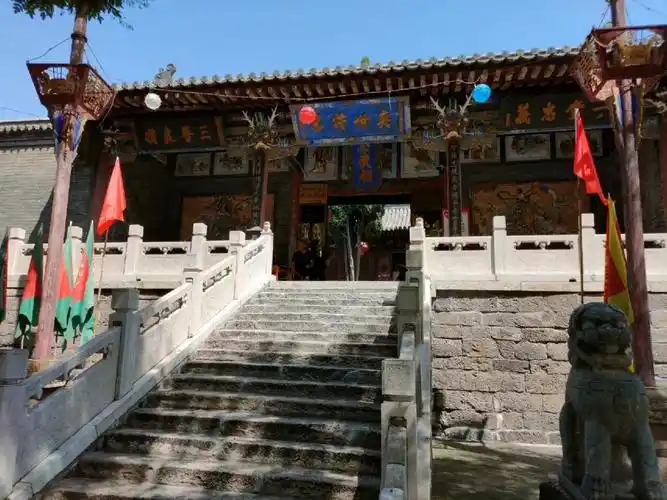 Step into a corner of late imperial China where clan memory, martial heritage, and riverine geography converge. The hall was founded in the sixteenth year of the Daoguang reign (1836) by Yang Fang, a titled general (Tai zi shao bao) stationed at Zhengan Garrison and a proud descendant of the Yang Generals, the heroic dynasty celebrated in northern Chinese folklore from the Song Dynasty through the Qianlong era. Like a Tudor-era great hall in England or an Italian Renaissance palazzo, the complex served as both religious shrine and civic council chamber, where the Yang clan settled disputes, recorded genealogies, and honored ancestors. Today it remains the sole fully intact ancestral hall in Fenghuang and a designated provincial cultural relic since 2011, anchoring the town's claim as a living museum of Hunan frontier culture.
The architecture rewards close inspection. Built entirely of timber across 770 square meters, the two-story siheyuan (courtyard compound) follows the traditional "fortune-bearing waters flow inward" feng shui principle, with its main door set at an angle to channel the auspicious qi of the Tuo River directly into the central hall. Craftsmen lavished attention on every detail: pierced latticework fills the windows, layers of ruyi-shaped dougong brackets stack beneath the eaves, and the lintel bears a carved ox head to ward off evil, flanked by bats—homophones for "good fortune." The free-standing performance stage at the heart of the hall, a single-eave xieshan-roofed pavilion rising 16 meters, is its showpiece, adorned with a vibrant mural of "Mother Yang Instructing Her Sons" and a commanding plaque reading "Might Shaking Three Passes."
The hall pulses with living folk tradition. Whereas European cathedrals once hosted mystery plays and guild halls staged civic dramas, this Miao-region theater continues to stage yangxi and wenchadeng—two of Hunan's treasured intangible folk operas—drawing on themes of love, migration, and resistance that echo across centuries of highland life. The side galleries have been thoughtfully converted into exhibits on Miao wedding customs, traditional weaving, and daily utensils, letting visitors piece together the cultural fabric that surrounds the ancestral rituals. Visiting during an afternoon performance transforms a quiet architectural stop into one of the most atmospheric cultural encounters in western Hunan.
Practical planning is straightforward. The hall sits at the entrance of Shijia Lane on Beibian Street, between the East Gate and North Gate towers, and is included in the "Fenghuang Nine Attractions" combo ticket (around 128 RMB); individual entry is not sold. Doors open roughly 08:30 to 17:30, with slight seasonal variation. A brisk walk-through takes 20 to 30 minutes; allow 45 minutes if you linger over the woodcarvings or stay for a play. Stepping over thresholds or raising voices in the main shrine is considered disrespectful. Many travelers pair the hall with the Shen Congwen Former Residence, the East Gate Tower, and a Tuo River punt ride, an efficient half-day loop that captures the town's literary, military, and waterway heritage.
Why make it a priority? Because few surviving Chinese clan halls retain their original performance stage, decorative program, and clan-council function under one roof, and because Fenghuang itself is already a UNESCO-worthy riverside treasure, comparable in atmosphere to Dubrovnik's walled old town or Venice's quieter back canals. The Yang Ancestral Hall distills that romance into a single, wood-perfumed courtyard where Miao song drifts past carved phoenixes and the Tuo River glimmers just beyond the angled gate—an essential stop for anyone seeking the human story behind China's misty western borderlands.
Step into a corner of late imperial China where clan memory, martial heritage, and riverine geography converge. The hall was founded in the sixteenth year of the Daoguang reign (1836) by Yang Fang, a titled general (Tai zi shao bao) stationed at Zhengan Garrison and a proud descendant of the Yang Generals, the heroic dynasty celebrated in northern Chinese folklore from the Song Dynasty through the Qianlong era. Like a Tudor-era great hall in England or an Italian Renaissance palazzo, the complex served as both religious shrine and civic council chamber, where the Yang clan settled disputes, recorded genealogies, and honored ancestors. Today it remains the sole fully intact ancestral hall in Fenghuang and a designated provincial cultural relic since 2011, anchoring the town's claim as a living museum of Hunan frontier culture.
The architecture rewards close inspection. Built entirely of timber across 770 square meters, the two-story siheyuan (courtyard compound) follows the traditional "fortune-bearing waters flow inward" feng shui principle, with its main door set at an angle to channel the auspicious qi of the Tuo River directly into the central hall. Craftsmen lavished attention on every detail: pierced latticework fills the windows, layers of ruyi-shaped dougong brackets stack beneath the eaves, and the lintel bears a carved ox head to ward off evil, flanked by bats—homophones for "good fortune." The free-standing performance stage at the heart of the hall, a single-eave xieshan-roofed pavilion rising 16 meters, is its showpiece, adorned with a vibrant mural of "Mother Yang Instructing Her Sons" and a commanding plaque reading "Might Shaking Three Passes."
The hall pulses with living folk tradition. Whereas European cathedrals once hosted mystery plays and guild halls staged civic dramas, this Miao-region theater continues to stage yangxi and wenchadeng—two of Hunan's treasured intangible folk operas—drawing on themes of love, migration, and resistance that echo across centuries of highland life. The side galleries have been thoughtfully converted into exhibits on Miao wedding customs, traditional weaving, and daily utensils, letting visitors piece together the cultural fabric that surrounds the ancestral rituals. Visiting during an afternoon performance transforms a quiet architectural stop into one of the most atmospheric cultural encounters in western Hunan.
Practical planning is straightforward. The hall sits at the entrance of Shijia Lane on Beibian Street, between the East Gate and North Gate towers, and is included in the "Fenghuang Nine Attractions" combo ticket (around 128 RMB); individual entry is not sold. Doors open roughly 08:30 to 17:30, with slight seasonal variation. A brisk walk-through takes 20 to 30 minutes; allow 45 minutes if you linger over the woodcarvings or stay for a play. Stepping over thresholds or raising voices in the main shrine is considered disrespectful. Many travelers pair the hall with the Shen Congwen Former Residence, the East Gate Tower, and a Tuo River punt ride, an efficient half-day loop that captures the town's literary, military, and waterway heritage.
Why make it a priority? Because few surviving Chinese clan halls retain their original performance stage, decorative program, and clan-council function under one roof, and because Fenghuang itself is already a UNESCO-worthy riverside treasure, comparable in atmosphere to Dubrovnik's walled old town or Venice's quieter back canals. The Yang Ancestral Hall distills that romance into a single, wood-perfumed courtyard where Miao song drifts past carved phoenixes and the Tuo River glimmers just beyond the angled gate—an essential stop for anyone seeking the human story behind China's misty western borderlands.