Wanming Tower
⭐ 3.60
Wanming Tower, Fenghuang County, Xiangxi Tujia and Miao Autonomous Prefecture, Hunan Province, China
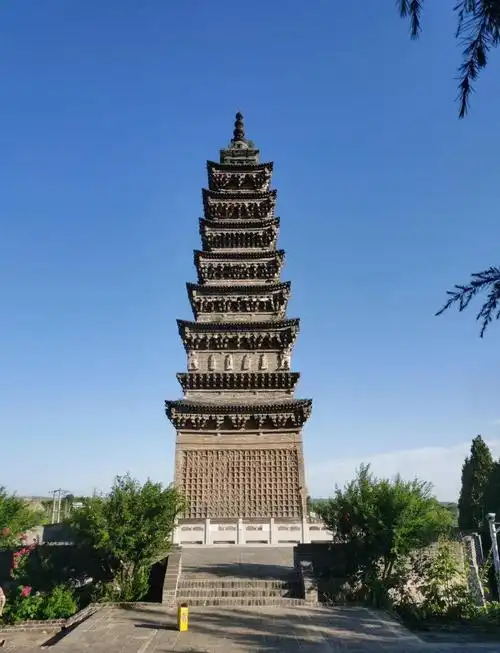 Standing on Fenghuang's Tuojiang River bank since 1988, Wanming Tower has roots stretching back to the early 19th century, during the Qing Dynasty's Jiaqing reign—roughly contemporary with Napoleon's final years in Europe. Its predecessor was a unique chimney-like pagoda used to burn paper bearing written characters, reflecting the ancient Confucian reverence for the written word as something akin to a sacred object. That earlier tower was lost during the chaotic Cultural Revolution of the late 1960s, when countless Chinese heritage sites suffered irreparable damage. In 1985, the renowned painter Huang Yongyu—often called "the conscience of Chinese art"—launched a campaign to rebuild it, and by 1988 the new pagoda rose through the pooled efforts of thousands of townspeople, giving it the name "Tower of Ten Thousand."
Standing roughly 22 meters tall and rising through seven slender, tapering tiers, Wanming Tower is built from brick in a hexagonal plan—an unusual choice, since most Chinese pagodas follow a square or octagonal footprint, much like the square medieval towers of Tuscany or the hexagonal stone pylons that punctuate a few European Gothic cathedrals. Each eave is decorated with colorful painted reliefs of folk motifs, and bronze wind chimes hang from every corner, producing delicate, irregular tinkling whenever the river breeze stirs. The structure follows the traditional Chinese "narrowing-tier" technique, with each story slightly slimmer than the one below, creating a slim silhouette that recalls, in miniature, the soaring proportions of a Venetian campanile.
The tower carries a dual heritage bridging two very different chapters of Chinese history. On one hand, it perpetuates the literati custom of reverently burning written paper—an echo of ancient traditions treating inscribed words as sacred, akin to the reverence medieval monks held for illuminated manuscripts. On the other, it embodies the grassroots optimism of Deng Xiaoping's early reform era, when ordinary citizens pooled private funds to rebuild a community landmark after decades of national upheaval. Together these layers make Wanming Tower a tangible thread connecting the imperial Confucian past to the cooperative spirit of modern China, and a focal point in the cultural memory of the western Hunan highlands, home to the Tujia and Miao ethnic minorities.
The tower stands on the sandy bend known locally as Shawan on Fenghuang's north bank, just a short walk from the central Hong Bridge pedestrian crossing and within easy strolling distance of the town's ticket-free riverside parks. Admission is completely free and there are no opening hours—the tower can be admired at any hour of the day or night. However, visitors should note that the interior contains no staircase to the upper floors; the tower can only be admired from the ground and its perimeter, much like viewing an Italian bell tower from a piazza below. Plan on spending 15 to 30 minutes here, and combine the visit with neighboring sights such as the wooden Wind-and-Rain Bridge and the historic Wanshou Palace.
For travelers without a fixed schedule, the best moment to see Wanming Tower is between 19:00 and 21:30, when floodlit golden uplighting transforms the brickwork into a glowing beacon reflected in the jade-green waters of the Tuojiang—an effect that rivals the illuminated spires lining Bruges's canals at night or the riverside views of Prague's Charles Bridge. Photographers will find the classic wide shots from the opposite riverbank or from a small wooden rowboat drifting beneath the bridges. Early risers, before 7 a.m., can also capture the tower wreathed in misty river fog, an atmosphere reminiscent of the dreamy watercolors of 19th-century European Romantic painters. Either way, the tower is a luminous focal point for understanding Fenghuang's distinctive blend of mountain heritage, minority cultures, and timeless riverside beauty.
Standing on Fenghuang's Tuojiang River bank since 1988, Wanming Tower has roots stretching back to the early 19th century, during the Qing Dynasty's Jiaqing reign—roughly contemporary with Napoleon's final years in Europe. Its predecessor was a unique chimney-like pagoda used to burn paper bearing written characters, reflecting the ancient Confucian reverence for the written word as something akin to a sacred object. That earlier tower was lost during the chaotic Cultural Revolution of the late 1960s, when countless Chinese heritage sites suffered irreparable damage. In 1985, the renowned painter Huang Yongyu—often called "the conscience of Chinese art"—launched a campaign to rebuild it, and by 1988 the new pagoda rose through the pooled efforts of thousands of townspeople, giving it the name "Tower of Ten Thousand."
Standing roughly 22 meters tall and rising through seven slender, tapering tiers, Wanming Tower is built from brick in a hexagonal plan—an unusual choice, since most Chinese pagodas follow a square or octagonal footprint, much like the square medieval towers of Tuscany or the hexagonal stone pylons that punctuate a few European Gothic cathedrals. Each eave is decorated with colorful painted reliefs of folk motifs, and bronze wind chimes hang from every corner, producing delicate, irregular tinkling whenever the river breeze stirs. The structure follows the traditional Chinese "narrowing-tier" technique, with each story slightly slimmer than the one below, creating a slim silhouette that recalls, in miniature, the soaring proportions of a Venetian campanile.
The tower carries a dual heritage bridging two very different chapters of Chinese history. On one hand, it perpetuates the literati custom of reverently burning written paper—an echo of ancient traditions treating inscribed words as sacred, akin to the reverence medieval monks held for illuminated manuscripts. On the other, it embodies the grassroots optimism of Deng Xiaoping's early reform era, when ordinary citizens pooled private funds to rebuild a community landmark after decades of national upheaval. Together these layers make Wanming Tower a tangible thread connecting the imperial Confucian past to the cooperative spirit of modern China, and a focal point in the cultural memory of the western Hunan highlands, home to the Tujia and Miao ethnic minorities.
The tower stands on the sandy bend known locally as Shawan on Fenghuang's north bank, just a short walk from the central Hong Bridge pedestrian crossing and within easy strolling distance of the town's ticket-free riverside parks. Admission is completely free and there are no opening hours—the tower can be admired at any hour of the day or night. However, visitors should note that the interior contains no staircase to the upper floors; the tower can only be admired from the ground and its perimeter, much like viewing an Italian bell tower from a piazza below. Plan on spending 15 to 30 minutes here, and combine the visit with neighboring sights such as the wooden Wind-and-Rain Bridge and the historic Wanshou Palace.
For travelers without a fixed schedule, the best moment to see Wanming Tower is between 19:00 and 21:30, when floodlit golden uplighting transforms the brickwork into a glowing beacon reflected in the jade-green waters of the Tuojiang—an effect that rivals the illuminated spires lining Bruges's canals at night or the riverside views of Prague's Charles Bridge. Photographers will find the classic wide shots from the opposite riverbank or from a small wooden rowboat drifting beneath the bridges. Early risers, before 7 a.m., can also capture the tower wreathed in misty river fog, an atmosphere reminiscent of the dreamy watercolors of 19th-century European Romantic painters. Either way, the tower is a luminous focal point for understanding Fenghuang's distinctive blend of mountain heritage, minority cultures, and timeless riverside beauty.