Rainbow Bridge Scenic Area
⭐ 3.80
Rainbow Bridge Scenic Area, Fenghuang County, Xiangxi Tujia and Miao Autonomous Prefecture, Hunan Province, China
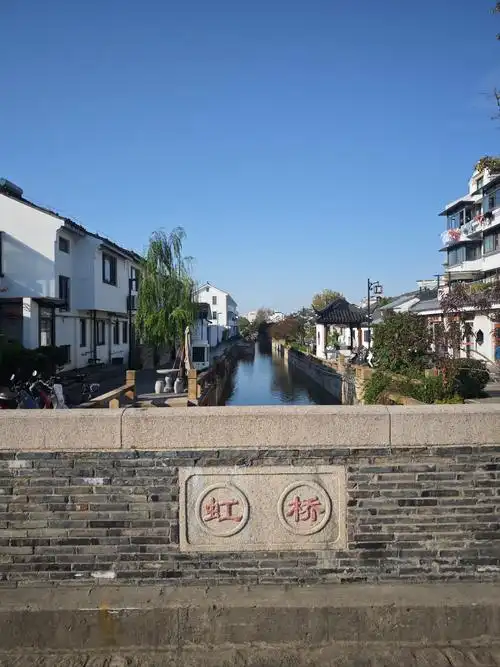 Built in the early Ming era (around 1370), the Hong Bridge—originally named "Recumbent Rainbow Bridge"—has stood for over six centuries as the commercial and cultural lifeline of Fenghuang. Its founding coincided with the consolidation of the Miao and Tujia regions into the imperial frontier system, and the bridge witnessed the town's transformation from a military outpost into a thriving trading hub along Hunan's western frontier. Slightly older than London's old London Bridge's medieval predecessors and predating many of Europe's surviving Renaissance bridges, it remains a remarkable testament to southern Chinese vernacular engineering.
Architecturally, the bridge is a striking example of the southern少数民族 covered bridge tradition, combining Miao stilt-house aesthetics with the Tujia wind-and-rain bridge typology. Spanning roughly 70 to 100 meters with three stone arches, the lower level features a stone-paved passageway lined with shops selling silver jewelry, ginger candy, and Miao embroidery, sheltered by a tiled roof. The upper story is a timber-pillared gallery with upturned eaves and whitewashed walls, evoking the layered charm of a Venetian loggia—though here crafted entirely in camphor wood and hung with red lanterns.
The bridge holds deep cultural resonance as one of the literary settings in Shen Congwen's celebrated 1934 novel "Border Town," a work often compared to Thomas Hardy's Wessex tales for its lyrical evocation of vanishing rural life. Fenghuang itself is often called the "Venice of the East," and the Hong Bridge plays the role of its Rialto—a vantage point where commerce, storytelling, and river life converge. Today it is a provincial-level protected cultural heritage site.
Visually, the bridge serves as the perfect observation deck for Fenghuang's iconic skyline. The upper gallery—accessible with the 128 RMB "Nine Scenic Wonders" combination ticket—delivers a sweeping 360-degree view of the Tuojiang's stilted houses, fishing boats, and the famous stepping stones downstream. The lower arcade is free and open daily from 8:00 AM to 5:30 PM, with the upper gallery typically closing at 5:00 PM. Allow 30 minutes to an hour; combine with a Tuojiang boat ride and the East Gate Tower for a complete half-day circuit.
The best photography conditions occur in the soft golden hour, between 7:00 and 9:00 AM or 5:30 to 7:00 PM, when the river mirrors the lantern-lit façades. Stone slabs can be slippery after rain, so tread carefully, and expect heavy crowds in the evenings when the bridge is illuminated. Whether you climb to the upper gallery or simply wander through the bustling arcade below, the Hong Bridge offers an unmissable glimpse into centuries of ethnic exchange, trade, and frontier poetry—an experience no visitor to this enchanting corner of China should skip.
Built in the early Ming era (around 1370), the Hong Bridge—originally named "Recumbent Rainbow Bridge"—has stood for over six centuries as the commercial and cultural lifeline of Fenghuang. Its founding coincided with the consolidation of the Miao and Tujia regions into the imperial frontier system, and the bridge witnessed the town's transformation from a military outpost into a thriving trading hub along Hunan's western frontier. Slightly older than London's old London Bridge's medieval predecessors and predating many of Europe's surviving Renaissance bridges, it remains a remarkable testament to southern Chinese vernacular engineering.
Architecturally, the bridge is a striking example of the southern少数民族 covered bridge tradition, combining Miao stilt-house aesthetics with the Tujia wind-and-rain bridge typology. Spanning roughly 70 to 100 meters with three stone arches, the lower level features a stone-paved passageway lined with shops selling silver jewelry, ginger candy, and Miao embroidery, sheltered by a tiled roof. The upper story is a timber-pillared gallery with upturned eaves and whitewashed walls, evoking the layered charm of a Venetian loggia—though here crafted entirely in camphor wood and hung with red lanterns.
The bridge holds deep cultural resonance as one of the literary settings in Shen Congwen's celebrated 1934 novel "Border Town," a work often compared to Thomas Hardy's Wessex tales for its lyrical evocation of vanishing rural life. Fenghuang itself is often called the "Venice of the East," and the Hong Bridge plays the role of its Rialto—a vantage point where commerce, storytelling, and river life converge. Today it is a provincial-level protected cultural heritage site.
Visually, the bridge serves as the perfect observation deck for Fenghuang's iconic skyline. The upper gallery—accessible with the 128 RMB "Nine Scenic Wonders" combination ticket—delivers a sweeping 360-degree view of the Tuojiang's stilted houses, fishing boats, and the famous stepping stones downstream. The lower arcade is free and open daily from 8:00 AM to 5:30 PM, with the upper gallery typically closing at 5:00 PM. Allow 30 minutes to an hour; combine with a Tuojiang boat ride and the East Gate Tower for a complete half-day circuit.
The best photography conditions occur in the soft golden hour, between 7:00 and 9:00 AM or 5:30 to 7:00 PM, when the river mirrors the lantern-lit façades. Stone slabs can be slippery after rain, so tread carefully, and expect heavy crowds in the evenings when the bridge is illuminated. Whether you climb to the upper gallery or simply wander through the bustling arcade below, the Hong Bridge offers an unmissable glimpse into centuries of ethnic exchange, trade, and frontier poetry—an experience no visitor to this enchanting corner of China should skip.