Yili General's Mansion
⭐ 3.80
South Section, East Side of Jiefang Road, Yining City, Ili Kazakh Autonomous Prefecture, Xinjiang Uygur Autonomous Region, China
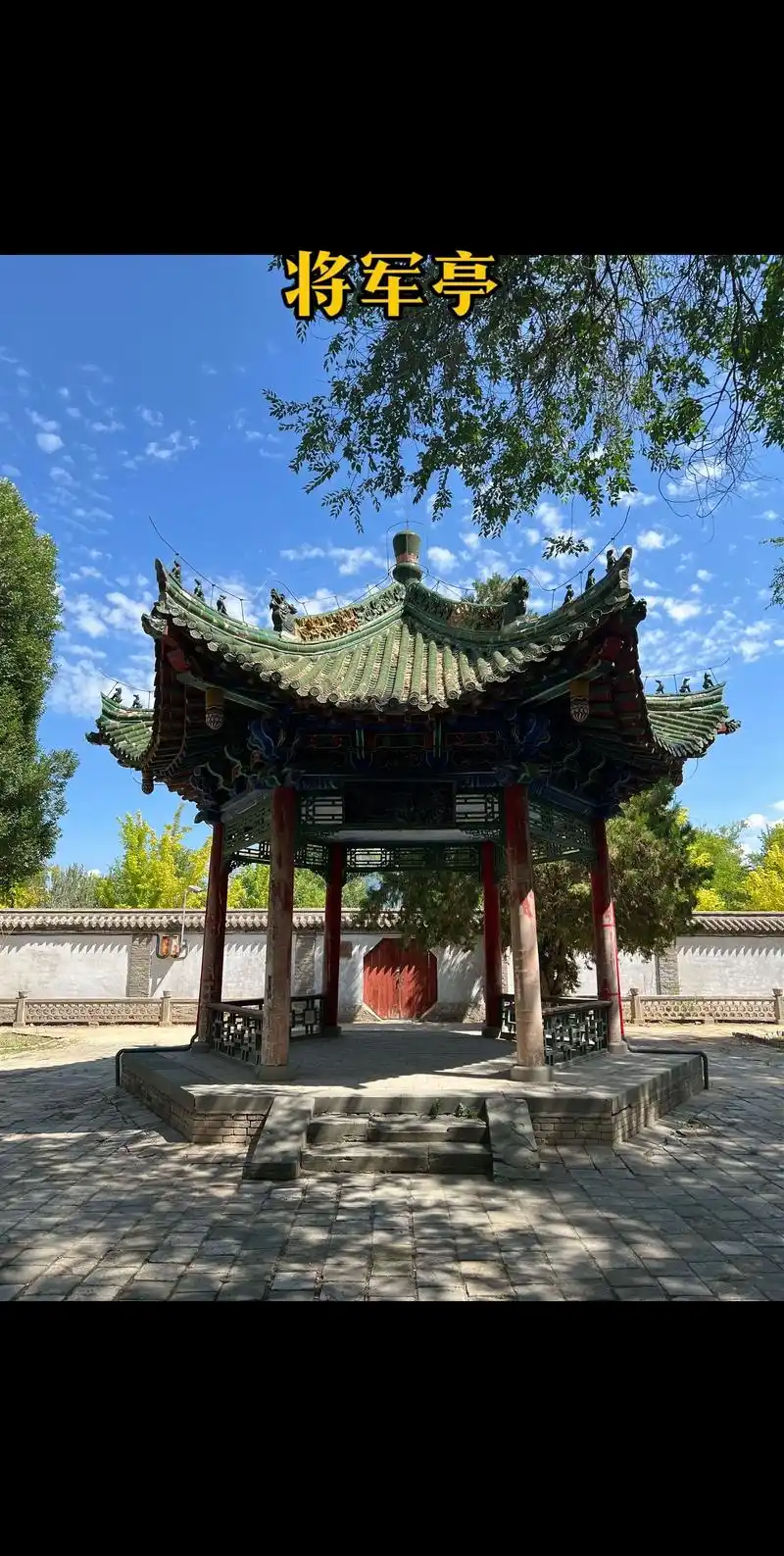 Established in 1762—the very year Catherine the Great ascended the Russian throne—Ili General's Office functioned as the Qing dynasty's supreme military-administrative nerve center for its vast Central Asian frontier, governing territories stretching across both slopes of the Tianshan Mountains. For 150 years, this remote outpost wielded influence comparable to British India's viceregal councils or Russian Steppe administrations. The original fortress-city was razed during the devastating Tongzhi-era Muslim revolts of the 1860s, then rebuilt in 1882 as a symbol of restored imperial authority—remarkably, just as European powers were scrambling for their own Asian colonial footholds.
The compound follows a strict north-south axis typical of imperial Chinese administrative architecture, organized as a series of interconnected siheyuan courtyards—the structural equivalent of a Roman peristyle villa or a Spanish colonial plaza mayor. Visitors pass sequentially through the main gate, ruins of the great hall, the formal audience palace, and the General's Pavilion, flanked by barracks, side chambers, and residential quarters. The 19,900-square-meter complex is anchored by the Bell and Drum Tower, whose upper balcony offers a commanding panorama of Huiyuan's restored ramparts and rooftops—a visual echo of European medieval town belfries.
The site's emotional weight comes largely from its association with Lin Zexu, the imperial commissioner who destroyed British opium stocks at Canton in 1839, triggering the First Opium War and earning him a place alongside moral dissidents like Russia's exiled Decembrists. Banished to Ili in 1842, Lin served here as a humble clerk while documenting the region, lending the otherwise austere government compound a poignant human dimension. Today, four exhibition halls display Qing-era armor, weapons, and official correspondence, while the site serves as both patriotic education center and model institution for ethnic unity—offering rare insight into Qing frontier governance and the long history of multi-ethnic coexistence in Xinjiang.
Admission costs around 45 yuan per person, with opening hours running 9:30 to 20:10 and last entry at 18:30. Allow 1.5 to 2 hours for a meaningful visit. The attraction sits within Huiyuan Old Town in Huocheng County, approximately 40 km west of Yining city, the main urban hub of the Ili Kazakh Autonomous Prefecture. Self-driving with GPS set to "Ili General's Office South Gate" is by far the easiest option; public transit requires a tedious multi-transfer journey from Yining, so hiring a private car or joining a small-group tour is strongly recommended for international visitors.
The optimal route links four sites in a logical half-day circuit: climb the Huiyuan Bell-Drum Tower first to grasp the old town's layout, then explore the General's Office with its exhibition halls, and finish at the adjacent Lin Zexu Memorial Hall. July and August visitors should pack strong sun protection and layer clothing for dramatic day-night temperature swings across the Ili Valley. Since several structures are reconstructions or exposed foundations only, an audio guide or licensed guide is essential for proper context—without one, you'll see handsome walls rather than understand the 150-year imperial story they contain.
Established in 1762—the very year Catherine the Great ascended the Russian throne—Ili General's Office functioned as the Qing dynasty's supreme military-administrative nerve center for its vast Central Asian frontier, governing territories stretching across both slopes of the Tianshan Mountains. For 150 years, this remote outpost wielded influence comparable to British India's viceregal councils or Russian Steppe administrations. The original fortress-city was razed during the devastating Tongzhi-era Muslim revolts of the 1860s, then rebuilt in 1882 as a symbol of restored imperial authority—remarkably, just as European powers were scrambling for their own Asian colonial footholds.
The compound follows a strict north-south axis typical of imperial Chinese administrative architecture, organized as a series of interconnected siheyuan courtyards—the structural equivalent of a Roman peristyle villa or a Spanish colonial plaza mayor. Visitors pass sequentially through the main gate, ruins of the great hall, the formal audience palace, and the General's Pavilion, flanked by barracks, side chambers, and residential quarters. The 19,900-square-meter complex is anchored by the Bell and Drum Tower, whose upper balcony offers a commanding panorama of Huiyuan's restored ramparts and rooftops—a visual echo of European medieval town belfries.
The site's emotional weight comes largely from its association with Lin Zexu, the imperial commissioner who destroyed British opium stocks at Canton in 1839, triggering the First Opium War and earning him a place alongside moral dissidents like Russia's exiled Decembrists. Banished to Ili in 1842, Lin served here as a humble clerk while documenting the region, lending the otherwise austere government compound a poignant human dimension. Today, four exhibition halls display Qing-era armor, weapons, and official correspondence, while the site serves as both patriotic education center and model institution for ethnic unity—offering rare insight into Qing frontier governance and the long history of multi-ethnic coexistence in Xinjiang.
Admission costs around 45 yuan per person, with opening hours running 9:30 to 20:10 and last entry at 18:30. Allow 1.5 to 2 hours for a meaningful visit. The attraction sits within Huiyuan Old Town in Huocheng County, approximately 40 km west of Yining city, the main urban hub of the Ili Kazakh Autonomous Prefecture. Self-driving with GPS set to "Ili General's Office South Gate" is by far the easiest option; public transit requires a tedious multi-transfer journey from Yining, so hiring a private car or joining a small-group tour is strongly recommended for international visitors.
The optimal route links four sites in a logical half-day circuit: climb the Huiyuan Bell-Drum Tower first to grasp the old town's layout, then explore the General's Office with its exhibition halls, and finish at the adjacent Lin Zexu Memorial Hall. July and August visitors should pack strong sun protection and layer clothing for dramatic day-night temperature swings across the Ili Valley. Since several structures are reconstructions or exposed foundations only, an audio guide or licensed guide is essential for proper context—without one, you'll see handsome walls rather than understand the 150-year imperial story they contain.