Bayinbuluke Grassland
⭐ 4.60
Hejing County, Bayingolin Mongol Autonomous Prefecture, Xinjiang, China
 The Torghut Mongols' 1771 eastward migration from the Volga River region to the Tianshan ranks among history's most extraordinary overland journeys—on par with the Magyars' centuries-long trek into the Carpathian Basin or the Long Walk of the Navajo. Today, their descendants preserve this heritage through the Naadam Festival, held each June on the lunar calendar, featuring horse racing, wrestling, and archery—sports echoing Mongolia's medieval warrior traditions and Scotland's Highland Games. The Barun Kure Lama Temple stands as a tangible relic of this 6,000-mile journey, bridging Eurasian steppe cultures across three centuries.
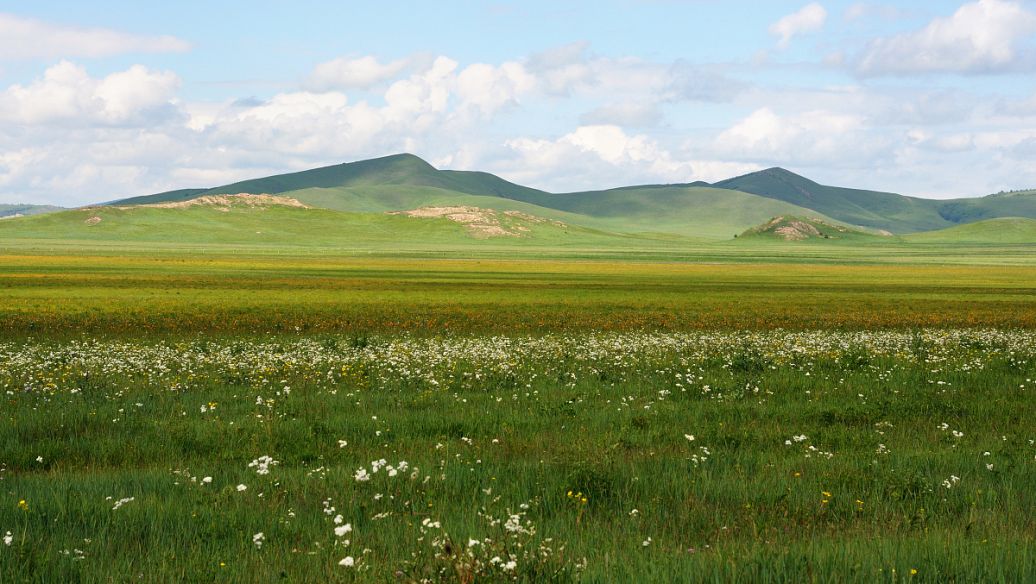
The grassland sprawls across roughly 23,800 square kilometers of high-altitude basin, encircled by snow-capped Tianshan peaks. Think of it as China's answer to the Carpathian meadows or the high plateaus of Kyrgyzstan—vast, windswept, and startlingly green in summer. The Kaidu River, fed by thirteen named springs and twenty tributaries, traces the most dramatic meanders in Central Asia. From June through August, wildflowers carpet the pastures in a rolling palette of yellow, purple, and white, fulfilling the ancient Mongol verse: "sky-blue above, boundless below."
At sunset, when the air is still and the sky is cloudless, the river's serpentine bends reflect the descending sun in a phenomenon locals call the "Nine Suns in a Row"—a sight so surreal it feels almost mythological. Imagine a scene from a fantasy novel where mirrors multiply a single image into many. Photographers from across Asia flock here to capture it, but timing is everything: the illusion requires windless conditions and perfect horizon clarity. Arrive an hour before sunset, claim a spot early, and keep fingers crossed.
Just as the Camargue in southern France shelters flamingos, Bayinbuluke's Swan Lake hosts Asia's largest gathering of whooper swans, arriving each March from Central Asian wintering grounds. By June, hundreds of pairs are nesting, and visitors can watch fluffy grey cygnets gliding behind their parents through the wetlands. The reserve also protects red-billed gulls and over a hundred other bird species, making it one of the world's premier high-altitude birding destinations. Dawn and dusk offer the softest light and the most active wildlife.
The grassland lies within Hejing County in the Bayingolin Mongol Autonomous Prefecture, reached via the legendary Duku Highway—a single-lane route often compared to Norway's Trollstigen for its sheer switchbacks. Entry requires a combined ticket and mandatory shuttle bus, currently 127 to 140 yuan, as private vehicles cannot enter the core zone. The round-trip drive takes about three hours. July and August are prime months, when grass peaks green and swans are nesting. Pack for extremes: daytime may hit 25°C in a T-shirt, while nighttime plunges near freezing, demanding a down jacket or hardshell.
Few places on Earth blend untouched wilderness with such layered cultural depth. Bayinbuluke rewards travelers who make the long journey into the Tianshan with a rare combination of geological spectacle, ecological wonder, and living nomadic heritage. Whether you're a birder chasing the perfect swan photograph, a photographer awaiting that elusive ninth sun, or a curious traveler drawn to the romance of the Mongolian steppe, this grassland delivers an experience that feels increasingly precious in our overdeveloped world. Far from the crowds of more famous Chinese destinations, it offers the solitude and scale that have drawn wanderers to high places since the time of Genghis Khan.
The Torghut Mongols' 1771 eastward migration from the Volga River region to the Tianshan ranks among history's most extraordinary overland journeys—on par with the Magyars' centuries-long trek into the Carpathian Basin or the Long Walk of the Navajo. Today, their descendants preserve this heritage through the Naadam Festival, held each June on the lunar calendar, featuring horse racing, wrestling, and archery—sports echoing Mongolia's medieval warrior traditions and Scotland's Highland Games. The Barun Kure Lama Temple stands as a tangible relic of this 6,000-mile journey, bridging Eurasian steppe cultures across three centuries.
The grassland sprawls across roughly 23,800 square kilometers of high-altitude basin, encircled by snow-capped Tianshan peaks. Think of it as China's answer to the Carpathian meadows or the high plateaus of Kyrgyzstan—vast, windswept, and startlingly green in summer. The Kaidu River, fed by thirteen named springs and twenty tributaries, traces the most dramatic meanders in Central Asia. From June through August, wildflowers carpet the pastures in a rolling palette of yellow, purple, and white, fulfilling the ancient Mongol verse: "sky-blue above, boundless below."
At sunset, when the air is still and the sky is cloudless, the river's serpentine bends reflect the descending sun in a phenomenon locals call the "Nine Suns in a Row"—a sight so surreal it feels almost mythological. Imagine a scene from a fantasy novel where mirrors multiply a single image into many. Photographers from across Asia flock here to capture it, but timing is everything: the illusion requires windless conditions and perfect horizon clarity. Arrive an hour before sunset, claim a spot early, and keep fingers crossed.
Just as the Camargue in southern France shelters flamingos, Bayinbuluke's Swan Lake hosts Asia's largest gathering of whooper swans, arriving each March from Central Asian wintering grounds. By June, hundreds of pairs are nesting, and visitors can watch fluffy grey cygnets gliding behind their parents through the wetlands. The reserve also protects red-billed gulls and over a hundred other bird species, making it one of the world's premier high-altitude birding destinations. Dawn and dusk offer the softest light and the most active wildlife.
The grassland lies within Hejing County in the Bayingolin Mongol Autonomous Prefecture, reached via the legendary Duku Highway—a single-lane route often compared to Norway's Trollstigen for its sheer switchbacks. Entry requires a combined ticket and mandatory shuttle bus, currently 127 to 140 yuan, as private vehicles cannot enter the core zone. The round-trip drive takes about three hours. July and August are prime months, when grass peaks green and swans are nesting. Pack for extremes: daytime may hit 25°C in a T-shirt, while nighttime plunges near freezing, demanding a down jacket or hardshell.
Few places on Earth blend untouched wilderness with such layered cultural depth. Bayinbuluke rewards travelers who make the long journey into the Tianshan with a rare combination of geological spectacle, ecological wonder, and living nomadic heritage. Whether you're a birder chasing the perfect swan photograph, a photographer awaiting that elusive ninth sun, or a curious traveler drawn to the romance of the Mongolian steppe, this grassland delivers an experience that feels increasingly precious in our overdeveloped world. Far from the crowds of more famous Chinese destinations, it offers the solitude and scale that have drawn wanderers to high places since the time of Genghis Khan.