Genghis Khan Palace
⭐ 4.20
Genghis Khan Palace, Huocheng County, Ili Kazakh Autonomous Prefecture, Xinjiang Uyghur Autonomous Region, China
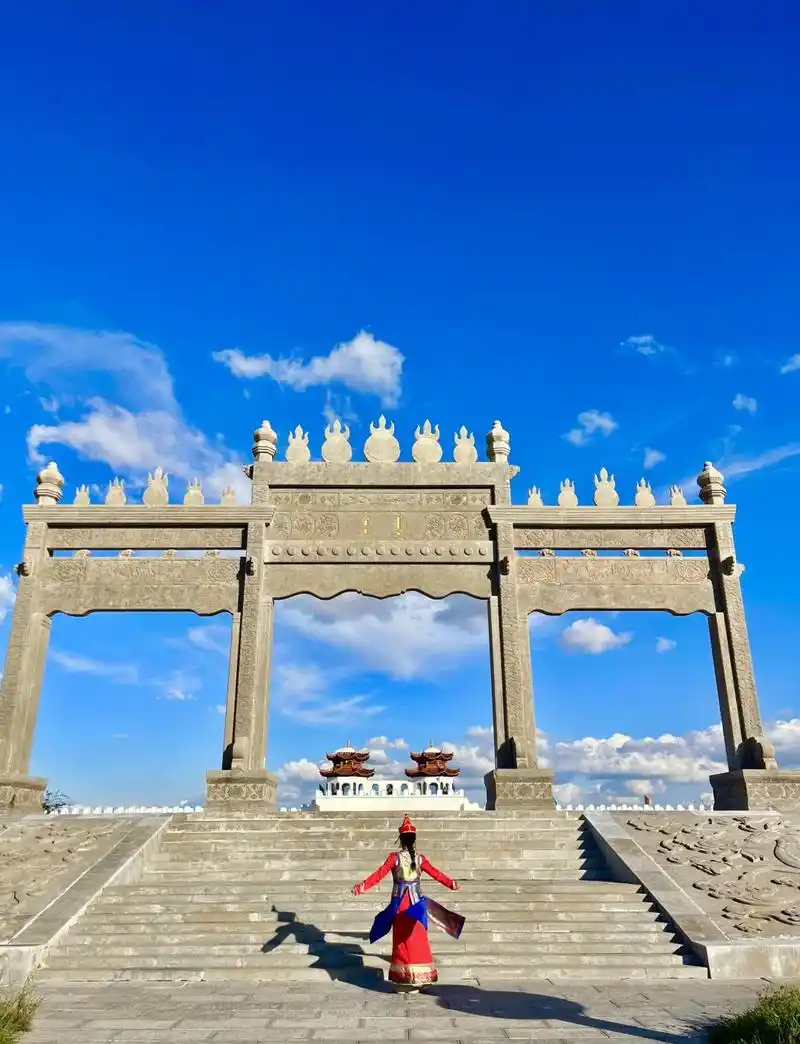 Fengning's Genghis Khan Palace dramatizes one of history's most astonishing stories: the rise of the Mongol Empire in the late 12th and early 13th centuries. Within a single generation, a confederation of steppe tribes under Temujin—Genghis Khan—conquered the largest contiguous land empire the world has ever known, dwarfing Rome in territorial reach. Visitors learn how mounted nomads reshaped Eurasia, from the Danube to the Sea of Japan. In 1222 the Great Khan actually crossed the Tianshan in today's Xinjiang and met the Daoist sage Qiu Chuji in Afghanistan's Hindu Kush—a historical fact that sometimes fuels online confusion about a Yili "palace" that never existed.
Spanning roughly 200 hectares of rolling grassland, the complex follows the layout of a Yuan-dynasty royal camp. The centerpiece is the Council Golden Tent, crowned with a gilded roof and framed by carved beams that echo both Mongolian ger geometry and the timber halls of Han Chinese palaces. Around it sprawl more than a hundred scenic spots: a Heaven-Worshipping Platform, Lion Ridge, and clusters of Genghis Khan-era statues. The visual contrast—gleaming gold against endless green—evokes the great khans' mobile courts, vast tent cities that once trailed their rulers across continents.
The park functions as a living museum of Mongol-Yuan heritage, using themed statues, artifact displays, and multimedia to chart the journey from tribal confederation to imperial power. Staff and performers demonstrate traditional skills that survive on the modern Mongolian steppe: the long song (urtyn duu), the throat singing called khoomei—comparable to Tuvan and Inuit vocal traditions—and the bowed horsehead fiddle, a wooden instrument carved with a stallion's head at its tip. Year-round programs include Naadam-style wrestling and archery contests, ovoo stone-cairn worship, and bonfire evenings where travelers can join locals in circle dances.
The site sits in Datán Town, Fengning, a roughly four-hour drive from Beijing via the Jing-Cheng Expressway to National Route 111. Best months are June through October, when daytime temperatures hover around 18 °C and the grass is at its greenest; pack a windproof layer and high-SPF sunscreen even in midsummer, since the plateau swings sharply between sun and chill. Expect to pay 80–120 RMB at the gate, with opening hours typically 8 a.m. to 6 p.m. Local inns serve hearty Mongolian fare—hand-pulled mutton, salty milk tea, and whole roasted lamb—that rivals what travelers find on the actual Mongolian steppe.
For visitors based in Beijing or passing through northern China, the palace is the closest accessible window onto a nomadic imperial world often overshadowed by the Great Wall and the Forbidden City in guidebooks. Pair it with the neighboring North Beijing First Grassland and Qiansongba National Forest Park for a one- or two-day loop that mixes horseback riding, archery, and rides in traditional Lele carts with some of China's most photogenic highland pastures. Western travelers should book through a licensed Chinese travel agency that handles entry and ticketing—a small step that opens up one of China's most cinematic steppe experiences, far from the well-trodden tourist routes.
Fengning's Genghis Khan Palace dramatizes one of history's most astonishing stories: the rise of the Mongol Empire in the late 12th and early 13th centuries. Within a single generation, a confederation of steppe tribes under Temujin—Genghis Khan—conquered the largest contiguous land empire the world has ever known, dwarfing Rome in territorial reach. Visitors learn how mounted nomads reshaped Eurasia, from the Danube to the Sea of Japan. In 1222 the Great Khan actually crossed the Tianshan in today's Xinjiang and met the Daoist sage Qiu Chuji in Afghanistan's Hindu Kush—a historical fact that sometimes fuels online confusion about a Yili "palace" that never existed.
Spanning roughly 200 hectares of rolling grassland, the complex follows the layout of a Yuan-dynasty royal camp. The centerpiece is the Council Golden Tent, crowned with a gilded roof and framed by carved beams that echo both Mongolian ger geometry and the timber halls of Han Chinese palaces. Around it sprawl more than a hundred scenic spots: a Heaven-Worshipping Platform, Lion Ridge, and clusters of Genghis Khan-era statues. The visual contrast—gleaming gold against endless green—evokes the great khans' mobile courts, vast tent cities that once trailed their rulers across continents.
The park functions as a living museum of Mongol-Yuan heritage, using themed statues, artifact displays, and multimedia to chart the journey from tribal confederation to imperial power. Staff and performers demonstrate traditional skills that survive on the modern Mongolian steppe: the long song (urtyn duu), the throat singing called khoomei—comparable to Tuvan and Inuit vocal traditions—and the bowed horsehead fiddle, a wooden instrument carved with a stallion's head at its tip. Year-round programs include Naadam-style wrestling and archery contests, ovoo stone-cairn worship, and bonfire evenings where travelers can join locals in circle dances.
The site sits in Datán Town, Fengning, a roughly four-hour drive from Beijing via the Jing-Cheng Expressway to National Route 111. Best months are June through October, when daytime temperatures hover around 18 °C and the grass is at its greenest; pack a windproof layer and high-SPF sunscreen even in midsummer, since the plateau swings sharply between sun and chill. Expect to pay 80–120 RMB at the gate, with opening hours typically 8 a.m. to 6 p.m. Local inns serve hearty Mongolian fare—hand-pulled mutton, salty milk tea, and whole roasted lamb—that rivals what travelers find on the actual Mongolian steppe.
For visitors based in Beijing or passing through northern China, the palace is the closest accessible window onto a nomadic imperial world often overshadowed by the Great Wall and the Forbidden City in guidebooks. Pair it with the neighboring North Beijing First Grassland and Qiansongba National Forest Park for a one- or two-day loop that mixes horseback riding, archery, and rides in traditional Lele carts with some of China's most photogenic highland pastures. Western travelers should book through a licensed Chinese travel agency that handles entry and ticketing—a small step that opens up one of China's most cinematic steppe experiences, far from the well-trodden tourist routes.