Red Star Forest Railway
⭐ 4.60
Hongxing District, Yichun City, Heilongjiang Province, China
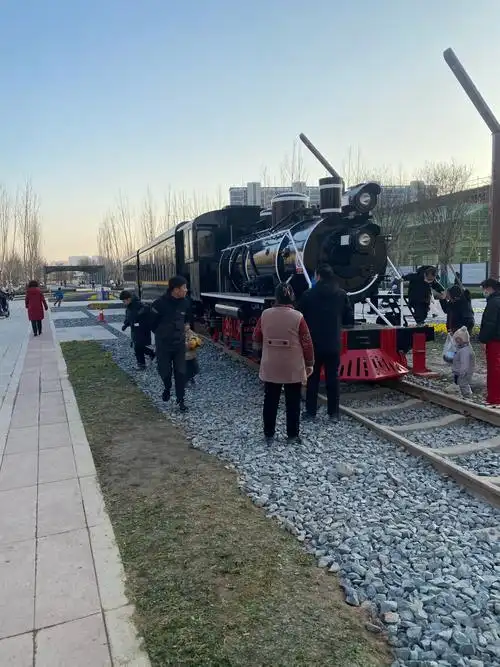 The Red Star Forest Railway traces its origins to the large-scale logging boom that swept through the Lesser Khingan Range during the mid-twentieth century, an era when China's northeast forests supplied timber for the young People's Republic. Much like the narrow-gauge mining railways of the Welsh slate industry or the heritage lines of Colorado's San Juan Mountains, this railway was engineered to haul precious resources from remote terrain. When commercial logging ended in 2014 under a sweeping conservation program, the line was reborn as a living museum of industrial heritage—a Chinese cousin to Britain's celebrated Bluebell Railway and Germany's Black Forest heritage routes.
The railway's rolling stock has been carefully preserved as a time capsule of mid-century forestry operations. The steam locomotives—belching white smoke and echoing their whistles through the valley—are identical to those that once hauled logs to the sawmills. Wooden passenger carriages retain their original patina, while station buildings and maintenance sheds continue to display the rugged utilitarian architecture typical of state forest enterprises. For European visitors accustomed to the polished heritage stations of the Bodensee or the Severn Valley Railway, the rough-edged authenticity here provides a far more visceral encounter with industrial working life.
Beyond its machinery, the railway stands as a memorial to the millions of forestry workers—known locally as "lin ye ren"—who shaped life in these mountains for generations. The line preserves intangible heritage as well: the rhythm of daily operations, the distinctive vocabulary of timber transport, and the communal culture of remote forest settlements. Visitors stepping off the train find themselves immersed in scenes that might have unfolded half a century ago, offering a poignant contrast to China's ultramodern cities. It is, in essence, an open-air museum where history is heard, smelled, and felt rather than merely observed behind glass.
The route winds for several kilometers through a magnificent mosaic of Korean pine, white birch, and larch—an ecosystem often compared to the boreal forests of Scandinavia or Canada's British Columbia. As the train chugs gently along, passengers are treated to an ever-changing panorama: rolling hills draped in emerald canopy, sun-dappled clearings, and mirror-still streams. Each season paints a different masterpiece—lush summer greens, fiery autumn golds, and the hushed whites of long winters. Photographers will find that virtually every window frame is composed for them, making the journey as rewarding for the camera as for the soul.
The railway operates seasonally from May through October, with fixed daily departures that require advance booking—usually three days ahead—through official channels. The site lies roughly one hour by car from central Yichun along well-maintained forest roads, allowing visitors to combine their trip with scenic driving through the Lesser Khingan foothills. From the railway station, downtown Yichun is only fifteen minutes away: follow the forest railway road to Zhicai Street, turn left onto Yulin Road, then right onto Xinxing Middle Avenue, continuing straight onto Xinxing West Avenue. Pairing the railway with other forest-park attractions in the area is highly recommended.
For Western travelers who have already ticked off China's headline attractions—the Great Wall, the Forbidden City, the Terracotta Warriors—the Red Star Forest Railway offers something rarer: an intimate encounter with a side of the country rarely glimpsed in guidebooks. It is a journey that slows the pace, inviting reflection amid whispering pines and the soulful cry of a steam whistle bouncing off forested hills. Few experiences combine industrial nostalgia, natural beauty, and cultural discovery so seamlessly. Those seeking authenticity over spectacle will leave with stories—and photographs—they will be telling for years.
The Red Star Forest Railway traces its origins to the large-scale logging boom that swept through the Lesser Khingan Range during the mid-twentieth century, an era when China's northeast forests supplied timber for the young People's Republic. Much like the narrow-gauge mining railways of the Welsh slate industry or the heritage lines of Colorado's San Juan Mountains, this railway was engineered to haul precious resources from remote terrain. When commercial logging ended in 2014 under a sweeping conservation program, the line was reborn as a living museum of industrial heritage—a Chinese cousin to Britain's celebrated Bluebell Railway and Germany's Black Forest heritage routes.
The railway's rolling stock has been carefully preserved as a time capsule of mid-century forestry operations. The steam locomotives—belching white smoke and echoing their whistles through the valley—are identical to those that once hauled logs to the sawmills. Wooden passenger carriages retain their original patina, while station buildings and maintenance sheds continue to display the rugged utilitarian architecture typical of state forest enterprises. For European visitors accustomed to the polished heritage stations of the Bodensee or the Severn Valley Railway, the rough-edged authenticity here provides a far more visceral encounter with industrial working life.
Beyond its machinery, the railway stands as a memorial to the millions of forestry workers—known locally as "lin ye ren"—who shaped life in these mountains for generations. The line preserves intangible heritage as well: the rhythm of daily operations, the distinctive vocabulary of timber transport, and the communal culture of remote forest settlements. Visitors stepping off the train find themselves immersed in scenes that might have unfolded half a century ago, offering a poignant contrast to China's ultramodern cities. It is, in essence, an open-air museum where history is heard, smelled, and felt rather than merely observed behind glass.
The route winds for several kilometers through a magnificent mosaic of Korean pine, white birch, and larch—an ecosystem often compared to the boreal forests of Scandinavia or Canada's British Columbia. As the train chugs gently along, passengers are treated to an ever-changing panorama: rolling hills draped in emerald canopy, sun-dappled clearings, and mirror-still streams. Each season paints a different masterpiece—lush summer greens, fiery autumn golds, and the hushed whites of long winters. Photographers will find that virtually every window frame is composed for them, making the journey as rewarding for the camera as for the soul.
The railway operates seasonally from May through October, with fixed daily departures that require advance booking—usually three days ahead—through official channels. The site lies roughly one hour by car from central Yichun along well-maintained forest roads, allowing visitors to combine their trip with scenic driving through the Lesser Khingan foothills. From the railway station, downtown Yichun is only fifteen minutes away: follow the forest railway road to Zhicai Street, turn left onto Yulin Road, then right onto Xinxing Middle Avenue, continuing straight onto Xinxing West Avenue. Pairing the railway with other forest-park attractions in the area is highly recommended.
For Western travelers who have already ticked off China's headline attractions—the Great Wall, the Forbidden City, the Terracotta Warriors—the Red Star Forest Railway offers something rarer: an intimate encounter with a side of the country rarely glimpsed in guidebooks. It is a journey that slows the pace, inviting reflection amid whispering pines and the soulful cry of a steam whistle bouncing off forested hills. Few experiences combine industrial nostalgia, natural beauty, and cultural discovery so seamlessly. Those seeking authenticity over spectacle will leave with stories—and photographs—they will be telling for years.