Baishan Heishui Eco-Tourism Area
⭐ 4.90
Baishan Heishui Eco-Tourism Area, Wumahe District, Yichun City, Heilongjiang Province, China
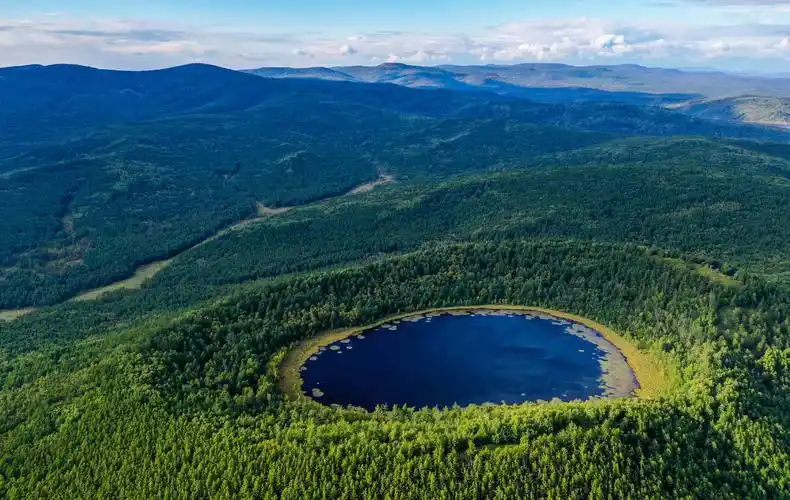 The region's story begins in the 1950s, when the first generation of Chinese forestry workers felled these pines to fuel national reconstruction—much as the Carpathian forests were harvested across the Iron Curtain. After the Natural Forest Protection Project launched in 1998, the axe gave way to the telescope. Wuying National Forest Park, one of the earliest state-run forests opened to visitors, embodies this transformation from lumber camp to living museum, making it one of the most compelling case studies in modern conservation anywhere in the temperate world.
At the heart of the experience lies the Wuying Korean Pine Forest Sea, home to Asia's largest and oldest stand of Korean pine (Pinus koraiensis)—a species often called the "King of Northeast Forests" and a living fossil of the Tertiary era. Many trees have stood for three to five centuries, with some patriarchs exceeding a thousand years, easily rivalling the venerable yews of Borrowdale in England's Lake District or the ancient spruces of Sweden's Fulufjället. Concentrations of negative oxygen ions regularly surpass 50,000 per cubic centimeter, earning the forest its reputation as a "natural oxygen bar."
The signature journey is a ride aboard a vintage-style steam train that threads through the towering pines, stopping at landmarks like the King Pine and Pine Song Pavilion. Comparable in charm to Switzerland's Rhaetian Railway or Wales's Ffestiniog line, the route offers seasonal drama: spring blossoms, summer shade, autumn's fiery palette, and a hushed winter snowscape. Nearby, the Tangwang River Forest Sea showcases granite tors and sculpted boulders reminiscent of England's Dartmoor or the sandstone landscapes of Bohemian Switzerland, while Jiayin Maolan Valley delivers cascading waterfalls and the sweeping vistas of the Heilongjiang (Amur) River, which forms the natural border with Russia.
Culturally, the Korean pine holds deep significance: its seeds sustain wild boar, Siberian chipmunks, black bears, and the endangered Siberian musk deer, weaving the forest into a living tapestry of biodiversity. The Wuying Korean Pine Science Museum and a network of research trails invite visitors to engage with topics from seed conservation to habitat restoration—offering an accessible, on-the-ground lesson in temperate forest ecology that would satisfy any naturalist schooled in European woodland management.
Reaching the zone is straightforward: Wuying District sits roughly 80 kilometers from Yichun Lindu Airport, accessible via the new Harbin–Yichun high-speed rail or by rental car. Tickets for the forest train and park entry are best booked through the official WeChat account, Ctrip, or Meituan; most vendors accept Visa and Mastercard. The park generally operates 8:00 a.m. to 5:00 p.m., with train schedules posted daily—avoiding Chinese national holidays is strongly recommended for a quieter experience.
For international travelers, plan two to three days: ride the forest train on day one and sleep in a wooden cabin beneath the starlit canopy; on day two, explore the granite labyrinths of Tangwang River; on day three, venture to Maolan Valley for its gorge waterfalls and Amur River scenery. Pack layered clothing—summers average a refreshing 22°C but nights turn cool—and bring insect repellent. Bring a light shell jacket; the forest's midday breezes carry the scent of resin and damp moss, a perfume as timeless as the trees themselves.
The region's story begins in the 1950s, when the first generation of Chinese forestry workers felled these pines to fuel national reconstruction—much as the Carpathian forests were harvested across the Iron Curtain. After the Natural Forest Protection Project launched in 1998, the axe gave way to the telescope. Wuying National Forest Park, one of the earliest state-run forests opened to visitors, embodies this transformation from lumber camp to living museum, making it one of the most compelling case studies in modern conservation anywhere in the temperate world.
At the heart of the experience lies the Wuying Korean Pine Forest Sea, home to Asia's largest and oldest stand of Korean pine (Pinus koraiensis)—a species often called the "King of Northeast Forests" and a living fossil of the Tertiary era. Many trees have stood for three to five centuries, with some patriarchs exceeding a thousand years, easily rivalling the venerable yews of Borrowdale in England's Lake District or the ancient spruces of Sweden's Fulufjället. Concentrations of negative oxygen ions regularly surpass 50,000 per cubic centimeter, earning the forest its reputation as a "natural oxygen bar."
The signature journey is a ride aboard a vintage-style steam train that threads through the towering pines, stopping at landmarks like the King Pine and Pine Song Pavilion. Comparable in charm to Switzerland's Rhaetian Railway or Wales's Ffestiniog line, the route offers seasonal drama: spring blossoms, summer shade, autumn's fiery palette, and a hushed winter snowscape. Nearby, the Tangwang River Forest Sea showcases granite tors and sculpted boulders reminiscent of England's Dartmoor or the sandstone landscapes of Bohemian Switzerland, while Jiayin Maolan Valley delivers cascading waterfalls and the sweeping vistas of the Heilongjiang (Amur) River, which forms the natural border with Russia.
Culturally, the Korean pine holds deep significance: its seeds sustain wild boar, Siberian chipmunks, black bears, and the endangered Siberian musk deer, weaving the forest into a living tapestry of biodiversity. The Wuying Korean Pine Science Museum and a network of research trails invite visitors to engage with topics from seed conservation to habitat restoration—offering an accessible, on-the-ground lesson in temperate forest ecology that would satisfy any naturalist schooled in European woodland management.
Reaching the zone is straightforward: Wuying District sits roughly 80 kilometers from Yichun Lindu Airport, accessible via the new Harbin–Yichun high-speed rail or by rental car. Tickets for the forest train and park entry are best booked through the official WeChat account, Ctrip, or Meituan; most vendors accept Visa and Mastercard. The park generally operates 8:00 a.m. to 5:00 p.m., with train schedules posted daily—avoiding Chinese national holidays is strongly recommended for a quieter experience.
For international travelers, plan two to three days: ride the forest train on day one and sleep in a wooden cabin beneath the starlit canopy; on day two, explore the granite labyrinths of Tangwang River; on day three, venture to Maolan Valley for its gorge waterfalls and Amur River scenery. Pack layered clothing—summers average a refreshing 22°C but nights turn cool—and bring insect repellent. Bring a light shell jacket; the forest's midday breezes carry the scent of resin and damp moss, a perfume as timeless as the trees themselves.