Tangwang River National Forest Park
⭐ 4.60
Tangwang River National Forest Park, Yichun City, Heilongjiang Province, China
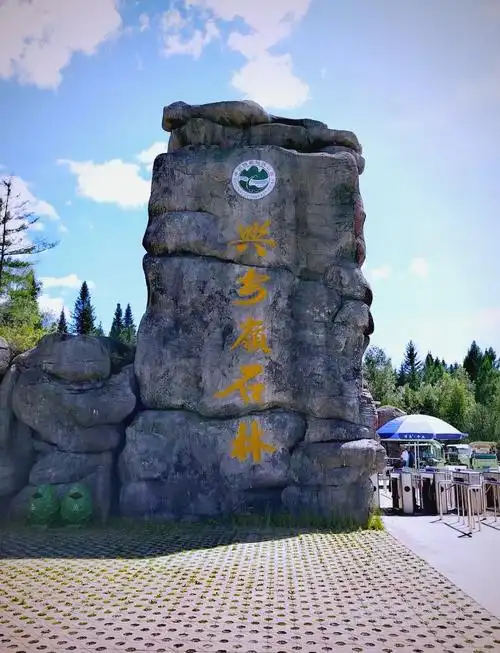 The park's granite formations date back roughly 200 million years to the Indosinian orogeny, a tectonic upheaval contemporaneous with the earliest dinosaurs and the breakup of the supercontinent Pangaea. Over eons, these plutonic rocks were thrust upward, fractured, and weathered into the fantastical shapes that visitors see today. Comparable in drama to the granite tors of England's Dartmoor or the boulder-strewn highlands of Scotland's Cairngorms, Tangwanghe's stone forest carries a distinctly Asian character, with spires sculpted in coarse granite rather than volcanic tuff like Turkey's Cappadocia. The simultaneous preservation of ancient Korean pines, some exceeding 200 years, creates a living diorama of deep-time natural history.
The signature attraction is Yixiantian, or "One-Line Sky," a narrow granite crevice so slim that visitors must turn sideways to pass through—reminiscent of the knife-edge fissures found in Spain's La Pedriza or New Hampshire's Flume Gorge. Nearby, anthropomorphic boulders named Zhenhai Jiangjun ("Guardian General") and Doujin Shi ("Boulder of Dueling Gold") reward imagination with shapes resembling military figures and mythical beasts. These formations rise from a forest floor draped in moss, lichen, and pine needles, with boardwalks threading between stone and tree in a manner that recalls Japan's temple gardens, though on a wilder, more primeval scale.
Korean red pine forests once stretched across northeastern Asia, but logging and development have reduced these ecosystems to scattered fragments. Tangwanghe preserves one of the most intact examples, where red pines, spruces, and birches share the canopy with granite outcrops—a symbiosis that conservationists prize as a model of natural heritage protection. The region's indigenous Manchu and Hezhen communities have long harvested pine nuts and ginseng here, traditions that quietly persist. Park designation as China's first national park pilot in 2015 signaled Beijing's growing commitment to ecosystem-based tourism, paralleling trends in Yellowstone, Kruger, and the New Zealand national parks system.
The park lies approximately 100 kilometers east of Yichun city center, reachable by rental car via the Heha Expressway and Provincial Road S204 in roughly 90 minutes. Train travelers can reach Yichun Station and then arrange local bus or taxi connections, though pre-booking a driver through your hotel is recommended. Within the park, a sightseeing shuttle (round-trip fare around 25 yuan) ferries visitors between the entrance and the core scenic zone, sparing energy for the 5–7 kilometer walking loop. The full circuit typically requires half a day, though keen hikers may linger until closing.
Entry fees run 70–90 yuan during peak season (roughly June through October), with discounts for children and seniors. Summer operating hours generally run 7:30 a.m. to 5:00 p.m., with final entry at 4:30 p.m. Bring at least two liters of water per person and energy snacks—refreshment stalls inside the park are sparse. English signage is limited, so downloading an offline translation app or hiring a local guide (arrangeable through Yichun hotels for around 300–500 yuan per day) dramatically enriches the experience. Mobile phone reception can be patchy in forested valleys; offline maps are essential.
Tangwanghe rewards travelers seeking solitude, clean air, and dramatic geology without the crowds of more famous Chinese parks like Zhangjiajie or Huangshan. The combination of cool summer temperatures, pristine air quality, and gentle hiking terrain makes it especially appealing for families, photographers, and wellness-focused visitors—compare the restorative experience to a long weekend in Austria's Salzkammergut or Finland's Koli National Park. Stay strictly on marked boardwalks: climbing the stones damages fragile lichen communities, and smoking is strictly prohibited due to extreme wildfire risk. Carry out all litter and follow the "leave no trace" ethic that sustains such protected spaces worldwide.
The park's granite formations date back roughly 200 million years to the Indosinian orogeny, a tectonic upheaval contemporaneous with the earliest dinosaurs and the breakup of the supercontinent Pangaea. Over eons, these plutonic rocks were thrust upward, fractured, and weathered into the fantastical shapes that visitors see today. Comparable in drama to the granite tors of England's Dartmoor or the boulder-strewn highlands of Scotland's Cairngorms, Tangwanghe's stone forest carries a distinctly Asian character, with spires sculpted in coarse granite rather than volcanic tuff like Turkey's Cappadocia. The simultaneous preservation of ancient Korean pines, some exceeding 200 years, creates a living diorama of deep-time natural history.
The signature attraction is Yixiantian, or "One-Line Sky," a narrow granite crevice so slim that visitors must turn sideways to pass through—reminiscent of the knife-edge fissures found in Spain's La Pedriza or New Hampshire's Flume Gorge. Nearby, anthropomorphic boulders named Zhenhai Jiangjun ("Guardian General") and Doujin Shi ("Boulder of Dueling Gold") reward imagination with shapes resembling military figures and mythical beasts. These formations rise from a forest floor draped in moss, lichen, and pine needles, with boardwalks threading between stone and tree in a manner that recalls Japan's temple gardens, though on a wilder, more primeval scale.
Korean red pine forests once stretched across northeastern Asia, but logging and development have reduced these ecosystems to scattered fragments. Tangwanghe preserves one of the most intact examples, where red pines, spruces, and birches share the canopy with granite outcrops—a symbiosis that conservationists prize as a model of natural heritage protection. The region's indigenous Manchu and Hezhen communities have long harvested pine nuts and ginseng here, traditions that quietly persist. Park designation as China's first national park pilot in 2015 signaled Beijing's growing commitment to ecosystem-based tourism, paralleling trends in Yellowstone, Kruger, and the New Zealand national parks system.
The park lies approximately 100 kilometers east of Yichun city center, reachable by rental car via the Heha Expressway and Provincial Road S204 in roughly 90 minutes. Train travelers can reach Yichun Station and then arrange local bus or taxi connections, though pre-booking a driver through your hotel is recommended. Within the park, a sightseeing shuttle (round-trip fare around 25 yuan) ferries visitors between the entrance and the core scenic zone, sparing energy for the 5–7 kilometer walking loop. The full circuit typically requires half a day, though keen hikers may linger until closing.
Entry fees run 70–90 yuan during peak season (roughly June through October), with discounts for children and seniors. Summer operating hours generally run 7:30 a.m. to 5:00 p.m., with final entry at 4:30 p.m. Bring at least two liters of water per person and energy snacks—refreshment stalls inside the park are sparse. English signage is limited, so downloading an offline translation app or hiring a local guide (arrangeable through Yichun hotels for around 300–500 yuan per day) dramatically enriches the experience. Mobile phone reception can be patchy in forested valleys; offline maps are essential.
Tangwanghe rewards travelers seeking solitude, clean air, and dramatic geology without the crowds of more famous Chinese parks like Zhangjiajie or Huangshan. The combination of cool summer temperatures, pristine air quality, and gentle hiking terrain makes it especially appealing for families, photographers, and wellness-focused visitors—compare the restorative experience to a long weekend in Austria's Salzkammergut or Finland's Koli National Park. Stay strictly on marked boardwalks: climbing the stones damages fragile lichen communities, and smoking is strictly prohibited due to extreme wildfire risk. Carry out all litter and follow the "leave no trace" ethic that sustains such protected spaces worldwide.