Wuying Primitive Forest
⭐ 4.20
Wuying Primitive Forest, Yichun City, Heilongjiang Province, China
 **Historical and Ecological Significance**: Established as the Fenglin Korean Pine Genetic Reserve in the mid-twentieth century to safeguard the genetic legacy of Asia's most iconic conifer, Wuying was elevated to UNESCO World Biosphere Reserve status in 1997, the only such site worldwide dedicated primarily to virgin red pine ecology. Its ecological importance rivals that of Europe's ancient woodlands like Białowieża Forest on the Poland-Belarus border, where primeval oaks and European bison survive as living museums. Here, towering specimens over a thousand years old stand as silent witnesses to a thousand years of temperate forest evolution.
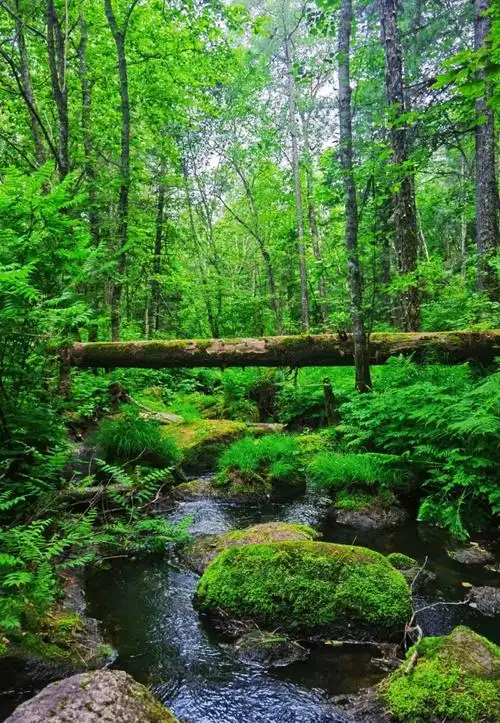
**Forest Landscape and Natural Wonders**: The park's signature Korean red pines soar to heights rivaling California's coastal redwoods, their massive trunks creating a cathedral-like canopy that filters the sunlight into golden shafts. A dense carpet of mosses and ferns covers the forest floor, while the air itself carries therapeutic concentrations of negative oxygen ions, often called "forest vitamins." Visitors walk elevated boardwalks that protect the fragile understory, immersed in the same kind of primordial silence that once blanketed Scandinavia or the Carpathians before modern logging transformed much of Europe's woodlands.
**Core Attractions**: At the heart of the park lies Tianci Lake, a serene body of water encircled by a three-kilometer boardwalk where morning mist transforms the still surface into a mirror reflecting ancient pines and drifting clouds. Climbing the Guantao Observation Tower rewards visitors with a sweeping 360-degree panorama of an unbroken sea of green stretching to the horizon, a view comparable to gazing across the canopy walkways of Germany's Black Forest from a high vantage point. The vintage "Shaoqi" forest train, a charming relic of timber-era operations, chugs through the woods offering a nostalgic perspective on China's forestry heritage.
**Seasonal Experiences and Climate**: Summers are delightfully cool with average temperatures around 20°C, making July and August the prime season for hiking and "forest bathing." Autumn paints the hillsides in fiery reds and golds as maples and birches intermingle with the evergreens, while winter cloaks the pines in heavy snow, transforming the landscape into something resembling Lapland's taiga. Spring awakens the forest with tender new growth and the calls of returning migratory birds. Photographers particularly favor early August mornings, when ethereal fog weaves between the colossal trunks in luminous veils.
**Practical Visitor Information**: Rated a National AAAA Tourist Attraction, the park welcomes visitors daily from 08:00 to 16:30, with last entry at 16:30. Admission is approximately 60 yuan for adults, with a separate sightseeing bus fee of around 18 yuan; seniors over 65, military personnel, and children enjoy free or discounted entry. Allow three to five hours for a satisfying visit, following the recommended circuit: forest train to Songxiang Bridge, then to Guantao Tower, finishing at Tianci Lake. Wear sturdy non-slip hiking shoes, bring a light jacket, and pack mosquito repellent; smoking and open fires are strictly prohibited to protect this irreplaceable ecosystem.
**Recommended Extensions and Tips**: Combine your visit with the neighboring Tangwang River Forest Park or overnight stays in Yichun city to fully appreciate the region's lesser-known treasures. The park lies about 70 kilometers from Yichun's railway station, accessible by tourist shuttle or private transfer. Bring binoculars for spotting Siberian chipmunks and the occasional roe deer. Most importantly, slow your pace; in an era when Europe's primeval forests survive only in fragmented pockets, Wuying offers a rare chance to stand among giants that have witnessed the rise and fall of dynasties.
**Historical and Ecological Significance**: Established as the Fenglin Korean Pine Genetic Reserve in the mid-twentieth century to safeguard the genetic legacy of Asia's most iconic conifer, Wuying was elevated to UNESCO World Biosphere Reserve status in 1997, the only such site worldwide dedicated primarily to virgin red pine ecology. Its ecological importance rivals that of Europe's ancient woodlands like Białowieża Forest on the Poland-Belarus border, where primeval oaks and European bison survive as living museums. Here, towering specimens over a thousand years old stand as silent witnesses to a thousand years of temperate forest evolution.
**Forest Landscape and Natural Wonders**: The park's signature Korean red pines soar to heights rivaling California's coastal redwoods, their massive trunks creating a cathedral-like canopy that filters the sunlight into golden shafts. A dense carpet of mosses and ferns covers the forest floor, while the air itself carries therapeutic concentrations of negative oxygen ions, often called "forest vitamins." Visitors walk elevated boardwalks that protect the fragile understory, immersed in the same kind of primordial silence that once blanketed Scandinavia or the Carpathians before modern logging transformed much of Europe's woodlands.
**Core Attractions**: At the heart of the park lies Tianci Lake, a serene body of water encircled by a three-kilometer boardwalk where morning mist transforms the still surface into a mirror reflecting ancient pines and drifting clouds. Climbing the Guantao Observation Tower rewards visitors with a sweeping 360-degree panorama of an unbroken sea of green stretching to the horizon, a view comparable to gazing across the canopy walkways of Germany's Black Forest from a high vantage point. The vintage "Shaoqi" forest train, a charming relic of timber-era operations, chugs through the woods offering a nostalgic perspective on China's forestry heritage.
**Seasonal Experiences and Climate**: Summers are delightfully cool with average temperatures around 20°C, making July and August the prime season for hiking and "forest bathing." Autumn paints the hillsides in fiery reds and golds as maples and birches intermingle with the evergreens, while winter cloaks the pines in heavy snow, transforming the landscape into something resembling Lapland's taiga. Spring awakens the forest with tender new growth and the calls of returning migratory birds. Photographers particularly favor early August mornings, when ethereal fog weaves between the colossal trunks in luminous veils.
**Practical Visitor Information**: Rated a National AAAA Tourist Attraction, the park welcomes visitors daily from 08:00 to 16:30, with last entry at 16:30. Admission is approximately 60 yuan for adults, with a separate sightseeing bus fee of around 18 yuan; seniors over 65, military personnel, and children enjoy free or discounted entry. Allow three to five hours for a satisfying visit, following the recommended circuit: forest train to Songxiang Bridge, then to Guantao Tower, finishing at Tianci Lake. Wear sturdy non-slip hiking shoes, bring a light jacket, and pack mosquito repellent; smoking and open fires are strictly prohibited to protect this irreplaceable ecosystem.
**Recommended Extensions and Tips**: Combine your visit with the neighboring Tangwang River Forest Park or overnight stays in Yichun city to fully appreciate the region's lesser-known treasures. The park lies about 70 kilometers from Yichun's railway station, accessible by tourist shuttle or private transfer. Bring binoculars for spotting Siberian chipmunks and the occasional roe deer. Most importantly, slow your pace; in an era when Europe's primeval forests survive only in fragmented pockets, Wuying offers a rare chance to stand among giants that have witnessed the rise and fall of dynasties.