Huangyangjie Sentry Post
⭐ 3.80
Huangyangjie Sentry Post, Ciping Town, Jinggangshan City, Jiangxi Province, China
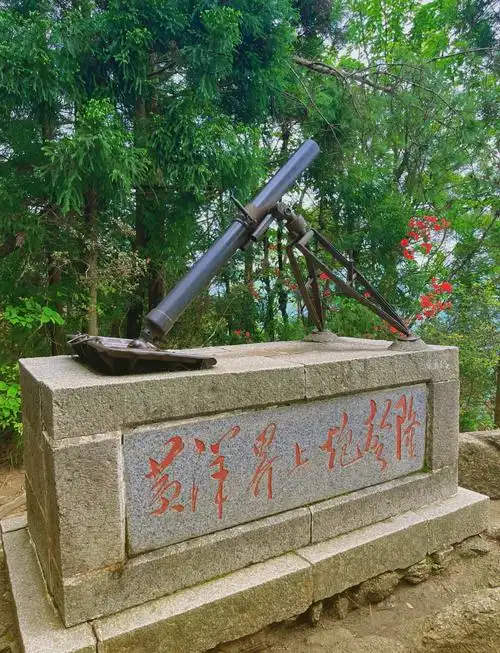 **Historical Context:** The Battle of Huangyangjie on August 30, 1928, represents one of the most lopsided victories in 20th-century military history. Roughly 300 Red Army defenders, armed with limited supplies, held off a four-regiment Nationalist force of nearly 4,000 soldiers by exploiting narrow mountain approaches—reminiscent of the strategic defensive brilliance seen at the Alpine passes during the Napoleonic Wars or Thermopylae's ancient stand. Three well-placed mortar shells reportedly struck the enemy command post, shattering their offensive. The victory enabled Mao Zedong to establish the Jinggangshan base, the first rural revolutionary stronghold of the Chinese Communist Party—a parallel to how remote mountain redoubts shaped other insurgencies from Cuba's Sierra Maestra to Vietnam's Viet Minh hideouts.
**Architecture and Site Features:** The surviving fortification complex forms an interlocking triangle of bunkers and observation posts that still command the strategic chokepoint they once defended, with trenches cut deeply into the granite slopes. The Victory Monument rises 12 meters, its main stele inscribed with Zhu De's calligraphy alongside Mao's handwritten "A single spark can start a prairie fire"—a phrase as central to modern Chinese identity as "Liberty, Equality, Fraternity" remains to France. A replica mortar emplacement and partial reconstruction of Red Army barracks complete the tableau, while a horizontal stele displays the complete text of Mao's poem.
**Cultural Significance:** For Chinese visitors, Huangyangjie functions much like Verdun or Normandy do for Europeans—a place where collective memory is actively maintained through school trips, party study sessions, and patriotic ceremonies. Designated a key protected heritage site and included in broader Jinggangshan scenic management, it anchors the narrative of Jinggangshan as the "Cradle of the Chinese Revolution." The site embodies the enduring "Jinggangshan Spirit" of perseverance through adversity, a concept often invoked alongside China's modern developmental achievements and frequently compared by historians to the inspirational weight of Gettysburg in American civic memory.
**Practical Visit Information:** The outpost lies within the unified Jinggangshan Scenic Area, requiring a combined ticket that includes mandatory shuttle bus service, priced around 245 RMB per person. From Ciping town center, the ecological shuttle reaches the site in roughly 40 minutes along winding mountain roads. No individual entry fee applies. English signage is limited, so hiring a guide—arrangeable through the visitor center or your hotel—strongly enhances understanding of both the battle's tactics and its symbolic weight. Allow between 90 minutes and two hours for a thorough visit.
**Natural Setting and Best Experience:** Locals call Huangyangjie "Ocean-like Boundary" for good reason—on misty mornings, clouds cascade over the ridges like waves against a rocky shore, a spectacle rivaling the cloud formations above Japan's Mount Fuji or the rolling fog of Scotland's Isle of Skye. Rhododendrons carpet the slopes in vivid crimson during April and May, framing the war memorials in unexpected beauty. Combine your visit with a short hike along the historic "Grain-Carrying Trail," a rough path used by Red Army soldiers to smuggle rice past enemy blockades. Mountain weather shifts quickly, so bring a windproof jacket, sturdy non-slip shoes, water, and snacks.
**Historical Context:** The Battle of Huangyangjie on August 30, 1928, represents one of the most lopsided victories in 20th-century military history. Roughly 300 Red Army defenders, armed with limited supplies, held off a four-regiment Nationalist force of nearly 4,000 soldiers by exploiting narrow mountain approaches—reminiscent of the strategic defensive brilliance seen at the Alpine passes during the Napoleonic Wars or Thermopylae's ancient stand. Three well-placed mortar shells reportedly struck the enemy command post, shattering their offensive. The victory enabled Mao Zedong to establish the Jinggangshan base, the first rural revolutionary stronghold of the Chinese Communist Party—a parallel to how remote mountain redoubts shaped other insurgencies from Cuba's Sierra Maestra to Vietnam's Viet Minh hideouts.
**Architecture and Site Features:** The surviving fortification complex forms an interlocking triangle of bunkers and observation posts that still command the strategic chokepoint they once defended, with trenches cut deeply into the granite slopes. The Victory Monument rises 12 meters, its main stele inscribed with Zhu De's calligraphy alongside Mao's handwritten "A single spark can start a prairie fire"—a phrase as central to modern Chinese identity as "Liberty, Equality, Fraternity" remains to France. A replica mortar emplacement and partial reconstruction of Red Army barracks complete the tableau, while a horizontal stele displays the complete text of Mao's poem.
**Cultural Significance:** For Chinese visitors, Huangyangjie functions much like Verdun or Normandy do for Europeans—a place where collective memory is actively maintained through school trips, party study sessions, and patriotic ceremonies. Designated a key protected heritage site and included in broader Jinggangshan scenic management, it anchors the narrative of Jinggangshan as the "Cradle of the Chinese Revolution." The site embodies the enduring "Jinggangshan Spirit" of perseverance through adversity, a concept often invoked alongside China's modern developmental achievements and frequently compared by historians to the inspirational weight of Gettysburg in American civic memory.
**Practical Visit Information:** The outpost lies within the unified Jinggangshan Scenic Area, requiring a combined ticket that includes mandatory shuttle bus service, priced around 245 RMB per person. From Ciping town center, the ecological shuttle reaches the site in roughly 40 minutes along winding mountain roads. No individual entry fee applies. English signage is limited, so hiring a guide—arrangeable through the visitor center or your hotel—strongly enhances understanding of both the battle's tactics and its symbolic weight. Allow between 90 minutes and two hours for a thorough visit.
**Natural Setting and Best Experience:** Locals call Huangyangjie "Ocean-like Boundary" for good reason—on misty mornings, clouds cascade over the ridges like waves against a rocky shore, a spectacle rivaling the cloud formations above Japan's Mount Fuji or the rolling fog of Scotland's Isle of Skye. Rhododendrons carpet the slopes in vivid crimson during April and May, framing the war memorials in unexpected beauty. Combine your visit with a short hike along the historic "Grain-Carrying Trail," a rough path used by Red Army soldiers to smuggle rice past enemy blockades. Mountain weather shifts quickly, so bring a windproof jacket, sturdy non-slip shoes, water, and snacks.