Mount Wutai Folk Culture Village
⭐ 2.50
Mount Wutai Folk Culture Village, Taihuai Town, Mount Wutai Scenic Area, Xinzhou City, Shanxi Province, China
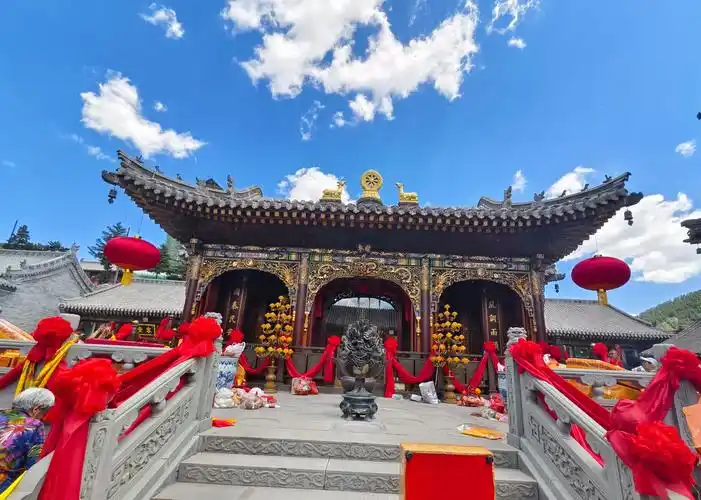 Mount Wutai, rising in northeastern Shanxi Province, ranks among the Four Sacred Buddhist Mountains of China, with monastic foundations stretching back to the first century CE. For Western visitors, its religious significance invites comparison to sites like Assisi in Umbria or the great pilgrimage cathedrals of medieval Europe—places where sacred architecture coexists with the rhythms of surrounding farming villages. The communities encircling Wutai's temple cluster have sustained this spiritual landscape for centuries, and their folk traditions remain remarkably intact.
The "village" itself defies typical theme-park expectations. Rather than a gated compound, it unfolds along the Ming-Qing era street of Taihuai Town and bleeds outward into Hedong, Tanzi, and other small settlements. Architecture consists of repurposed Shanbei courtyard homes—gray-brick walls, tiled roofs, open courtyards—much like the vernacular farmhouses found across the North China Plain, or for Western eyes, reminiscent of sturdy alpine homesteads in Bavaria or the Tyrol. Some buildings originated as resettlement housing for villagers relocated during earlier site development.
Cultural offerings center on intangible heritage still practiced by local masters. In Hedong village, artisans continue shaping Chengni inkstones using traditional grinding and carving techniques—a craft comparable to the fine stonework traditions of Carrara or the calligraphy brush-making of Kyoto. Buddhist music performances occasionally take place in farmhouse courtyards, where sacred melodies blend with rural life rather than being staged as formal concerts. These experiences feel refreshingly unscripted.
Dining anchors the visit. Shanbei farmhouse kitchens serve hearty regional dishes impossible to find on the mountain's vegetarian temple menus: iron-pot stews with wild Wutai mushrooms, oat noodles known as kaolaolao, and Dingxiang steamed pork. Compared to the austere monastery fare above—think simple Italian monastery refectory meals—these spreads are robust, oily, and deeply satisfying after long days of temple-hopping. Many terraces offer sweeping valley views alongside the meal.
Practical planning requires flexibility. There is no entrance fee and no set route—visitors wander alleyways, duck into workshops, and rest wherever food appears. Most artisans keep informal hours rather than posted schedules, so confirming availability through your guesthouse or local hosts is essential. The optimal time is late afternoon into evening, when Taihuai's lanes glow with red lanterns and the mountain air cools, evoking a scene reminiscent of a Tuscan hill town at dusk. Plan this experience as a gentle coda to your temple touring, not a standalone excursion.
Mount Wutai, rising in northeastern Shanxi Province, ranks among the Four Sacred Buddhist Mountains of China, with monastic foundations stretching back to the first century CE. For Western visitors, its religious significance invites comparison to sites like Assisi in Umbria or the great pilgrimage cathedrals of medieval Europe—places where sacred architecture coexists with the rhythms of surrounding farming villages. The communities encircling Wutai's temple cluster have sustained this spiritual landscape for centuries, and their folk traditions remain remarkably intact.
The "village" itself defies typical theme-park expectations. Rather than a gated compound, it unfolds along the Ming-Qing era street of Taihuai Town and bleeds outward into Hedong, Tanzi, and other small settlements. Architecture consists of repurposed Shanbei courtyard homes—gray-brick walls, tiled roofs, open courtyards—much like the vernacular farmhouses found across the North China Plain, or for Western eyes, reminiscent of sturdy alpine homesteads in Bavaria or the Tyrol. Some buildings originated as resettlement housing for villagers relocated during earlier site development.
Cultural offerings center on intangible heritage still practiced by local masters. In Hedong village, artisans continue shaping Chengni inkstones using traditional grinding and carving techniques—a craft comparable to the fine stonework traditions of Carrara or the calligraphy brush-making of Kyoto. Buddhist music performances occasionally take place in farmhouse courtyards, where sacred melodies blend with rural life rather than being staged as formal concerts. These experiences feel refreshingly unscripted.
Dining anchors the visit. Shanbei farmhouse kitchens serve hearty regional dishes impossible to find on the mountain's vegetarian temple menus: iron-pot stews with wild Wutai mushrooms, oat noodles known as kaolaolao, and Dingxiang steamed pork. Compared to the austere monastery fare above—think simple Italian monastery refectory meals—these spreads are robust, oily, and deeply satisfying after long days of temple-hopping. Many terraces offer sweeping valley views alongside the meal.
Practical planning requires flexibility. There is no entrance fee and no set route—visitors wander alleyways, duck into workshops, and rest wherever food appears. Most artisans keep informal hours rather than posted schedules, so confirming availability through your guesthouse or local hosts is essential. The optimal time is late afternoon into evening, when Taihuai's lanes glow with red lanterns and the mountain air cools, evoking a scene reminiscent of a Tuscan hill town at dusk. Plan this experience as a gentle coda to your temple touring, not a standalone excursion.