East Peak (Wanghai Peak)
⭐ 4.20
Wutaishan Scenic Area, Xinzhou, Shanxi Province, China
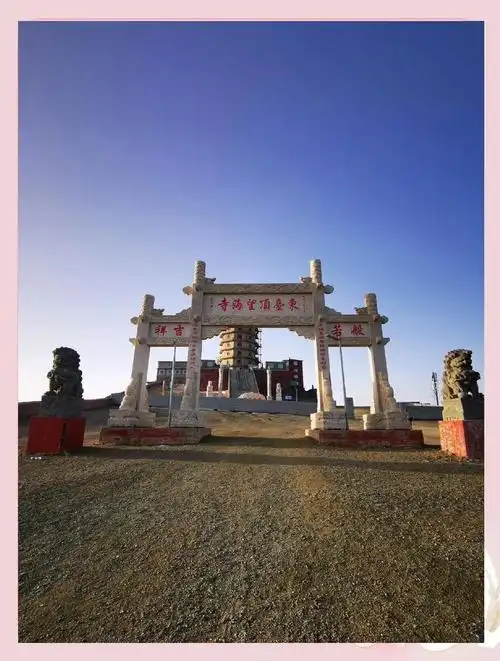 Mount Wutai ranks among Buddhism's four sacred mountains, alongside India's Bodh Gaya and Tibet's Mount Kailash. Its Wanghai Temple was founded during the Sui Dynasty around 600 CE, contemporary with Europe's earliest medieval monasteries such as Monte Cassino in Italy. For more than 1,400 years, the temple has welcomed pilgrims, scholars, and emperors, predating most Western European cathedrals and anchoring Chinese Han Buddhist tradition for over a millennium.
The temple complex cascades gracefully down the mountainside, its halls arranged in classic Chinese Buddhist hierarchy with the main shrine crowning the summit. It enshrines Manjushri, the Bodhisattva of Wisdom, whose worship originated in ancient India and spread across East Asia. Within the grounds stands the Lizi Pagoda, a rare Northern Song Dynasty brick tower from the 10th century, roughly contemporary with the great Romanesque campaniles of Lombardy. Its finely carved tiered eaves offer invaluable insight into Song-era sacred architecture.
As one of Manjushri's five sacred manifestation sites across Mount Wutai, East Terrace holds profound spiritual significance. The Bodhisattva of Wisdom has long attracted scholars, poets, and examination candidates seeking blessings. Nearby, the mysterious Narayana Cave is traditionally believed to be where Manjushri once meditated, while ancient inscriptions and poems by dynasties of literati have layered the peak with cultural resonance.
The scenic area entrance costs around 135 yuan in peak season and includes East Terrace. From Taihuai town, visitors can drive or hire a car to Hongmenyan, then hike 1 to 1.5 hours up gentle slopes, or take a shuttle bus directly to the summit. The 10-kilometer mountain road has numerous hairpin bends, so drive carefully in rain.
The optimal season runs June through August, particularly mornings after rainfall when cloud seas are most frequent. Arrive at the viewpoint between 4:00 and 5:30 AM to catch sunrise. Even in midsummer, summit temperatures plunge to 5–10°C at dawn, so pack a windbreaker or light down jacket, sturdy hiking boots, and a thermos. Nighttime pilgrims are rewarded with profound silence and starlit skies.
Few places combine such natural spectacle with deep spiritual heritage. Watching dawn break over an ocean of rolling clouds, with ancient temple bells echoing across the ridges, feels like glimpsing eternity. East Terrace offers Western travelers an unforgettable encounter with both China's sublime landscapes and the living heart of its Buddhist civilization.
Mount Wutai ranks among Buddhism's four sacred mountains, alongside India's Bodh Gaya and Tibet's Mount Kailash. Its Wanghai Temple was founded during the Sui Dynasty around 600 CE, contemporary with Europe's earliest medieval monasteries such as Monte Cassino in Italy. For more than 1,400 years, the temple has welcomed pilgrims, scholars, and emperors, predating most Western European cathedrals and anchoring Chinese Han Buddhist tradition for over a millennium.
The temple complex cascades gracefully down the mountainside, its halls arranged in classic Chinese Buddhist hierarchy with the main shrine crowning the summit. It enshrines Manjushri, the Bodhisattva of Wisdom, whose worship originated in ancient India and spread across East Asia. Within the grounds stands the Lizi Pagoda, a rare Northern Song Dynasty brick tower from the 10th century, roughly contemporary with the great Romanesque campaniles of Lombardy. Its finely carved tiered eaves offer invaluable insight into Song-era sacred architecture.
As one of Manjushri's five sacred manifestation sites across Mount Wutai, East Terrace holds profound spiritual significance. The Bodhisattva of Wisdom has long attracted scholars, poets, and examination candidates seeking blessings. Nearby, the mysterious Narayana Cave is traditionally believed to be where Manjushri once meditated, while ancient inscriptions and poems by dynasties of literati have layered the peak with cultural resonance.
The scenic area entrance costs around 135 yuan in peak season and includes East Terrace. From Taihuai town, visitors can drive or hire a car to Hongmenyan, then hike 1 to 1.5 hours up gentle slopes, or take a shuttle bus directly to the summit. The 10-kilometer mountain road has numerous hairpin bends, so drive carefully in rain.
The optimal season runs June through August, particularly mornings after rainfall when cloud seas are most frequent. Arrive at the viewpoint between 4:00 and 5:30 AM to catch sunrise. Even in midsummer, summit temperatures plunge to 5–10°C at dawn, so pack a windbreaker or light down jacket, sturdy hiking boots, and a thermos. Nighttime pilgrims are rewarded with profound silence and starlit skies.
Few places combine such natural spectacle with deep spiritual heritage. Watching dawn break over an ocean of rolling clouds, with ancient temple bells echoing across the ridges, feels like glimpsing eternity. East Terrace offers Western travelers an unforgettable encounter with both China's sublime landscapes and the living heart of its Buddhist civilization.