Dailuo Peak
⭐ 4.20
Dongshan Town, Pingding County, Yangquan City, Shanxi Province, China
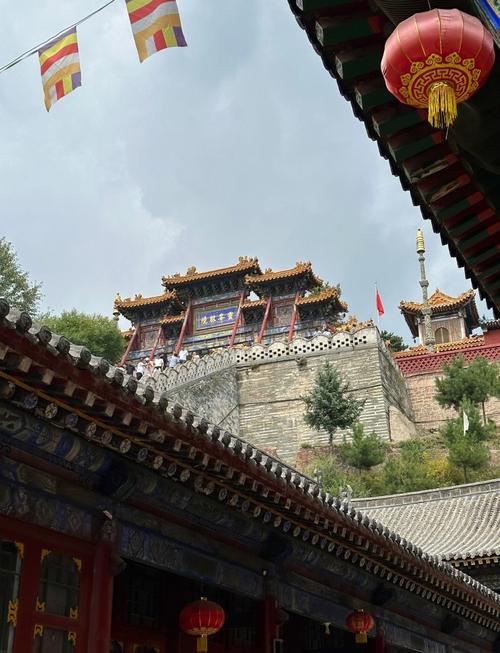 Dailuo Ding has drawn Buddhist pilgrims since at least the Ming Dynasty (14th–17th centuries), with major restorations carried out during the Qianlong Emperor's reign in the 18th century—an era when Qing imperial patronage shaped many of China's most important religious sites, much as European monarchs commissioned monasteries and pilgrimage churches in the Baroque age. A Qianlong-era stele still stands among the temple's treasures. The name "Dailuo" poetically describes the peak's resemblance to a dark conch shell seen from the valley below, and the mountaintop complex occupies a commanding position facing Taihuai town, much like a pilgrimage chapel crowning a hilltop town in Tuscany or Bavaria.
Architecturally, the temple is a fascinating study in syncretic Buddhist design. Built in terraces that follow the contours of the steep hillside, its halls blend the sweeping tiled eaves and timber-frame elegance of Han Chinese Buddhist architecture with the bolder colors, gilded ornaments, and tantric symbolism characteristic of Tibetan Buddhist practice. The result feels more intimate than the great monastic complexes of central China—closer in spirit to a mountaintop hermitage or shrine perched above a medieval European pilgrimage route, where the climb itself becomes part of the spiritual experience.
The cultural heart of Dailuo Ding is the Hall of the Five Manjushris, dedicated to the five directional bodhisattvas representing each of Mount Wutai's five peaks: the Wise Manjushri of the East, the Lion Manjushri of the West, the Wisdom Manjushri of the South, the Stainless Manjushri of the North, and the Childlike Manjushri of the Center. Tradition holds that paying homage here grants the same karmic merit as completing the arduous trek to all five summits—a "short pilgrimage" that has made this spot beloved by devout Buddhists from across Asia for centuries.
Reaching the summit is half the adventure. The Great Wisdom Path climbs 1,080 granite steps, each one symbolically dispelling a烦恼 (affliction), in a journey that takes 40 to 70 minutes and echoes the deliberate ascent of Spain's Camino de Santiago or a steep Himalayan pilgrimage staircase. Those preferring a gentler route can take the cable car (about 50 yuan one-way, 85 yuan round-trip) for sweeping views over Taihuai's temple-studded basin. While Dailuo Ding itself is free, entry to the Mount Wutai Scenic Area requires a ticket (135 yuan), and opening hours run roughly 7:30 a.m. to 6:30 p.m.
Visitors should dress modestly—covering knees and shoulders—as a sign of respect within the halls, where photography is also prohibited. Keep quiet during prayer and prostration rituals, and follow the suggested route: Heavenly Kings Hall, then the檀 Hall, the Five Manjushri Hall, and finally the Great Hall of the Buddha. Summer brings the most pleasant weather and full cable car operations, while winter visitors should check ahead, as ice and service suspensions can complicate the climb—elderly travelers and families with small children are generally advised to take the cable car year-round.
Worth visiting for the chance to combine light adventure with genuine spiritual atmosphere, Dailuo Ding offers some of the finest panoramic views in all of Mount Wutai, with the white-and-gold roofs of Taihuai's temples glittering below and the silhouettes of the Five Peaks rising in the distance. It captures in a single morning what many travelers spend days seeking: the essence of one of China's four sacred Buddhist mountains, condensed into a single, unforgettable ascent.
Dailuo Ding has drawn Buddhist pilgrims since at least the Ming Dynasty (14th–17th centuries), with major restorations carried out during the Qianlong Emperor's reign in the 18th century—an era when Qing imperial patronage shaped many of China's most important religious sites, much as European monarchs commissioned monasteries and pilgrimage churches in the Baroque age. A Qianlong-era stele still stands among the temple's treasures. The name "Dailuo" poetically describes the peak's resemblance to a dark conch shell seen from the valley below, and the mountaintop complex occupies a commanding position facing Taihuai town, much like a pilgrimage chapel crowning a hilltop town in Tuscany or Bavaria.
Architecturally, the temple is a fascinating study in syncretic Buddhist design. Built in terraces that follow the contours of the steep hillside, its halls blend the sweeping tiled eaves and timber-frame elegance of Han Chinese Buddhist architecture with the bolder colors, gilded ornaments, and tantric symbolism characteristic of Tibetan Buddhist practice. The result feels more intimate than the great monastic complexes of central China—closer in spirit to a mountaintop hermitage or shrine perched above a medieval European pilgrimage route, where the climb itself becomes part of the spiritual experience.
The cultural heart of Dailuo Ding is the Hall of the Five Manjushris, dedicated to the five directional bodhisattvas representing each of Mount Wutai's five peaks: the Wise Manjushri of the East, the Lion Manjushri of the West, the Wisdom Manjushri of the South, the Stainless Manjushri of the North, and the Childlike Manjushri of the Center. Tradition holds that paying homage here grants the same karmic merit as completing the arduous trek to all five summits—a "short pilgrimage" that has made this spot beloved by devout Buddhists from across Asia for centuries.
Reaching the summit is half the adventure. The Great Wisdom Path climbs 1,080 granite steps, each one symbolically dispelling a烦恼 (affliction), in a journey that takes 40 to 70 minutes and echoes the deliberate ascent of Spain's Camino de Santiago or a steep Himalayan pilgrimage staircase. Those preferring a gentler route can take the cable car (about 50 yuan one-way, 85 yuan round-trip) for sweeping views over Taihuai's temple-studded basin. While Dailuo Ding itself is free, entry to the Mount Wutai Scenic Area requires a ticket (135 yuan), and opening hours run roughly 7:30 a.m. to 6:30 p.m.
Visitors should dress modestly—covering knees and shoulders—as a sign of respect within the halls, where photography is also prohibited. Keep quiet during prayer and prostration rituals, and follow the suggested route: Heavenly Kings Hall, then the檀 Hall, the Five Manjushri Hall, and finally the Great Hall of the Buddha. Summer brings the most pleasant weather and full cable car operations, while winter visitors should check ahead, as ice and service suspensions can complicate the climb—elderly travelers and families with small children are generally advised to take the cable car year-round.
Worth visiting for the chance to combine light adventure with genuine spiritual atmosphere, Dailuo Ding offers some of the finest panoramic views in all of Mount Wutai, with the white-and-gold roofs of Taihuai's temples glittering below and the silhouettes of the Five Peaks rising in the distance. It captures in a single morning what many travelers spend days seeking: the essence of one of China's four sacred Buddhist mountains, condensed into a single, unforgettable ascent.