Baitashan Park
⭐ 4.60
Baitashan Park, Chengguan District, Lanzhou City, Gansu Province, China
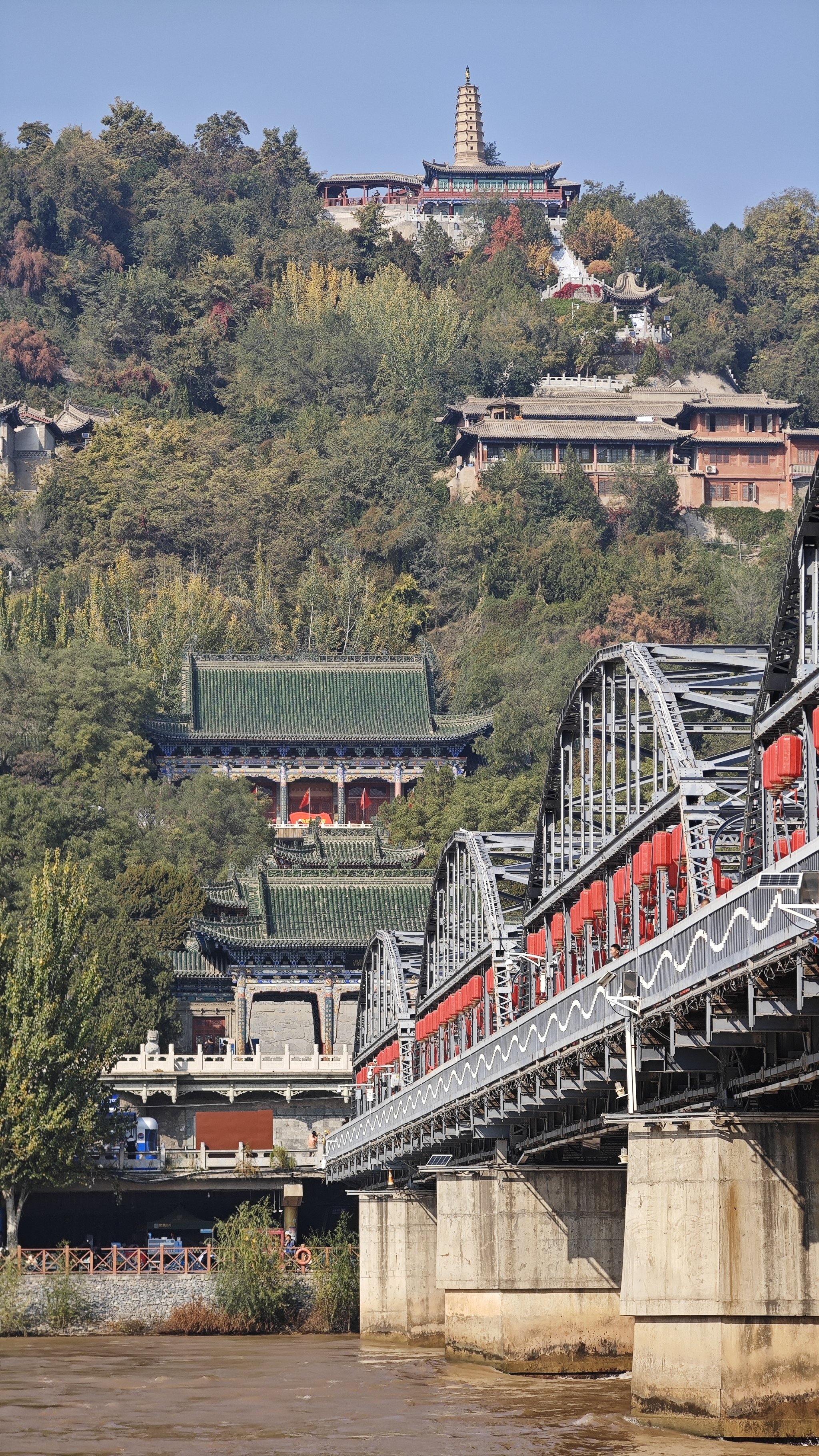 The park takes its name from a striking 17-meter, eight-sided white pagoda crowning the summit. Originally erected during the Yuan Dynasty (1271–1368)—contemporary with Europe's soaring Gothic cathedrals such as Cologne or Strasbourg—the tower was rebuilt in the Ming era and is said to commemorate a Tibetan lama who passed away in Lanzhou. Still immaculately white and serene, it remains the city's most recognizable historical silhouette, anchoring a skyline otherwise dominated by modern high-rises.
At the base of the hill, visitors pass through the imposing Three Terraces complex, a magnificent ensemble of traditional-style wooden halls completed in 1958–59. Carved beams, upturned eaves, and richly painted details fuse classical Chinese architecture with the bold, earthy character of northwestern China. Comparable in ambition to Europe's grand civic reconstructions of the mid-twentieth century, the halls form the cultural heart of the climb. Scattered along the slopes sit smaller Ming and Qing dynasty temples, including the Samsung Hall, Sanyuan Hall, and Fayu Temple.
The Lanzhou Stele Forest, occupying roughly 35 mu within the park, gathers centuries of the region's finest calligraphy carved in stone. Among its prized holdings are works attributed to Zhang Zhi, the Eastern Han master revered as the "Sage of Cursive Script"—a figure in Chinese calligraphy comparable to Michelangelo in Western art. Hailed as the "First Pavilion Under Heaven," the collection parallels Europe's great epigraphic libraries at the Vatican or the Bibliothèque nationale. Nearby, the former CPC Gansu Working Committee Memorial adds a layer of twentieth-century revolutionary history.
The park covers more than 100 hectares and is entirely free, typically open from 6:30 a.m. to 7:30 p.m. with slight seasonal adjustments. Most visitors begin at the north end of Zhongshan Bridge and climb the main path—roughly 30 to 45 minutes at a moderate pace. Less active travelers can take the cable car from mid-mountain (about 50 yuan one way) and walk down for different perspectives. Summer visitors should avoid midday heat by coming early or late, while sunset delivers the magical combination of fading daylight, illuminated bridge, and glittering city lights.
Few urban parks in the world combine such a sweeping natural panorama with deep historical layers. From the summit, the Yellow River unspools like a silver ribbon beneath you, the century-old Zhongshan Bridge arches gracefully across its waters, and Lanzhou's layered cityscape rises behind—comparable to gazing over the Seine from Montmartre or the Danube from Gellért Hill. It is, quite simply, the single best way to grasp Lanzhou in a single visit.
The park takes its name from a striking 17-meter, eight-sided white pagoda crowning the summit. Originally erected during the Yuan Dynasty (1271–1368)—contemporary with Europe's soaring Gothic cathedrals such as Cologne or Strasbourg—the tower was rebuilt in the Ming era and is said to commemorate a Tibetan lama who passed away in Lanzhou. Still immaculately white and serene, it remains the city's most recognizable historical silhouette, anchoring a skyline otherwise dominated by modern high-rises.
At the base of the hill, visitors pass through the imposing Three Terraces complex, a magnificent ensemble of traditional-style wooden halls completed in 1958–59. Carved beams, upturned eaves, and richly painted details fuse classical Chinese architecture with the bold, earthy character of northwestern China. Comparable in ambition to Europe's grand civic reconstructions of the mid-twentieth century, the halls form the cultural heart of the climb. Scattered along the slopes sit smaller Ming and Qing dynasty temples, including the Samsung Hall, Sanyuan Hall, and Fayu Temple.
The Lanzhou Stele Forest, occupying roughly 35 mu within the park, gathers centuries of the region's finest calligraphy carved in stone. Among its prized holdings are works attributed to Zhang Zhi, the Eastern Han master revered as the "Sage of Cursive Script"—a figure in Chinese calligraphy comparable to Michelangelo in Western art. Hailed as the "First Pavilion Under Heaven," the collection parallels Europe's great epigraphic libraries at the Vatican or the Bibliothèque nationale. Nearby, the former CPC Gansu Working Committee Memorial adds a layer of twentieth-century revolutionary history.
The park covers more than 100 hectares and is entirely free, typically open from 6:30 a.m. to 7:30 p.m. with slight seasonal adjustments. Most visitors begin at the north end of Zhongshan Bridge and climb the main path—roughly 30 to 45 minutes at a moderate pace. Less active travelers can take the cable car from mid-mountain (about 50 yuan one way) and walk down for different perspectives. Summer visitors should avoid midday heat by coming early or late, while sunset delivers the magical combination of fading daylight, illuminated bridge, and glittering city lights.
Few urban parks in the world combine such a sweeping natural panorama with deep historical layers. From the summit, the Yellow River unspools like a silver ribbon beneath you, the century-old Zhongshan Bridge arches gracefully across its waters, and Lanzhou's layered cityscape rises behind—comparable to gazing over the Seine from Montmartre or the Danube from Gellért Hill. It is, quite simply, the single best way to grasp Lanzhou in a single visit.