Five-Color Lake
⭐ 4.90
Five-Color Lake, Jiuzhaigou County, Aba Tibetan and Qiang Autonomous Prefecture, Sichuan Province, China
 **A Geological Masterpiece in the Min Mountains**
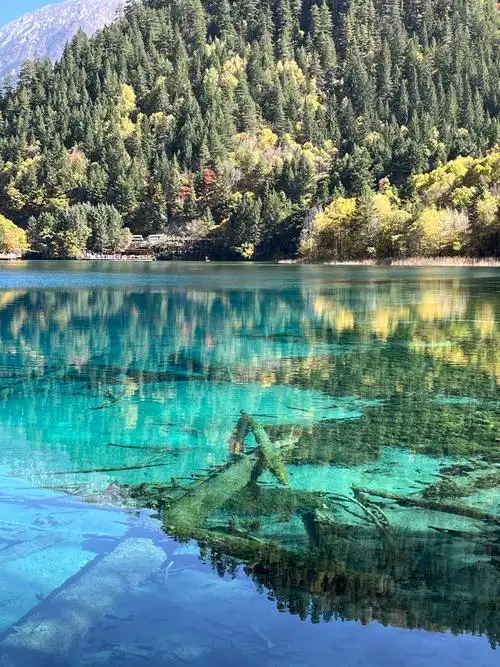
Five Flower Lake sits in the Rize Valley of Jiuzhaigou, a UNESCO World Heritage Site since 1992 and a Biosphere Reserve on par with Yellowstone or Switzerland's Jungfrau-Aletsch in global ecological significance. The lake spans roughly 90,000 square meters with an average depth of just five meters, but it is what lies beneath that captivates: centuries of calcium carbonate (travertine) precipitation, combined with calcified tree trunks from an older forest, have created an underwater sculpture reminiscent of Italy's Lame Rosse or the petrified formations of Cappadocia. The result is a chromatic phenomenon where the same patch of water can read as saffron, jade, or lapis depending on the angle of the sun.
**The Palette of Nature**
The lake's legendary color shift—earning it the nickname "Peacock Lake" when viewed from above—stems from a delicate interplay of mineral content, varied algae species, and submerged aquatic plants distributed at different depths. Visitors familiar with Iceland's geothermal springs or New Zealand's Wai-O-Tapu will recognize this kind of biogenic color display, yet Five Flower Lake achieves it at high altitude and in far greater surface area. Photographers describe it as "nature's most astonishing mixing board," with no two minutes of viewing offering the same composition.
**Best Time and Vantage Points**
The prime viewing window runs from 9 to 11 a.m., when oblique morning light saturates the colors and mirror-still reflections of autumn foliage are at their peak. Late September through late October transforms the surrounding forests into a riot of red, gold, and amber that doubles the visual drama. The Tiger Mouth (Laohuzui) viewing platform on the southeast side delivers the iconic panoramic shot showing the lake in its full peacock-fan shape, while the western boardwalk allows intimate encounters with the calcified logs and subtle tonal gradations below the surface.
**Practical Visitor Information**
Five Flower Lake is included in the Jiuzhaigou Scenic Area entrance ticket (peak season 169–190 RMB), with a separate 90 RMB shuttle bus fee. The park enforces real-name reservation and caps daily visitors at 41,000 during peak season—bookings should be made 1–3 days in advance via the official "Jiuzhaigou" WeChat account or the Aba Tourism portal. Foreign visitors need a valid Chinese visa or must qualify under transit-exemption policies; passports are required for booking. Multilingual signage and audio guides are available at major stops.
**Cultural Respect and Health Considerations**
To the local Tibetan communities, Five Flower Lake is a sacred "Spirit Pool," and visitors are asked to maintain a quiet demeanor and refrain from swimming, feeding wildlife, or leaving any litter. At 2,472 meters, altitude can cause mild headaches or shortness of breath—move slowly, hydrate, and avoid strenuous exertion. Boardwalks can be slippery after rain, especially during August afternoon showers, so sturdy non-slip footwear is essential along with sun protection, a windproof layer, and a light jacket for the sharp temperature drops after sunset.
**Suggested Itinerary and Seasonal Highlights**
Plan at least 1 to 1.5 hours for Five Flower Lake, following a one-way route from the shuttle drop-off down the western boardwalk, north to the outflow bridge with its peacock-neck river bend, and up to Tiger Mouth for the grand finale. The site connects seamlessly with neighboring Pearl Shoal Waterfall and the broader Y-shaped valley route (Long Lake → Five-Color Pool → Nuorilang → Five Flower Lake → Pearl Shoal → Shuzheng Valley). While autumn is the most celebrated season, Jiuzhaigou rewards visitors year-round: fresh greens of spring, cool retreats in summer, fiery foliage in autumn, and the ethereal ice-blue hush of winter.
**A Geological Masterpiece in the Min Mountains**
Five Flower Lake sits in the Rize Valley of Jiuzhaigou, a UNESCO World Heritage Site since 1992 and a Biosphere Reserve on par with Yellowstone or Switzerland's Jungfrau-Aletsch in global ecological significance. The lake spans roughly 90,000 square meters with an average depth of just five meters, but it is what lies beneath that captivates: centuries of calcium carbonate (travertine) precipitation, combined with calcified tree trunks from an older forest, have created an underwater sculpture reminiscent of Italy's Lame Rosse or the petrified formations of Cappadocia. The result is a chromatic phenomenon where the same patch of water can read as saffron, jade, or lapis depending on the angle of the sun.
**The Palette of Nature**
The lake's legendary color shift—earning it the nickname "Peacock Lake" when viewed from above—stems from a delicate interplay of mineral content, varied algae species, and submerged aquatic plants distributed at different depths. Visitors familiar with Iceland's geothermal springs or New Zealand's Wai-O-Tapu will recognize this kind of biogenic color display, yet Five Flower Lake achieves it at high altitude and in far greater surface area. Photographers describe it as "nature's most astonishing mixing board," with no two minutes of viewing offering the same composition.
**Best Time and Vantage Points**
The prime viewing window runs from 9 to 11 a.m., when oblique morning light saturates the colors and mirror-still reflections of autumn foliage are at their peak. Late September through late October transforms the surrounding forests into a riot of red, gold, and amber that doubles the visual drama. The Tiger Mouth (Laohuzui) viewing platform on the southeast side delivers the iconic panoramic shot showing the lake in its full peacock-fan shape, while the western boardwalk allows intimate encounters with the calcified logs and subtle tonal gradations below the surface.
**Practical Visitor Information**
Five Flower Lake is included in the Jiuzhaigou Scenic Area entrance ticket (peak season 169–190 RMB), with a separate 90 RMB shuttle bus fee. The park enforces real-name reservation and caps daily visitors at 41,000 during peak season—bookings should be made 1–3 days in advance via the official "Jiuzhaigou" WeChat account or the Aba Tourism portal. Foreign visitors need a valid Chinese visa or must qualify under transit-exemption policies; passports are required for booking. Multilingual signage and audio guides are available at major stops.
**Cultural Respect and Health Considerations**
To the local Tibetan communities, Five Flower Lake is a sacred "Spirit Pool," and visitors are asked to maintain a quiet demeanor and refrain from swimming, feeding wildlife, or leaving any litter. At 2,472 meters, altitude can cause mild headaches or shortness of breath—move slowly, hydrate, and avoid strenuous exertion. Boardwalks can be slippery after rain, especially during August afternoon showers, so sturdy non-slip footwear is essential along with sun protection, a windproof layer, and a light jacket for the sharp temperature drops after sunset.
**Suggested Itinerary and Seasonal Highlights**
Plan at least 1 to 1.5 hours for Five Flower Lake, following a one-way route from the shuttle drop-off down the western boardwalk, north to the outflow bridge with its peacock-neck river bend, and up to Tiger Mouth for the grand finale. The site connects seamlessly with neighboring Pearl Shoal Waterfall and the broader Y-shaped valley route (Long Lake → Five-Color Pool → Nuorilang → Five Flower Lake → Pearl Shoal → Shuzheng Valley). While autumn is the most celebrated season, Jiuzhaigou rewards visitors year-round: fresh greens of spring, cool retreats in summer, fiery foliage in autumn, and the ethereal ice-blue hush of winter.