Leshan International Tourism Passenger Transport Center
⭐ 1.00
No. 188, South Section, Jiazhou Avenue, Shizhong District, Leshan City, Sichuan Province, China
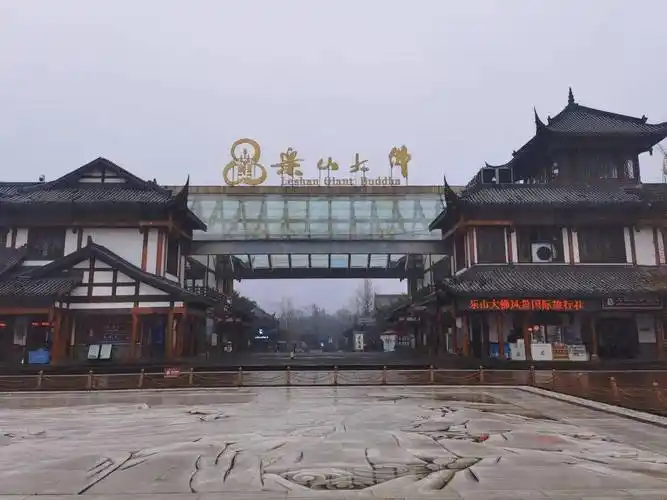 Though it may lack the romance of a centuries-old caravanserai, this sleek transport hub fulfills a similarly ancient role: connecting travelers to the wonders of the Sichuan basin. Like the great railway termini of 19th-century Europe that ushered Victorians toward Alpine retreats and Mediterranean treasures, this station serves as the modern threshold to two of China's most extraordinary cultural landmarks—the 71-meter-tall Leshan Giant Buddha, carved into cliffs during the Tang Dynasty in 713 CE and recognized as the largest stone Buddha in the world, and Mount Emei, one of Buddhism's four sacred mountains, celebrated alongside comparable pilgrimage sites such as Mount Athos or Santiago de Compostela.
The architecture itself is purely functional, prioritizing efficiency over aesthetics. The 2,000-seat waiting hall, 25 boarding platforms, and 13 ticket windows represent a contemporary Chinese approach to mass transit, comparable in scale and purpose to major European bus stations like Madrid's Estación Sur or Berlin's ZOB. Bilingual signage in Chinese and English, electronic departure boards, and amenities including mother-and-baby rooms and accessible facilities cater to international visitors with varying needs.
Culturally, the station embodies China's "景城一体" philosophy—integrating scenic destinations seamlessly with urban infrastructure. This concept mirrors the European tradition of well-connected cultural circuits, such as those linking Florence, Pisa, and Lucca, or the rail networks binding Vienna to the Wachau Valley. From here, dedicated shuttle buses and city routes K1 and 302 whisk passengers directly to the Giant Buddha's entrance, Mount Emei's base, and historic sites like Wuyou Temple and Jiadingfang ancient streets.
Practical logistics are straightforward: the station operates daily from approximately 6:20 AM to 7:20 PM, with frequent direct shuttles to major attractions throughout the day. Travelers should book tickets through official channels and allow buffer time for connections. Luggage lockers are available for storing bags, enabling visitors to explore unencumbered—a particularly welcome service given that climbing the Giant Buddha's narrow Nine-Curve Plank Path requires a free hand and steady footing.
Ultimately, this station rewards those who view transit itself as part of the journey. Unlike grand European train halls such as Milan's Centrale or Antwerp's Centraal, it offers little to admire architecturally, but its true purpose is fulfilled the moment you board a shuttle and watch the Sichuan countryside unfold toward one of humanity's most magnificent sculptural achievements—a fitting introduction to the spiritual and artistic heritage that has defined this region for over a millennium.
Though it may lack the romance of a centuries-old caravanserai, this sleek transport hub fulfills a similarly ancient role: connecting travelers to the wonders of the Sichuan basin. Like the great railway termini of 19th-century Europe that ushered Victorians toward Alpine retreats and Mediterranean treasures, this station serves as the modern threshold to two of China's most extraordinary cultural landmarks—the 71-meter-tall Leshan Giant Buddha, carved into cliffs during the Tang Dynasty in 713 CE and recognized as the largest stone Buddha in the world, and Mount Emei, one of Buddhism's four sacred mountains, celebrated alongside comparable pilgrimage sites such as Mount Athos or Santiago de Compostela.
The architecture itself is purely functional, prioritizing efficiency over aesthetics. The 2,000-seat waiting hall, 25 boarding platforms, and 13 ticket windows represent a contemporary Chinese approach to mass transit, comparable in scale and purpose to major European bus stations like Madrid's Estación Sur or Berlin's ZOB. Bilingual signage in Chinese and English, electronic departure boards, and amenities including mother-and-baby rooms and accessible facilities cater to international visitors with varying needs.
Culturally, the station embodies China's "景城一体" philosophy—integrating scenic destinations seamlessly with urban infrastructure. This concept mirrors the European tradition of well-connected cultural circuits, such as those linking Florence, Pisa, and Lucca, or the rail networks binding Vienna to the Wachau Valley. From here, dedicated shuttle buses and city routes K1 and 302 whisk passengers directly to the Giant Buddha's entrance, Mount Emei's base, and historic sites like Wuyou Temple and Jiadingfang ancient streets.
Practical logistics are straightforward: the station operates daily from approximately 6:20 AM to 7:20 PM, with frequent direct shuttles to major attractions throughout the day. Travelers should book tickets through official channels and allow buffer time for connections. Luggage lockers are available for storing bags, enabling visitors to explore unencumbered—a particularly welcome service given that climbing the Giant Buddha's narrow Nine-Curve Plank Path requires a free hand and steady footing.
Ultimately, this station rewards those who view transit itself as part of the journey. Unlike grand European train halls such as Milan's Centrale or Antwerp's Centraal, it offers little to admire architecturally, but its true purpose is fulfilled the moment you board a shuttle and watch the Sichuan countryside unfold toward one of humanity's most magnificent sculptural achievements—a fitting introduction to the spiritual and artistic heritage that has defined this region for over a millennium.