Lingyun Temple
⭐ 4.70
Lingyun Temple, Shizhong District, Leshan City, Sichuan Province, China
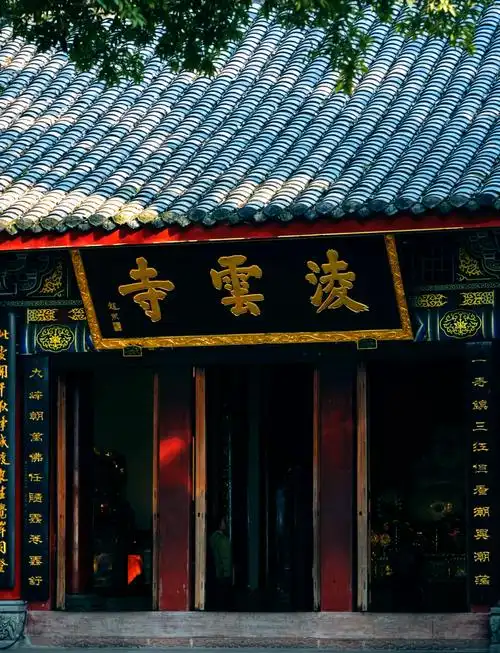 **A Survivor of Empire-Wide Persecution**
Lingyun Temple traces its origins to the Tang Dynasty (618–907 AD), a golden age when Buddhism flourished across Asia from Nara to Samarkand. Its greatest claim to historical significance emerged during the Huichang Suppression of Buddhism in 845 AD, when Emperor Wuzong demolished thousands of monasteries across China—much as Emperor Theodosius closed pagan temples in late Rome or Henry VIII later dissolved England's abbeys. Of all the temples on Lingyun Mountain, only Lingyun survived, earning it the reverence it still commands today. The temple witnessed the entire ninety-year construction of the Giant Buddha, initiated by the monk Haitong and completed through the patronage of regional governors Zhangqou Jianqiong and Wei Gao.
**Architecture Carved into the Hillside**
The present complex reflects Ming and Qing dynasty rebuilding (roughly contemporary with Europe's Baroque cathedrals and Versailles), organized into three ascending courtyards that follow the mountain's natural contours—a principle not unlike Italian hillside villages or Greek monastic complexes at Meteora. The central axis features the Heavenly Kings Hall, Great Hero Hall, and Guanyin Hall, flanked by side chambers. Inside, visitors encounter exquisite gilded camphor-wood statues of the Four Heavenly Kings and a triad of Shakyamuni Buddhas accompanied by eighteen arhats, their weathered surfaces radiating centuries of incense smoke and whispered prayers.
**A Meeting Place of Poets and Sages**
Lingyun Temple has long drawn China's literary giants, including the immortal Tang poet Li Bai, the Song dynasty polymath Su Shi (whose calligraphy echoes the artistic refinement of Dante's Florence), and the historian-poet Lu You. Their verses and inscriptions remain etched throughout the grounds. The sutra repository, a charming Sino-Western hybrid structure from the early twentieth century, houses statues of Haitong and the two governors who funded the Buddha's creation, alongside a small museum chronicling the monument's construction and ongoing conservation—a thoughtful counterpoint to the temple's ancient stones.
**Practical Information for Visitors**
The temple sits within the Leshan Giant Buddha Scenic Area at 2435 Lingyun Road, Shizhong District, Leshan, and shares the main entrance ticket (no separate fee required). Hours run daily from 8:00 AM to 5:30 PM, year-round. Visitors are strongly advised to book tickets in advance through official channels and avoid the 9:00–11:00 AM weekend and holiday crush. From central Leshan, a taxi ride takes roughly fifteen minutes, while buses 3 and 13 stop directly at the scenic area gates.
**Why Lingyun Deserves Your Time**
Beyond its historical gravitas, the temple offers the most rewarding approach to the Leshan Giant Buddha itself—a 71-meter colossus comparable in scale to the Statue of Liberty or Rio's Christ the Redeemer. From the Buddha's Head Plaza, a two-minute walk from the temple entrance, visitors gaze across the dramatic confluence of the Min, Dadu, and Qingyi rivers, just as Tang Dynasty pilgrims once did. Nearby, the thirteen-story Tang-era Lingbao Pagoda provides one of Sichuan's most photographed compositions, framing ancient pagoda, sacred temple, and three great rivers in a single sweep.
**A Survivor of Empire-Wide Persecution**
Lingyun Temple traces its origins to the Tang Dynasty (618–907 AD), a golden age when Buddhism flourished across Asia from Nara to Samarkand. Its greatest claim to historical significance emerged during the Huichang Suppression of Buddhism in 845 AD, when Emperor Wuzong demolished thousands of monasteries across China—much as Emperor Theodosius closed pagan temples in late Rome or Henry VIII later dissolved England's abbeys. Of all the temples on Lingyun Mountain, only Lingyun survived, earning it the reverence it still commands today. The temple witnessed the entire ninety-year construction of the Giant Buddha, initiated by the monk Haitong and completed through the patronage of regional governors Zhangqou Jianqiong and Wei Gao.
**Architecture Carved into the Hillside**
The present complex reflects Ming and Qing dynasty rebuilding (roughly contemporary with Europe's Baroque cathedrals and Versailles), organized into three ascending courtyards that follow the mountain's natural contours—a principle not unlike Italian hillside villages or Greek monastic complexes at Meteora. The central axis features the Heavenly Kings Hall, Great Hero Hall, and Guanyin Hall, flanked by side chambers. Inside, visitors encounter exquisite gilded camphor-wood statues of the Four Heavenly Kings and a triad of Shakyamuni Buddhas accompanied by eighteen arhats, their weathered surfaces radiating centuries of incense smoke and whispered prayers.
**A Meeting Place of Poets and Sages**
Lingyun Temple has long drawn China's literary giants, including the immortal Tang poet Li Bai, the Song dynasty polymath Su Shi (whose calligraphy echoes the artistic refinement of Dante's Florence), and the historian-poet Lu You. Their verses and inscriptions remain etched throughout the grounds. The sutra repository, a charming Sino-Western hybrid structure from the early twentieth century, houses statues of Haitong and the two governors who funded the Buddha's creation, alongside a small museum chronicling the monument's construction and ongoing conservation—a thoughtful counterpoint to the temple's ancient stones.
**Practical Information for Visitors**
The temple sits within the Leshan Giant Buddha Scenic Area at 2435 Lingyun Road, Shizhong District, Leshan, and shares the main entrance ticket (no separate fee required). Hours run daily from 8:00 AM to 5:30 PM, year-round. Visitors are strongly advised to book tickets in advance through official channels and avoid the 9:00–11:00 AM weekend and holiday crush. From central Leshan, a taxi ride takes roughly fifteen minutes, while buses 3 and 13 stop directly at the scenic area gates.
**Why Lingyun Deserves Your Time**
Beyond its historical gravitas, the temple offers the most rewarding approach to the Leshan Giant Buddha itself—a 71-meter colossus comparable in scale to the Statue of Liberty or Rio's Christ the Redeemer. From the Buddha's Head Plaza, a two-minute walk from the temple entrance, visitors gaze across the dramatic confluence of the Min, Dadu, and Qingyi rivers, just as Tang Dynasty pilgrims once did. Nearby, the thirteen-story Tang-era Lingbao Pagoda provides one of Sichuan's most photographed compositions, framing ancient pagoda, sacred temple, and three great rivers in a single sweep.