Wuyou Temple
⭐ 4.20
Shizhong District, Leshan City, Sichuan Province, China
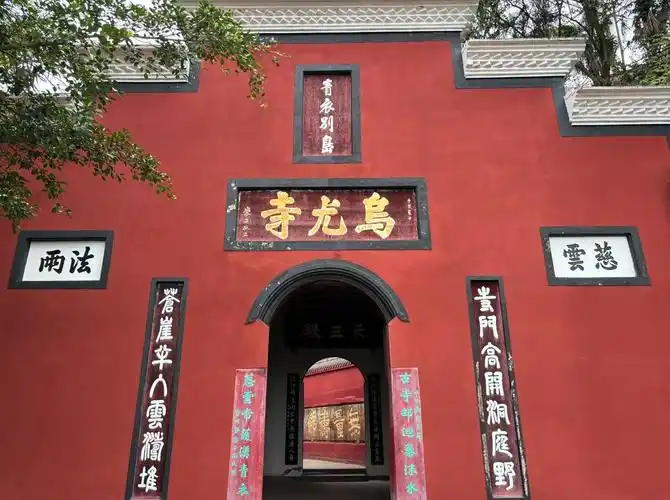 Wuyou Temple traces its origins to the Tang Dynasty (founded as Zhengjue Temple and renamed during the Northern Song), placing it among the same era as England's Canterbury Cathedral and predating the Romanesque wonders of southern France. For over a millennium, its bells have marked the rhythm of monastic life, and in 1983 it was recognized as a national key Buddhist temple. Today it forms part of the same UNESCO World Heritage designation as the 71-meter Leshan Giant Buddha, carved by a Tang monk named Haitong during the same period when Viking longships still sailed northern seas.
Architecturally, the complex is a textbook example of Sichuan's mountain-clinging building tradition, somewhat reminiscent of how Italian hill towns like Civita di Bagnoregio adapt to rocky terrain. The principal halls—Tianwang, Mahavira, Amitabha, and the Arhat Hall—cascade down the hillside in harmonious disorder. The Mahavira Hall houses gilded camphor-wood sculptures of the Three Saints of the Huayan tradition, while the Arhat Hall contains 500 vividly individualized clay figures. The cliff-hugging Amitabha Hall demonstrates how regional builders carved sacred space straight from living rock.
Three cultural treasures anchor any visit. The temple's masterpiece is a Tang-dynasty bronze of the Bodhisattva in his "Demon-Subduing" manifestation—an exceptionally rare subject in Chinese Buddhism, akin to encountering a fierce medieval depiction of Saint George trampling the dragon. The nearby Erya Terrace commemorates the Han Dynasty scholar Guo Sheren, who allegedly annotated China's oldest surviving dictionary here, with Ming-calligrapher Peng Rushi's five-meter "Pillar in the Midstream" cliff characters still commanding the riverbank. The Bell and Drum Pavilion displays fourteen stone steles inscribed with the Heart Sutra by Qing scholar Zhao Xi, celebrated as the "Republican-era Orchid Pavilion."
Practical planning is refreshingly simple. Wuyou Temple requires no separate ticket but only admits visitors holding a Leshan Giant Buddha ticket (¥80 in peak season, April 1–October 7). Opening hours run 7:30–18:30 in peak season and 8:00–17:30 in low season. Allow 1.5–2 hours; enter via the North Gate to enjoy Lingyun Temple and the Nine-Bend Plank Path first, cross Haoshang Bridge to the island, and exit via the South Gate. A boat also shuttles between the island and the main景区 from the Wuyou Temple wharf.
What sets this place apart is its remarkable tranquility. While tour buses clog the main Giant Buddha viewing platforms, Wuyou remains the preserve of pilgrims and contemplative travelers—a place where you may stand alone on the cliff edge watching the jade-green rivers merge, just as Tang Dynasty monks did thirteen centuries ago. Dress modestly, keep voices low, wear sturdy non-slip shoes, and bring sun protection. Come for the Buddhist art, stay for the silence, and leave with one of Sichuan's most quietly spectacular views etched in memory.
Wuyou Temple traces its origins to the Tang Dynasty (founded as Zhengjue Temple and renamed during the Northern Song), placing it among the same era as England's Canterbury Cathedral and predating the Romanesque wonders of southern France. For over a millennium, its bells have marked the rhythm of monastic life, and in 1983 it was recognized as a national key Buddhist temple. Today it forms part of the same UNESCO World Heritage designation as the 71-meter Leshan Giant Buddha, carved by a Tang monk named Haitong during the same period when Viking longships still sailed northern seas.
Architecturally, the complex is a textbook example of Sichuan's mountain-clinging building tradition, somewhat reminiscent of how Italian hill towns like Civita di Bagnoregio adapt to rocky terrain. The principal halls—Tianwang, Mahavira, Amitabha, and the Arhat Hall—cascade down the hillside in harmonious disorder. The Mahavira Hall houses gilded camphor-wood sculptures of the Three Saints of the Huayan tradition, while the Arhat Hall contains 500 vividly individualized clay figures. The cliff-hugging Amitabha Hall demonstrates how regional builders carved sacred space straight from living rock.
Three cultural treasures anchor any visit. The temple's masterpiece is a Tang-dynasty bronze of the Bodhisattva in his "Demon-Subduing" manifestation—an exceptionally rare subject in Chinese Buddhism, akin to encountering a fierce medieval depiction of Saint George trampling the dragon. The nearby Erya Terrace commemorates the Han Dynasty scholar Guo Sheren, who allegedly annotated China's oldest surviving dictionary here, with Ming-calligrapher Peng Rushi's five-meter "Pillar in the Midstream" cliff characters still commanding the riverbank. The Bell and Drum Pavilion displays fourteen stone steles inscribed with the Heart Sutra by Qing scholar Zhao Xi, celebrated as the "Republican-era Orchid Pavilion."
Practical planning is refreshingly simple. Wuyou Temple requires no separate ticket but only admits visitors holding a Leshan Giant Buddha ticket (¥80 in peak season, April 1–October 7). Opening hours run 7:30–18:30 in peak season and 8:00–17:30 in low season. Allow 1.5–2 hours; enter via the North Gate to enjoy Lingyun Temple and the Nine-Bend Plank Path first, cross Haoshang Bridge to the island, and exit via the South Gate. A boat also shuttles between the island and the main景区 from the Wuyou Temple wharf.
What sets this place apart is its remarkable tranquility. While tour buses clog the main Giant Buddha viewing platforms, Wuyou remains the preserve of pilgrims and contemplative travelers—a place where you may stand alone on the cliff edge watching the jade-green rivers merge, just as Tang Dynasty monks did thirteen centuries ago. Dress modestly, keep voices low, wear sturdy non-slip shoes, and bring sun protection. Come for the Buddhist art, stay for the silence, and leave with one of Sichuan's most quietly spectacular views etched in memory.