Mahao Rock Paintings
⭐ 3.20
Mahao Rock Paintings, Shizhong District, Leshan City, Sichuan Province, China
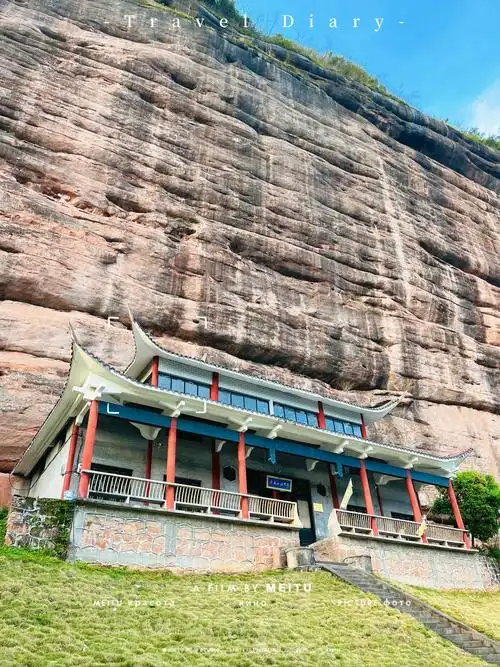 The Mahao Cliff Tombs were hewn directly into sandstone cliffs beginning in the Eastern Han Dynasty (25–220 CE), roughly contemporaneous with the late Roman Empire and the Antonine Plague period, and continued to be excavated through the Northern and Southern Dynasties (420–589 CE). Of the 544 surviving tomb chambers, 1988 saw the site elevated to national protected status, and in 1996 it was incorporated into the UNESCO World Heritage inscription covering Mount Emei and the Leshan Giant Buddha. Comparable in spirit to Rome's catacombs or the painted tombs of Egypt's Valley of the Kings, this necropolis offers a remarkably complete window into ancient Chinese funerary customs and daily life, all preserved beneath the same dramatic sky that shelters China's largest seated Buddha just a short walk away.
What sets Mahao apart architecturally is its meticulous imitation of contemporary Han wooden residences, translated entirely into stone. Tomb façades faithfully reproduce timber-frame details—lintels, bracket sets (dougong), columns, and roof tiles—with the precision of an architectural manual carved in rock. This "treating death as life" philosophy, much like the Etruscan concept of the tomb as eternal home, gave craftsmen every incentive to render their stone replicas with documentary accuracy, resulting in some of the finest surviving evidence for Han building practices outside of ancient texts.
The site's artistic treasures rival those of any contemporary Western mosaic tradition. Its most celebrated relief depicts Jing Ke's assassination attempt on the Qin King (227 BCE)—a scene also dramatized in Shakespeare's Measure for Measure-era chronicles—rendered with such dynamic tension and economical knife work that art historians rank it the finest Han Dynasty treatment of the subject. Equally significant is the small lotus-seated Buddha carved into a tomb lintel, standing roughly 35 centimeters tall and recognized as one of the earliest known Buddhist stone images in China, predating by generations the great cave sanctuaries of Dunhuang and offering crucial evidence for tracing Buddhism's eastward transmission along the Silk Road.
For practical planning, Mahao sits just a 10–15 minute walk south of the Leshan Giant Buddha scenic area's south gate, with entry typically included in the combined Leshan ticket. Opening hours run 08:30–17:30, and most visitors find 30–60 minutes sufficient to tour the main chambers and accompanying museum. Interior lighting is intentionally dim to protect the carvings, so renting an audio guide or joining a specialist docent tour is strongly advised—flash photography is prohibited. Sturdy, non-slip footwear and water are recommended, especially during humid summer months.
Most rewarding is approaching Mahao as a cultural pilgrimage rather than a casual stop. A suggested 2.5-hour route enters through the north gate, passes the historic Lingyun Temple, descends the cliffside boardwalks past the tomb complex, continues onward to the serene Wuyu Temple island, and exits via the south gate. This sequence lets travelers experience the contemplative Buddhist landscape at its fullest, moving from a monumental Buddha through an ancient necropolis to a quiet monastic island—a progression echoing the spiritual journeys once undertaken by monks along the Yangtze's sacred cliffs.
The Mahao Cliff Tombs were hewn directly into sandstone cliffs beginning in the Eastern Han Dynasty (25–220 CE), roughly contemporaneous with the late Roman Empire and the Antonine Plague period, and continued to be excavated through the Northern and Southern Dynasties (420–589 CE). Of the 544 surviving tomb chambers, 1988 saw the site elevated to national protected status, and in 1996 it was incorporated into the UNESCO World Heritage inscription covering Mount Emei and the Leshan Giant Buddha. Comparable in spirit to Rome's catacombs or the painted tombs of Egypt's Valley of the Kings, this necropolis offers a remarkably complete window into ancient Chinese funerary customs and daily life, all preserved beneath the same dramatic sky that shelters China's largest seated Buddha just a short walk away.
What sets Mahao apart architecturally is its meticulous imitation of contemporary Han wooden residences, translated entirely into stone. Tomb façades faithfully reproduce timber-frame details—lintels, bracket sets (dougong), columns, and roof tiles—with the precision of an architectural manual carved in rock. This "treating death as life" philosophy, much like the Etruscan concept of the tomb as eternal home, gave craftsmen every incentive to render their stone replicas with documentary accuracy, resulting in some of the finest surviving evidence for Han building practices outside of ancient texts.
The site's artistic treasures rival those of any contemporary Western mosaic tradition. Its most celebrated relief depicts Jing Ke's assassination attempt on the Qin King (227 BCE)—a scene also dramatized in Shakespeare's Measure for Measure-era chronicles—rendered with such dynamic tension and economical knife work that art historians rank it the finest Han Dynasty treatment of the subject. Equally significant is the small lotus-seated Buddha carved into a tomb lintel, standing roughly 35 centimeters tall and recognized as one of the earliest known Buddhist stone images in China, predating by generations the great cave sanctuaries of Dunhuang and offering crucial evidence for tracing Buddhism's eastward transmission along the Silk Road.
For practical planning, Mahao sits just a 10–15 minute walk south of the Leshan Giant Buddha scenic area's south gate, with entry typically included in the combined Leshan ticket. Opening hours run 08:30–17:30, and most visitors find 30–60 minutes sufficient to tour the main chambers and accompanying museum. Interior lighting is intentionally dim to protect the carvings, so renting an audio guide or joining a specialist docent tour is strongly advised—flash photography is prohibited. Sturdy, non-slip footwear and water are recommended, especially during humid summer months.
Most rewarding is approaching Mahao as a cultural pilgrimage rather than a casual stop. A suggested 2.5-hour route enters through the north gate, passes the historic Lingyun Temple, descends the cliffside boardwalks past the tomb complex, continues onward to the serene Wuyu Temple island, and exits via the south gate. This sequence lets travelers experience the contemplative Buddhist landscape at its fullest, moving from a monumental Buddha through an ancient necropolis to a quiet monastic island—a progression echoing the spiritual journeys once undertaken by monks along the Yangtze's sacred cliffs.