Mount Emei
⭐ 4.80
Hexin Village, Longchi Town, Emeishan City, Leshan City, Sichuan Province, China
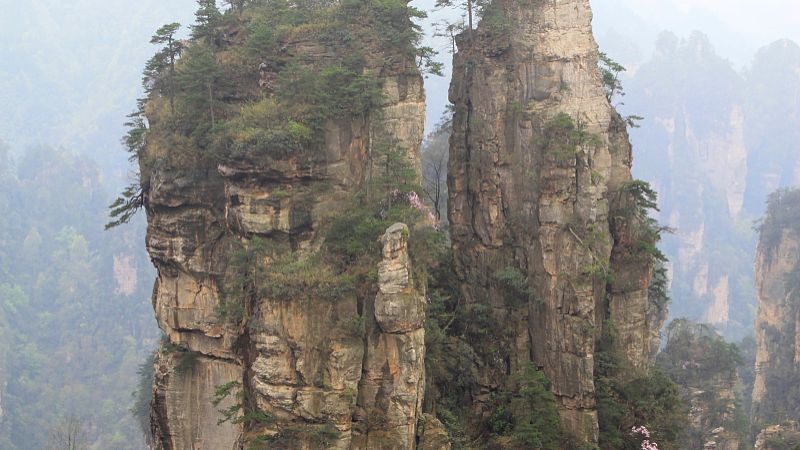 Rising from the steamy Sichuan Basin in a granite sweep reminiscent of the Alps, Mount Emei has drawn Buddhist pilgrims since the Eastern Han dynasty nearly two thousand years ago. Dedicated to Samantabhadra, the Bodhisattva of Universal Wisdom, it stands alongside Mount Wutai, Mount Putuo, and Mount Jiuhua as one of China's Four Sacred Buddhist Mountains, a spiritual lineage that UNESCO recognised in 1996 by inscribing it as a dual World Heritage Site. At its peak height of 3,079 metres, the mountain rivals the loftier Alps for drama while embedding layers of devotional architecture along its slopes.
The Golden Summit is the undisputed showpiece, an ethereal sanctuary where the 48-metre gilded statue of Samantabhadra gleams against the horizon. On clear days, the snowcapped silhouette of Mount Gongga pierces the distance like a distant Mont Blanc. Pilgrims arrive before dawn to witness the mountain's four celebrated marvels: a fiery sunrise, an undulating sea of clouds, the rainbow "Buddha's halo" that rings one's shadow, and the elusive "holy lamps," tiny lights that flicker mysteriously on summer nights after rain.
Emei's spiritual heritage survives in more than thirty ancient monasteries threading the mountainside, each echoing the contemplative silence of Europe's medieval abbey routes. Wannian Temple's Tang-dynasty brick vault, built entirely without wooden beams, is considered an architectural rarity on par with the ingenious domes of the Roman Pantheon. Inside rests a 62-tonne bronze statue of Samantabhadra riding a white elephant, a masterpiece of Buddhist metalwork. From 2026, all temple admission fees are waived, allowing unhurried exploration of these living sanctuaries.
Beneath the monasteries, Emei shelters one of China's most complete vertical vegetation belts, climbing from bamboo groves through cedar forests to alpine meadows, earning it the nickname "Kingdom of Plants." Near Qingyin Pavilion, the mischievous Tibetan macaques delight visitors, though the cardinal rule is hands-off: never feed them, never flash red clothing, and never let them glimpse food inside your daypack. The recently renovated Emei Mountain Museum, free since 2024, offers immersive exhibits on geology and the ancient Ba-Shu culture of the region.
For practical planning, peak-season entry costs 160 RMB, with free tickets for students holding exam vouchers in summer; a sightseeing bus pass runs 90 RMB round-trip, and the Golden Summit cable car adds 120 RMB. The classic one-day route takes the bus to Leidongping, then a short cable car ascent to the summit, while a leisurely two-day itinerary adds hikes through the half-mountain temples and a summit sunrise. Even in July and August, when lowland Chengdu swelters, the summit requires a windproof jacket, and the cable car to Jieyin Hall is essential for avoiding a punishing 1,800-step climb before you have even reached the upper stations.
Rising from the steamy Sichuan Basin in a granite sweep reminiscent of the Alps, Mount Emei has drawn Buddhist pilgrims since the Eastern Han dynasty nearly two thousand years ago. Dedicated to Samantabhadra, the Bodhisattva of Universal Wisdom, it stands alongside Mount Wutai, Mount Putuo, and Mount Jiuhua as one of China's Four Sacred Buddhist Mountains, a spiritual lineage that UNESCO recognised in 1996 by inscribing it as a dual World Heritage Site. At its peak height of 3,079 metres, the mountain rivals the loftier Alps for drama while embedding layers of devotional architecture along its slopes.
The Golden Summit is the undisputed showpiece, an ethereal sanctuary where the 48-metre gilded statue of Samantabhadra gleams against the horizon. On clear days, the snowcapped silhouette of Mount Gongga pierces the distance like a distant Mont Blanc. Pilgrims arrive before dawn to witness the mountain's four celebrated marvels: a fiery sunrise, an undulating sea of clouds, the rainbow "Buddha's halo" that rings one's shadow, and the elusive "holy lamps," tiny lights that flicker mysteriously on summer nights after rain.
Emei's spiritual heritage survives in more than thirty ancient monasteries threading the mountainside, each echoing the contemplative silence of Europe's medieval abbey routes. Wannian Temple's Tang-dynasty brick vault, built entirely without wooden beams, is considered an architectural rarity on par with the ingenious domes of the Roman Pantheon. Inside rests a 62-tonne bronze statue of Samantabhadra riding a white elephant, a masterpiece of Buddhist metalwork. From 2026, all temple admission fees are waived, allowing unhurried exploration of these living sanctuaries.
Beneath the monasteries, Emei shelters one of China's most complete vertical vegetation belts, climbing from bamboo groves through cedar forests to alpine meadows, earning it the nickname "Kingdom of Plants." Near Qingyin Pavilion, the mischievous Tibetan macaques delight visitors, though the cardinal rule is hands-off: never feed them, never flash red clothing, and never let them glimpse food inside your daypack. The recently renovated Emei Mountain Museum, free since 2024, offers immersive exhibits on geology and the ancient Ba-Shu culture of the region.
For practical planning, peak-season entry costs 160 RMB, with free tickets for students holding exam vouchers in summer; a sightseeing bus pass runs 90 RMB round-trip, and the Golden Summit cable car adds 120 RMB. The classic one-day route takes the bus to Leidongping, then a short cable car ascent to the summit, while a leisurely two-day itinerary adds hikes through the half-mountain temples and a summit sunrise. Even in July and August, when lowland Chengdu swelters, the summit requires a windproof jacket, and the cable car to Jieyin Hall is essential for avoiding a punishing 1,800-step climb before you have even reached the upper stations.