Shuhe Ancient Town
⭐ 4.20
Lijiang City, Yunnan, China
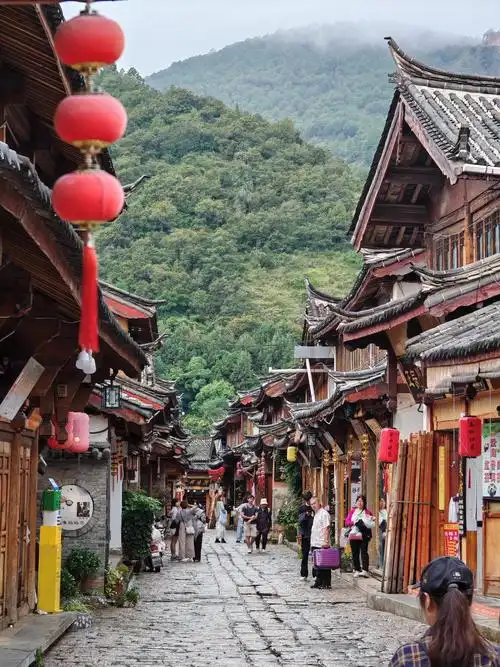 **Historical Context** Shuhe served as a vital caravan station on the Tea Horse Road, the winding mountain trade network that sustained commerce between Yunnan, Tibet, and Sichuan from the Tang dynasty onward—roughly contemporary with Europe's medieval merchant fairs. At its Ming and Qing peak, mule trains laden with tea, salt, and furs passed through its stone-paved lanes in ceaseless procession. In 1997, Shuhe was inscribed alongside Dayan Old Town as a UNESCO World Heritage Site, recognizing its role as a living Naxi cultural repository where centuries of caravan culture and ethnic heritage remain tangible.
**Architecture** The town's layout fans outward along nine radial alleys from the spine of the Green Dragon River, a pattern reminiscent of a medieval European hill town like Tuscany's San Gimignano. Hundreds of Ming and Qing-era Naxi residences survive, distinguished by grey-tiled roofs, whitewashed walls, and the classic "three-court screen-wall" courtyard plan—blending Han Chinese structural logic with indigenous highland aesthetics. Cobblestone lanes thread past ancient bridges, temples, and courtyards under lush canopies, preserving an atmosphere unchanged for generations.
**Cultural Highlights** The centerpiece is Nine-Pool Dragon Pond, fed by snowmelt from Jade Dragon Snow Mountain—on clear mornings, the 5,500-meter peak reflects with mirror-like perfection, rivaling Lake Como's iconic vistas. The waters harbor rare highland schizothorax fish. Nearby, the Tea Horse Road Museum, housed in the Ming-era Dajue Palace complex, displays over 800 artifacts and priceless murals explaining caravan life. Twice-weekly traditional markets enliven the Square of Four-Sided Sounds, while evenings often feature communal Naxi bonfire dances.
**Practical Information** Shuhe is free to enter and open around the clock; only a handful of small museums or performances charge fees. No reservations are required—enter via the south or north gate, with the latter offering easy parking and proximity to Nine-Pool Dragon Pond. From Lijiang Sanyi Airport, the journey takes 40–50 minutes by car; taxis from Dayan Old Town arrive in roughly 15 minutes. The compact footprint allows a leisurely walking tour in 2–3 hours, though an overnight stay is highly recommended.
**Visitor Tips** Arrive between 8:00–11:00 AM or after 4:00 PM when soft light bathes the stone lanes and crowds thin—a photographer's sweet spot comparable to the magic-hour windows at Venice or Bruges. Spring (March–May) and autumn (September–November) offer the most reliable weather. August brings heavy rains requiring sturdy footwear and rain gear, while year-round visitors should pack high-SPF sunscreen, lip balm, and layered clothing—highland temperatures swing dramatically between midday sun and chilly nights at over 2,400 meters elevation.
**Why Visit** Unlike the bustling souvenir shops of Dayan, Shuhe rewards travelers who linger. Boutique courtyard inns offer exceptional value, the pace echoes the unhurried rhythm of a Tuscan village, and pairing the visit with the nearby, even quieter Baisha Old Town creates a deeply rewarding two-day cultural immersion into one of China's most intact ethnic landscapes.
**Historical Context** Shuhe served as a vital caravan station on the Tea Horse Road, the winding mountain trade network that sustained commerce between Yunnan, Tibet, and Sichuan from the Tang dynasty onward—roughly contemporary with Europe's medieval merchant fairs. At its Ming and Qing peak, mule trains laden with tea, salt, and furs passed through its stone-paved lanes in ceaseless procession. In 1997, Shuhe was inscribed alongside Dayan Old Town as a UNESCO World Heritage Site, recognizing its role as a living Naxi cultural repository where centuries of caravan culture and ethnic heritage remain tangible.
**Architecture** The town's layout fans outward along nine radial alleys from the spine of the Green Dragon River, a pattern reminiscent of a medieval European hill town like Tuscany's San Gimignano. Hundreds of Ming and Qing-era Naxi residences survive, distinguished by grey-tiled roofs, whitewashed walls, and the classic "three-court screen-wall" courtyard plan—blending Han Chinese structural logic with indigenous highland aesthetics. Cobblestone lanes thread past ancient bridges, temples, and courtyards under lush canopies, preserving an atmosphere unchanged for generations.
**Cultural Highlights** The centerpiece is Nine-Pool Dragon Pond, fed by snowmelt from Jade Dragon Snow Mountain—on clear mornings, the 5,500-meter peak reflects with mirror-like perfection, rivaling Lake Como's iconic vistas. The waters harbor rare highland schizothorax fish. Nearby, the Tea Horse Road Museum, housed in the Ming-era Dajue Palace complex, displays over 800 artifacts and priceless murals explaining caravan life. Twice-weekly traditional markets enliven the Square of Four-Sided Sounds, while evenings often feature communal Naxi bonfire dances.
**Practical Information** Shuhe is free to enter and open around the clock; only a handful of small museums or performances charge fees. No reservations are required—enter via the south or north gate, with the latter offering easy parking and proximity to Nine-Pool Dragon Pond. From Lijiang Sanyi Airport, the journey takes 40–50 minutes by car; taxis from Dayan Old Town arrive in roughly 15 minutes. The compact footprint allows a leisurely walking tour in 2–3 hours, though an overnight stay is highly recommended.
**Visitor Tips** Arrive between 8:00–11:00 AM or after 4:00 PM when soft light bathes the stone lanes and crowds thin—a photographer's sweet spot comparable to the magic-hour windows at Venice or Bruges. Spring (March–May) and autumn (September–November) offer the most reliable weather. August brings heavy rains requiring sturdy footwear and rain gear, while year-round visitors should pack high-SPF sunscreen, lip balm, and layered clothing—highland temperatures swing dramatically between midday sun and chilly nights at over 2,400 meters elevation.
**Why Visit** Unlike the bustling souvenir shops of Dayan, Shuhe rewards travelers who linger. Boutique courtyard inns offer exceptional value, the pace echoes the unhurried rhythm of a Tuscan village, and pairing the visit with the nearby, even quieter Baisha Old Town creates a deeply rewarding two-day cultural immersion into one of China's most intact ethnic landscapes.