Black Dragon Pool
⭐ 3.50
Hongliutan Village, Zhenchuan Town, Yuyang District, Yulin City, Shaanxi Province, China
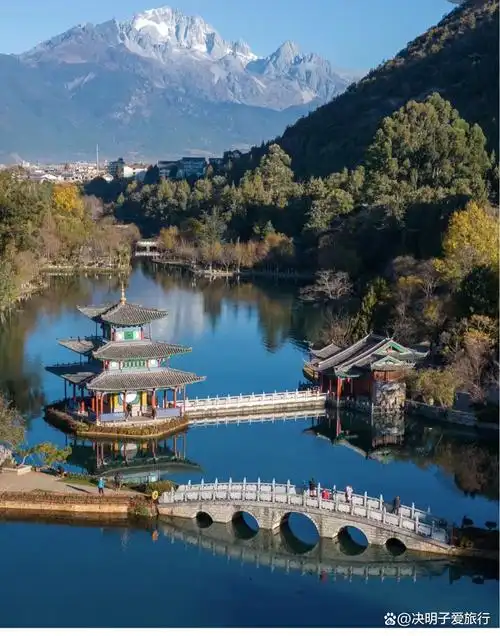 Heilongtan's origins date to the reign of the Zhengde Emperor (1506–1521), when villagers built a Dragon King Temple beside a natural spring, renaming the site from "Nine Dragon Pool" to its present title in keeping with the old saying "where there is a temple, there is a pool." For comparison, this places the sanctuary in the same era as the completion of Michelangelo's Sistine Chapel ceiling and the early stirrings of the Protestant Reformation, yet its cultural concerns are entirely local—appeasing the dragons said to release the lifeglood of water onto the sun-baked loess. Designated a key municipal heritage site in 1984 and later elevated to a national AAAA tourism zone, the temple complex has witnessed half a millennium of unbroken prayer for rain.
The architectural centerpiece is a colossal stone memorial archway standing 13.96 meters tall and weighing over 140 tons, its surface carved with intricate dragon reliefs that recall the craftsmanship of the Ming imperial tomb spirit ways near Nanjing, though on a more humble scale. Behind it, the Black Dragon King Shrine clings to the hillside with upturned eaves and grey-tiled roofs, framed by ancient pines. Bluestone footpaths weave between pavilions and pools, inviting the same contemplative wandering one might find at a Japanese temple garden—only here the backdrop is the ochre drama of collapsing loess cliffs rather than manicured moss.
The hydrology is what makes this place genuinely singular: nine limpid pools link together through the ravine, fed by springs that flow year-round despite the arid surroundings. High on a cliff west of the main temple, an egg-shaped fissure weeps droplets like a string of pearls—the "Dragon Cave Hiding Treasures," ranked among the "Eight Scenic Wonders of Yulin." Where the springs meet the Wuding River below, the contrast between the loess plateau's tawny silence and the tinkling, jade-clear water creates a landscape of striking yin-yang balance, reminiscent of how desert oases punctuate the Saharan caravan routes.
Culturally, Heilongtan remains the spiritual heart of northern Shaanxi's dragon-veneration traditions. Each year on the thirteenth day of the sixth lunar month, the site erupts into a raucous temple fair featuring Qinqiang and Shanxi opera performances, folk singers, and stalls selling regional specialties like wantuan (chilled millet jelly) and donkey meat. The gathering echoes Europe's medieval saint's-day fairs in Lourdes or the集市 traditions of Andalusia—lively, fragrant, and deeply communal. On quieter days, the temple serves as a place for solitary pilgrimage, prayer, and reflection beneath the pines.
For the practical traveler, the site is free of charge (despite some online misinformation) and lies along the G210 highway, roughly 60–70 kilometers southwest of Yulin city—a drive best made by private car or chartered minivan, as public transport is sparse. Opening hours vary by season: from April through August the gates run from 6 a.m. to 9 p.m., and from September through March from 7 a.m. to 6 p.m. Allow two to three hours for a thorough visit, wear sturdy non-slip shoes for the wet bluestone paths, and bring water and sun protection—shade is limited. Combining the trip with a half-day food crawl through the nearby Zhenchuan township is highly recommended.
Come for the thunder of Ming-era stone dragons, stay for the hush of spring water dripping into ancient pools. Heilongtan is not a destination of grand monuments but of intimate atmosphere—the kind of place that rewards travelers willing to venture beyond Xi'an's terracotta warriors into the raw, lyrical landscape that has shaped northern Chinese identity for centuries.
Heilongtan's origins date to the reign of the Zhengde Emperor (1506–1521), when villagers built a Dragon King Temple beside a natural spring, renaming the site from "Nine Dragon Pool" to its present title in keeping with the old saying "where there is a temple, there is a pool." For comparison, this places the sanctuary in the same era as the completion of Michelangelo's Sistine Chapel ceiling and the early stirrings of the Protestant Reformation, yet its cultural concerns are entirely local—appeasing the dragons said to release the lifeglood of water onto the sun-baked loess. Designated a key municipal heritage site in 1984 and later elevated to a national AAAA tourism zone, the temple complex has witnessed half a millennium of unbroken prayer for rain.
The architectural centerpiece is a colossal stone memorial archway standing 13.96 meters tall and weighing over 140 tons, its surface carved with intricate dragon reliefs that recall the craftsmanship of the Ming imperial tomb spirit ways near Nanjing, though on a more humble scale. Behind it, the Black Dragon King Shrine clings to the hillside with upturned eaves and grey-tiled roofs, framed by ancient pines. Bluestone footpaths weave between pavilions and pools, inviting the same contemplative wandering one might find at a Japanese temple garden—only here the backdrop is the ochre drama of collapsing loess cliffs rather than manicured moss.
The hydrology is what makes this place genuinely singular: nine limpid pools link together through the ravine, fed by springs that flow year-round despite the arid surroundings. High on a cliff west of the main temple, an egg-shaped fissure weeps droplets like a string of pearls—the "Dragon Cave Hiding Treasures," ranked among the "Eight Scenic Wonders of Yulin." Where the springs meet the Wuding River below, the contrast between the loess plateau's tawny silence and the tinkling, jade-clear water creates a landscape of striking yin-yang balance, reminiscent of how desert oases punctuate the Saharan caravan routes.
Culturally, Heilongtan remains the spiritual heart of northern Shaanxi's dragon-veneration traditions. Each year on the thirteenth day of the sixth lunar month, the site erupts into a raucous temple fair featuring Qinqiang and Shanxi opera performances, folk singers, and stalls selling regional specialties like wantuan (chilled millet jelly) and donkey meat. The gathering echoes Europe's medieval saint's-day fairs in Lourdes or the集市 traditions of Andalusia—lively, fragrant, and deeply communal. On quieter days, the temple serves as a place for solitary pilgrimage, prayer, and reflection beneath the pines.
For the practical traveler, the site is free of charge (despite some online misinformation) and lies along the G210 highway, roughly 60–70 kilometers southwest of Yulin city—a drive best made by private car or chartered minivan, as public transport is sparse. Opening hours vary by season: from April through August the gates run from 6 a.m. to 9 p.m., and from September through March from 7 a.m. to 6 p.m. Allow two to three hours for a thorough visit, wear sturdy non-slip shoes for the wet bluestone paths, and bring water and sun protection—shade is limited. Combining the trip with a half-day food crawl through the nearby Zhenchuan township is highly recommended.
Come for the thunder of Ming-era stone dragons, stay for the hush of spring water dripping into ancient pools. Heilongtan is not a destination of grand monuments but of intimate atmosphere—the kind of place that rewards travelers willing to venture beyond Xi'an's terracotta warriors into the raw, lyrical landscape that has shaped northern Chinese identity for centuries.