Dandong Museum
⭐ 3.50
No. 126, Renmin Street, Zhenxing District, Dandong City, Liaoning Province, China
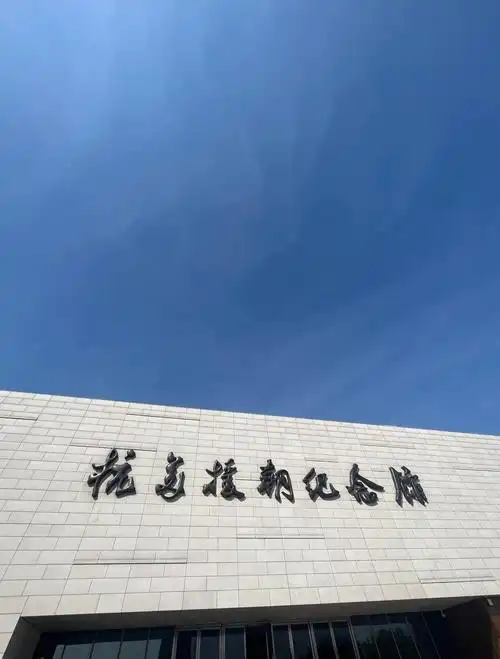 Perched on the rugged banks of the Yalu River, Dandong has long served as a geopolitical crossroads between China and the Korean Peninsula, a role it has played for roughly 18,000 years of human habitation. The region echoes with the same frontier tensions that animated ancient borderlands like Hadrian's Wall or the Roman limes, where empires met and cultures mingled. Considered the gateway to the DPRK, modern Dandong is inseparable from the 1950–1953 Korean War, which claimed millions of lives and reshaped Cold War alliances. The Sino-Korean War Memorial, the city's premier cultural institution, has fully integrated the interpretive role once envisioned for the neighboring Dandong City Museum, making it the essential stop for any visitor seeking historical context.
The unfinished Dandong City Museum, built in 1998, was designed in a modest 4,900-square-meter footprint with 2,000 square meters of exhibition space, an intimate scale suited to focused regional storytelling rather than grand blockbuster displays. Its architecture sits on the same slopes as the Memorial but maintains a separate entrance, often confusing travelers and GPS systems alike. The structure was conceived to echo the rolling hills of the Liaodong Peninsula, though visitors unfortunately cannot experience its interior, as the building has never opened its doors to the public. Navigating to the site requires entering the full Chinese name to avoid misdirection to its far more active neighbor.
Had the museum opened as planned, its centerpiece exhibition "The Yalu River's Tale" would have unfolded across three sweeping chapters: "Since Ancient Youyan Lands," "The Endless Yalu," and "The Vicissitudes of the Eastern Frontier." Together, these sections would have traced the valley's evolution from Paleolithic cave dwellers through Bronze Age artisans, Warring States metalworkers, and Qing Dynasty craftsmen, weaving a narrative comparable to the regional histories preserved in Europe's great provincial museums. The collection's prized pieces, including a Warring States bronze sword, a Qing-era ivory pagoda, and artifacts from the Qianyang Cave site, are recognized as treasures of national significance. Their true value lies in illuminating the often-overlooked cultural exchanges along China's northeastern frontier.
The cultural significance of the Memorial extends well beyond its immediate battlefield narratives. It stands as a vital repository of memory for the "Resist America, Aid Korea" campaign, a conflict that claimed roughly 300,000 Chinese soldiers and effectively drew the geopolitical map that persists across the peninsula today. For Western visitors, the experience offers rare insight into how the war is remembered and reframed from the Chinese perspective, a perspective rarely encountered in European or American museums. The Memorial complex features exhibition halls, an immersive panorama painting gallery, and a soaring memorial tower commanding views across the Yalu toward the hazy outlines of Sinuiju. The design language deliberately invokes solemnity and sacrifice, much like the war memorials found in Ypres, Verdun, or Normandy.
Practical planning is essential, as the Memorial operates on a strict reservation system. Foreign visitors must book online through the official website or WeChat mini-program using their passport, with admission free of charge but Monday closures in effect. Bilingual signage in English and Chinese helps international guests navigate the galleries, though guided tours in English are limited and worth requesting in advance. The site lies roughly 15 minutes by taxi from central Dandong, with the riverfront promenade and Broken Bridge, a casualty of American bombing in 1950, providing an evocative companion visit. Travelers should ignore routing to the closed Dandong City Museum entirely and direct themselves straight to the Memorial, confirming all reservations before departure.
For those with extra time, several worthy alternatives complement the Memorial experience. The Kuandian Museum, the Yalu River Art Museum, and the Dandong Historical and Cultural Experience Hall at Riverside Pier No. 1 offer smaller but accessible insights into local heritage, ethnic minorities, and contemporary art. These can be combined into a half-day extension depending on itinerary. Above all, travelers should verify opening status before setting out, as institutions in this border region occasionally adjust schedules in response to diplomatic developments. Dandong remains one of Northeast Asia's most historically charged destinations, and the Memorial offers an unforgettable, if sobering, introduction to its layered past.
Perched on the rugged banks of the Yalu River, Dandong has long served as a geopolitical crossroads between China and the Korean Peninsula, a role it has played for roughly 18,000 years of human habitation. The region echoes with the same frontier tensions that animated ancient borderlands like Hadrian's Wall or the Roman limes, where empires met and cultures mingled. Considered the gateway to the DPRK, modern Dandong is inseparable from the 1950–1953 Korean War, which claimed millions of lives and reshaped Cold War alliances. The Sino-Korean War Memorial, the city's premier cultural institution, has fully integrated the interpretive role once envisioned for the neighboring Dandong City Museum, making it the essential stop for any visitor seeking historical context.
The unfinished Dandong City Museum, built in 1998, was designed in a modest 4,900-square-meter footprint with 2,000 square meters of exhibition space, an intimate scale suited to focused regional storytelling rather than grand blockbuster displays. Its architecture sits on the same slopes as the Memorial but maintains a separate entrance, often confusing travelers and GPS systems alike. The structure was conceived to echo the rolling hills of the Liaodong Peninsula, though visitors unfortunately cannot experience its interior, as the building has never opened its doors to the public. Navigating to the site requires entering the full Chinese name to avoid misdirection to its far more active neighbor.
Had the museum opened as planned, its centerpiece exhibition "The Yalu River's Tale" would have unfolded across three sweeping chapters: "Since Ancient Youyan Lands," "The Endless Yalu," and "The Vicissitudes of the Eastern Frontier." Together, these sections would have traced the valley's evolution from Paleolithic cave dwellers through Bronze Age artisans, Warring States metalworkers, and Qing Dynasty craftsmen, weaving a narrative comparable to the regional histories preserved in Europe's great provincial museums. The collection's prized pieces, including a Warring States bronze sword, a Qing-era ivory pagoda, and artifacts from the Qianyang Cave site, are recognized as treasures of national significance. Their true value lies in illuminating the often-overlooked cultural exchanges along China's northeastern frontier.
The cultural significance of the Memorial extends well beyond its immediate battlefield narratives. It stands as a vital repository of memory for the "Resist America, Aid Korea" campaign, a conflict that claimed roughly 300,000 Chinese soldiers and effectively drew the geopolitical map that persists across the peninsula today. For Western visitors, the experience offers rare insight into how the war is remembered and reframed from the Chinese perspective, a perspective rarely encountered in European or American museums. The Memorial complex features exhibition halls, an immersive panorama painting gallery, and a soaring memorial tower commanding views across the Yalu toward the hazy outlines of Sinuiju. The design language deliberately invokes solemnity and sacrifice, much like the war memorials found in Ypres, Verdun, or Normandy.
Practical planning is essential, as the Memorial operates on a strict reservation system. Foreign visitors must book online through the official website or WeChat mini-program using their passport, with admission free of charge but Monday closures in effect. Bilingual signage in English and Chinese helps international guests navigate the galleries, though guided tours in English are limited and worth requesting in advance. The site lies roughly 15 minutes by taxi from central Dandong, with the riverfront promenade and Broken Bridge, a casualty of American bombing in 1950, providing an evocative companion visit. Travelers should ignore routing to the closed Dandong City Museum entirely and direct themselves straight to the Memorial, confirming all reservations before departure.
For those with extra time, several worthy alternatives complement the Memorial experience. The Kuandian Museum, the Yalu River Art Museum, and the Dandong Historical and Cultural Experience Hall at Riverside Pier No. 1 offer smaller but accessible insights into local heritage, ethnic minorities, and contemporary art. These can be combined into a half-day extension depending on itinerary. Above all, travelers should verify opening status before setting out, as institutions in this border region occasionally adjust schedules in response to diplomatic developments. Dandong remains one of Northeast Asia's most historically charged destinations, and the Memorial offers an unforgettable, if sobering, introduction to its layered past.