Phoenix Mountain
⭐ 4.60
Phoenix Mountain Scenic Area, Zhenxing District, Dandong City, Liaoning Province, China
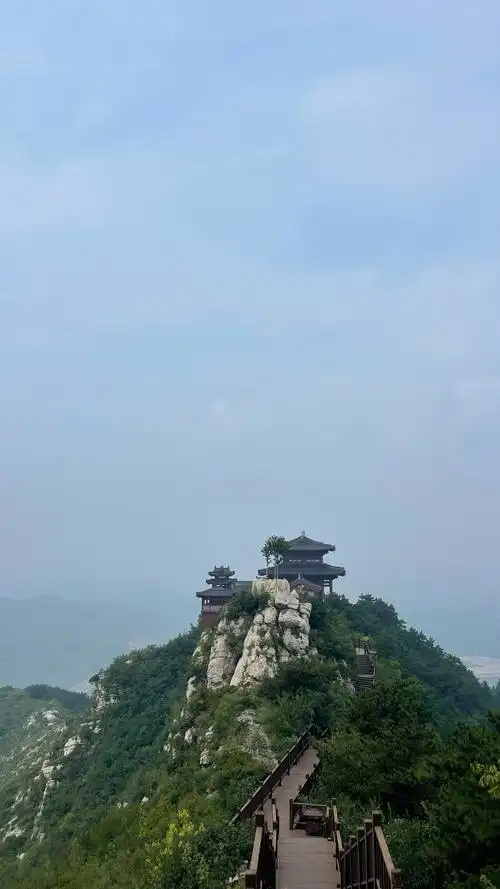 Long before it became a tourist draw, Phoenix Mountain served as a strategic outpost on China's northeastern frontier. Emperor Taizong of Tang — a contemporary of the Prophet Muhammad and Byzantine Emperor Heraclius — camped here in 645 AD during his ill-fated campaign against Goguryeo, the ancient Korean kingdom that once stretched across Manchuria. By the Ming Dynasty, when Shakespeare was penning his plays in distant England, Phoenix Mountain was already celebrated as a sacred peak guarding the Liaodong border. Today, standing within view of nuclear-armed North Korea, the mountain offers a rare glimpse into a contested frontier that has shaped East Asian geopolitics for fifteen centuries.
Scattered across the granite slopes are centuries-old temples testifying to the mountain's spiritual heritage. The Taoist Ziyang Monastery, perched among the pines, and the Buddhist Guanyin Pavilion form a harmonious dialogue between two traditions — much like the syncretic sites of Tuscany's Camaldoli Hermitage or Greece's Mount Athos. Pilgrims have climbed these paths for six hundred years, their incense mingling with mountain mist. The mountain remains a living monument to cultural exchange between China's Han heartland and its Manchurian frontier, where Confucian bureaucracy, Buddhist devotion, and frontier shamanism once converged.
Geologically, Phoenix Mountain belongs to the same volcanic system that produced the majestic Changbai peak on the North Korean border. Millions of years of wind and frost have sculpted its signature features: the pierced Arrow-Eye Peak, the hoof-shaped indentations of Divine Horse Peak, and yawning chasms between granite walls. After summer rains, fog rolls through the gorges like something from a Tolkien landscape, occasionally producing ethereal Buddha-light halos. In autumn — the best season to visit — the mountain blazes in shades of vermillion and gold, rivaling the foliage of Vermont's Green Mountains or Japan's Nikko highlands.
What truly sets Phoenix Mountain apart is its portfolio of heart-stopping traverses. The Old Cow Back ridge — a thirty-centimeter-wide spine of rock flanked by sheer hundred-meter drops — has earned comparisons to the famous Goûter ridge on Mont Blanc, but with far less safety infrastructure. The aptly named "World's End" plank path, barely half a meter wide, demands that visitors press against the cliff while gripping rusted chains. Most dramatic of all, the cantilevered glass skywalk extends over empty space, a modern cousin to Spain's Caminito del Rey. These aren't mere lookouts; they're genuine mountaineering challenges that test both nerve and stamina.
The AAAA-rated scenic area lies roughly forty minutes by taxi or rental car from central Dandong. During peak season (April through October), gates open at 6:30 AM and close at 4 PM. Smart visitors take the scenic shuttle to the entrance checkpoint, then board the one-way cable car to conserve energy for the demanding ridge sections. Three to four hours covers the highlights. Bring sturdy hiking boots with aggressive tread, leather gloves for the chains, at least two liters of water, and calorie-dense snacks. August brings frequent thunderstorms, so plan to begin your descent by 3:30 PM — lightning on exposed ridges is genuinely dangerous.
Phoenix Mountain isn't for everyone. Anyone with vertigo, heart conditions, or hypertension should choose the gentler perimeter paths rather than the famous ridge walks. Yet for adventurous travelers, it delivers something increasingly rare in modern China: an authentic, demanding mountain experience without the engineered safety of a theme-park attraction. Few places allow you to traverse a two-thousand-year-old pilgrimage route, gaze toward a forbidden foreign country, and cling to chains overhanging the abyss — all in a single afternoon. It is, quite simply, the most thrilling scramble in northeastern China.
Long before it became a tourist draw, Phoenix Mountain served as a strategic outpost on China's northeastern frontier. Emperor Taizong of Tang — a contemporary of the Prophet Muhammad and Byzantine Emperor Heraclius — camped here in 645 AD during his ill-fated campaign against Goguryeo, the ancient Korean kingdom that once stretched across Manchuria. By the Ming Dynasty, when Shakespeare was penning his plays in distant England, Phoenix Mountain was already celebrated as a sacred peak guarding the Liaodong border. Today, standing within view of nuclear-armed North Korea, the mountain offers a rare glimpse into a contested frontier that has shaped East Asian geopolitics for fifteen centuries.
Scattered across the granite slopes are centuries-old temples testifying to the mountain's spiritual heritage. The Taoist Ziyang Monastery, perched among the pines, and the Buddhist Guanyin Pavilion form a harmonious dialogue between two traditions — much like the syncretic sites of Tuscany's Camaldoli Hermitage or Greece's Mount Athos. Pilgrims have climbed these paths for six hundred years, their incense mingling with mountain mist. The mountain remains a living monument to cultural exchange between China's Han heartland and its Manchurian frontier, where Confucian bureaucracy, Buddhist devotion, and frontier shamanism once converged.
Geologically, Phoenix Mountain belongs to the same volcanic system that produced the majestic Changbai peak on the North Korean border. Millions of years of wind and frost have sculpted its signature features: the pierced Arrow-Eye Peak, the hoof-shaped indentations of Divine Horse Peak, and yawning chasms between granite walls. After summer rains, fog rolls through the gorges like something from a Tolkien landscape, occasionally producing ethereal Buddha-light halos. In autumn — the best season to visit — the mountain blazes in shades of vermillion and gold, rivaling the foliage of Vermont's Green Mountains or Japan's Nikko highlands.
What truly sets Phoenix Mountain apart is its portfolio of heart-stopping traverses. The Old Cow Back ridge — a thirty-centimeter-wide spine of rock flanked by sheer hundred-meter drops — has earned comparisons to the famous Goûter ridge on Mont Blanc, but with far less safety infrastructure. The aptly named "World's End" plank path, barely half a meter wide, demands that visitors press against the cliff while gripping rusted chains. Most dramatic of all, the cantilevered glass skywalk extends over empty space, a modern cousin to Spain's Caminito del Rey. These aren't mere lookouts; they're genuine mountaineering challenges that test both nerve and stamina.
The AAAA-rated scenic area lies roughly forty minutes by taxi or rental car from central Dandong. During peak season (April through October), gates open at 6:30 AM and close at 4 PM. Smart visitors take the scenic shuttle to the entrance checkpoint, then board the one-way cable car to conserve energy for the demanding ridge sections. Three to four hours covers the highlights. Bring sturdy hiking boots with aggressive tread, leather gloves for the chains, at least two liters of water, and calorie-dense snacks. August brings frequent thunderstorms, so plan to begin your descent by 3:30 PM — lightning on exposed ridges is genuinely dangerous.
Phoenix Mountain isn't for everyone. Anyone with vertigo, heart conditions, or hypertension should choose the gentler perimeter paths rather than the famous ridge walks. Yet for adventurous travelers, it delivers something increasingly rare in modern China: an authentic, demanding mountain experience without the engineered safety of a theme-park attraction. Few places allow you to traverse a two-thousand-year-old pilgrimage route, gaze toward a forbidden foreign country, and cling to chains overhanging the abyss — all in a single afternoon. It is, quite simply, the most thrilling scramble in northeastern China.