Tiger Mountain Great Wall
⭐ 4.20
Tiger Mountain Great Wall, Kuandian Manchu Autonomous County, Dandong City, Liaoning Province, China
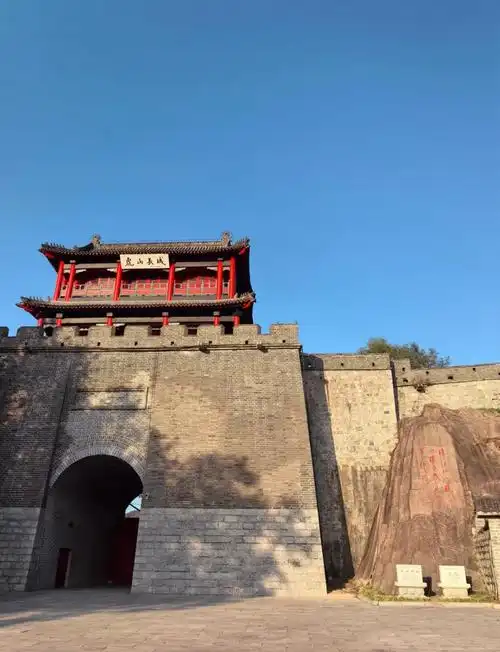 Long dismissed as a mere rumor, Hushan Great Wall was confirmed by archaeologists in the 1990s as the Ming Dynasty's genuine eastern anchor, predating the popular assumption that Shanhaiguan marked the wall's end. Constructed in 1469 during the reign of Emperor Chenghua, it formed a critical link in the Liaodong frontier defense system, protecting the empire's northeastern approaches against Manchu incursions. For travelers familiar with the stone bastions of the Great Wall near Beijing or the Alpine fortifications of medieval Europe, Hushan offers a far more intimate, river-bound experience where the wall literally terminates at an international boundary.
The restored complex spans roughly 1.25 kilometers along forested ridgelines, rising to about 146 meters above the river. Visitors can climb weathered Ming-era enemy towers and beacon platforms, then descend via the dramatic kilometer-long riverside plank road, which clings to cliff faces and crosses a swaying suspension bridge. Cleverly engineered mountain defense walls weave natural terrain into the fortifications, a design philosophy reminiscent of European border castles such as those along the Rhine, where geography itself served as a defensive ally.
Beyond its military pedigree, Hushan carries profound symbolic weight. Standing here, you sense the layered history of the Sino-Korean frontier, from imperial diplomacy to the modern Korean War era. Paired with Dandong's Yalu River Broken Bridge, where Chinese troops crossed into Korea in 1950, the site forms a continuous narrative arc from ancient borderlands to 20th-century geopolitics, making it essential for anyone interested in how this contested region shaped East Asian history.
Practical logistics are straightforward. The site sits in Hushan Town, Kuandian County, about 30 to 40 minutes from downtown Dandong by tour bus or taxi. Tickets cost 60 yuan in peak season (April through October) and 55 yuan off-season, with daily hours from 8:30 a.m. to 5:00 p.m., last entry at 4:30. Most visitors complete the loop in two to three hours, and the recommended route climbs the wall first, ascends the main beacon tower for panoramic views, then descends via the plank road to the One Step Across border marker and on-site museum.
Plan your visit for early morning before 9 a.m. or after 3 p.m. to dodge the tour-bus crush, and bring binoculars for surprisingly clear views of rural North Korean farmhouses across the Yalu. Wear sturdy, grippy hiking shoes for the steep plank-road sections and carry ample water, as shade is limited. Crucially, drones are prohibited, and shouting or tossing objects across the river is strictly forbidden, given the sensitive border zone.
Why visit? Hushan Great Wall delivers something no other section of this UNESCO-listed wonder can: the chance to stand at the actual eastern frontier where China meets North Korea, tracing history from Ming dynasty sentries to Cold War veterans. It is one of China's most quietly spectacular off-the-beaten-path experiences, rewarding curious travelers with sweeping river views, genuine historical revelation, and the surreal thrill of a border you can practically step across.
Long dismissed as a mere rumor, Hushan Great Wall was confirmed by archaeologists in the 1990s as the Ming Dynasty's genuine eastern anchor, predating the popular assumption that Shanhaiguan marked the wall's end. Constructed in 1469 during the reign of Emperor Chenghua, it formed a critical link in the Liaodong frontier defense system, protecting the empire's northeastern approaches against Manchu incursions. For travelers familiar with the stone bastions of the Great Wall near Beijing or the Alpine fortifications of medieval Europe, Hushan offers a far more intimate, river-bound experience where the wall literally terminates at an international boundary.
The restored complex spans roughly 1.25 kilometers along forested ridgelines, rising to about 146 meters above the river. Visitors can climb weathered Ming-era enemy towers and beacon platforms, then descend via the dramatic kilometer-long riverside plank road, which clings to cliff faces and crosses a swaying suspension bridge. Cleverly engineered mountain defense walls weave natural terrain into the fortifications, a design philosophy reminiscent of European border castles such as those along the Rhine, where geography itself served as a defensive ally.
Beyond its military pedigree, Hushan carries profound symbolic weight. Standing here, you sense the layered history of the Sino-Korean frontier, from imperial diplomacy to the modern Korean War era. Paired with Dandong's Yalu River Broken Bridge, where Chinese troops crossed into Korea in 1950, the site forms a continuous narrative arc from ancient borderlands to 20th-century geopolitics, making it essential for anyone interested in how this contested region shaped East Asian history.
Practical logistics are straightforward. The site sits in Hushan Town, Kuandian County, about 30 to 40 minutes from downtown Dandong by tour bus or taxi. Tickets cost 60 yuan in peak season (April through October) and 55 yuan off-season, with daily hours from 8:30 a.m. to 5:00 p.m., last entry at 4:30. Most visitors complete the loop in two to three hours, and the recommended route climbs the wall first, ascends the main beacon tower for panoramic views, then descends via the plank road to the One Step Across border marker and on-site museum.
Plan your visit for early morning before 9 a.m. or after 3 p.m. to dodge the tour-bus crush, and bring binoculars for surprisingly clear views of rural North Korean farmhouses across the Yalu. Wear sturdy, grippy hiking shoes for the steep plank-road sections and carry ample water, as shade is limited. Crucially, drones are prohibited, and shouting or tossing objects across the river is strictly forbidden, given the sensitive border zone.
Why visit? Hushan Great Wall delivers something no other section of this UNESCO-listed wonder can: the chance to stand at the actual eastern frontier where China meets North Korea, tracing history from Ming dynasty sentries to Cold War veterans. It is one of China's most quietly spectacular off-the-beaten-path experiences, rewarding curious travelers with sweeping river views, genuine historical revelation, and the surreal thrill of a border you can practically step across.