Yizhou Ancient City Ruins
⭐ 3.50
Lanshan District, Linyi City, Shandong Province, China
 Yizhou's story begins in the Eastern Jin dynasty (317–420 AD), roughly contemporary with the fall of the Western Roman Empire. As the seat of Langya Commandery, Linyi was a thriving cultural capital, home to the calligrapher Wang Xizhi, whose masterpiece Preface to the Orchid Pavilion Gathering is revered in East Asia the way Leonardo's manuscripts are in the West. The 1973 excavation of the Xianyanchi Jin Tomb, now a nationally protected site, yielded artifacts that illuminate both Jin-era funerary customs and the era's celebrated brush-and-ink traditions.
The Lanshan heritage cluster centers on Wang Xizhi's meticulously restored former residence. Expect a refined landscape blending Jiangnan-style gardens—imagine a smaller, more intimate Kew or Versailles—with northern courtyard architecture. Highlights include the ink-stained Xianyanchi pool where Wang reportedly ground his ink, the Five Sages Shrine, and an 18th-century Confucian temple whose ancient ginkgo trees blaze gold each autumn. It's an unhurried, contemplative stop, ideal for those who prefer quiet historic atmosphere over spectacle.
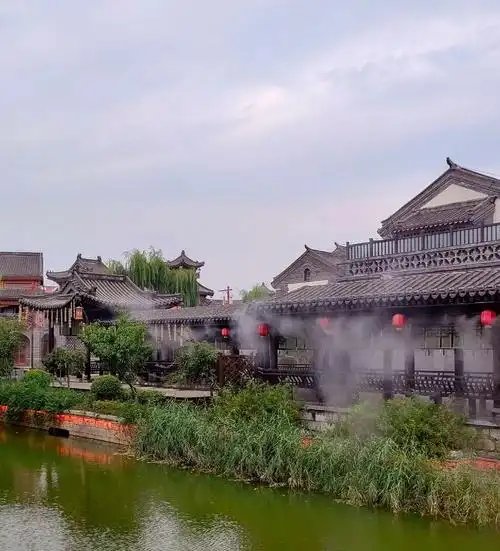
Across the city, the Hedong district's "Langya Ancient City" is a different beast: a 3,000-acre, multi-billion-yuan recreation of a Ming-Qing commercial town, opened progressively since 2016. Picture it as a Chinese answer to colonial Williamsburg or open-air museum villages like Puy du Fou, but free to enter and humming with contemporary entertainment. Some 30 replica structures—yamen government offices, princely mansions, gate towers—ring courtyards filled with teahouses, handicraft stalls, and food vendors serving local specialties.
After dusk, the complex transforms into a theatrical playground. Six or seven large-scale shows, including the acclaimed "Guoxiu Langya," rotate throughout the evening, blending live performance, music, and pyrotechnics. Visitors can rent hanfu period costumes, interact with costumed NPCs role-playing historical characters, and sample non-heritage street foods. Show tickets typically run 60–100 RMB, though entry to the street itself remains free, a refreshing contrast to the hefty fees at most European heritage attractions.
Practicalities: The two zones sit roughly 8 km apart. The historic Lanshan sites cluster around the old town, while Langya Ancient City is on Binhe East Road in Hedong. Buses and ride-hailing apps connect them in 20–30 minutes. Operating hours generally run 9:00 to 21:00; plan 3–5 hours for the evening experience alone. Foreign visitors should set up Alipay or WeChat Pay in advance and carry their passport for ID checks at ticketed venues.
Why visit? Few Chinese destinations let you trace a continuous cultural thread from genuine imperial-era antiquity to lavish modern showmanship within a single afternoon. Whether you're a calligraphy devotee, a history buff eager to explore a region rarely featured on Western itineraries, or a traveler seeking photogenic nightscapes with cultural depth, Yizhou Ancient City offers remarkable variety at refreshingly modest cost.
Yizhou's story begins in the Eastern Jin dynasty (317–420 AD), roughly contemporary with the fall of the Western Roman Empire. As the seat of Langya Commandery, Linyi was a thriving cultural capital, home to the calligrapher Wang Xizhi, whose masterpiece Preface to the Orchid Pavilion Gathering is revered in East Asia the way Leonardo's manuscripts are in the West. The 1973 excavation of the Xianyanchi Jin Tomb, now a nationally protected site, yielded artifacts that illuminate both Jin-era funerary customs and the era's celebrated brush-and-ink traditions.
The Lanshan heritage cluster centers on Wang Xizhi's meticulously restored former residence. Expect a refined landscape blending Jiangnan-style gardens—imagine a smaller, more intimate Kew or Versailles—with northern courtyard architecture. Highlights include the ink-stained Xianyanchi pool where Wang reportedly ground his ink, the Five Sages Shrine, and an 18th-century Confucian temple whose ancient ginkgo trees blaze gold each autumn. It's an unhurried, contemplative stop, ideal for those who prefer quiet historic atmosphere over spectacle.
Across the city, the Hedong district's "Langya Ancient City" is a different beast: a 3,000-acre, multi-billion-yuan recreation of a Ming-Qing commercial town, opened progressively since 2016. Picture it as a Chinese answer to colonial Williamsburg or open-air museum villages like Puy du Fou, but free to enter and humming with contemporary entertainment. Some 30 replica structures—yamen government offices, princely mansions, gate towers—ring courtyards filled with teahouses, handicraft stalls, and food vendors serving local specialties.
After dusk, the complex transforms into a theatrical playground. Six or seven large-scale shows, including the acclaimed "Guoxiu Langya," rotate throughout the evening, blending live performance, music, and pyrotechnics. Visitors can rent hanfu period costumes, interact with costumed NPCs role-playing historical characters, and sample non-heritage street foods. Show tickets typically run 60–100 RMB, though entry to the street itself remains free, a refreshing contrast to the hefty fees at most European heritage attractions.
Practicalities: The two zones sit roughly 8 km apart. The historic Lanshan sites cluster around the old town, while Langya Ancient City is on Binhe East Road in Hedong. Buses and ride-hailing apps connect them in 20–30 minutes. Operating hours generally run 9:00 to 21:00; plan 3–5 hours for the evening experience alone. Foreign visitors should set up Alipay or WeChat Pay in advance and carry their passport for ID checks at ticketed venues.
Why visit? Few Chinese destinations let you trace a continuous cultural thread from genuine imperial-era antiquity to lavish modern showmanship within a single afternoon. Whether you're a calligraphy devotee, a history buff eager to explore a region rarely featured on Western itineraries, or a traveler seeking photogenic nightscapes with cultural depth, Yizhou Ancient City offers remarkable variety at refreshingly modest cost.