Yinqueshan Han Dynasty Bamboo Slips Tombs Site
⭐ 4.20
Yinqueshan Street, Lanshan District, Linyi City, Shandong Province, China
 The 1972 discovery at Yinqueshan reshaped Chinese military history as dramatically as the Dead Sea Scrolls transformed our understanding of early Judaism. What began as routine military construction uncovered two Western Han tombs whose 7,500+ bamboo slips had lain untouched for two millennia—including the complete text of Sun Bin's Art of War, lost for centuries. Before this find, scholars from the Tang and Song dynasties onward debated whether Sun Wu and Sun Bin were the same person; this excavation definitively proved them separate figures with distinct philosophies. The site now shares honor with the Terracotta Warriors and Mawangdui tombs among the "100 Major Archaeological Discoveries of the Century."
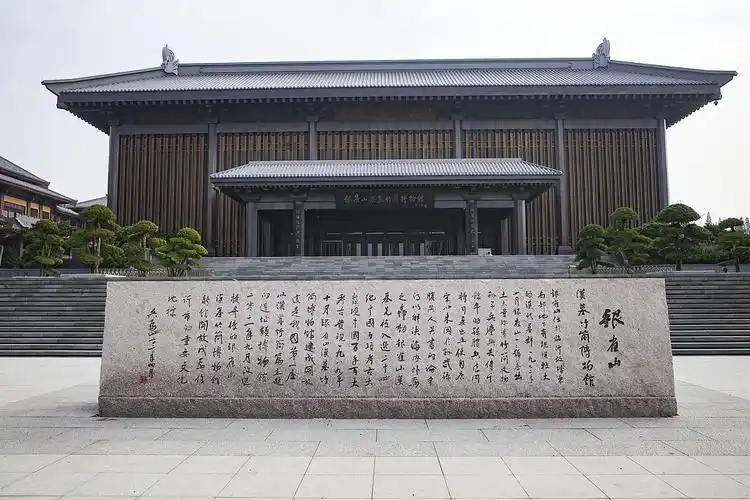
The museum complex consists of two integrated sections: the original tomb-pit restoration zone and a modern exhibition hall. Visitors can peer directly into the preserved first and second Han tombs, viewing the burial chambers much as archaeologists first encountered them. The exhibition hall systematically displays slips from pre-Qin through Western Han texts, including The Art of War, Sun Bin's Art of War, Six Secret Teachings, and Wuliaozi. Particularly remarkable is the Han Wudi Yuanguang First Year Calendar—the earliest complete Chinese calendar yet discovered—alongside the only Western Han silk painting found north of the Yangtze River. A 2021 renovation introduced immersive AR exhibits animating these ancient manuscripts.
Beyond their historical weight, the slips are also treasures of calligraphy. They capture the formative period of Han clerical script (hanli), an aesthetic that evolved from earlier seal script and would influence East Asian writing for centuries. The 7,500+ slips span military theory, calendrical science, and yin-yang divination—an extraordinarily dense intellectual snapshot of early imperial China. For Western visitors familiar with the philosophical legacy of ancient Greek strategists or Vegetius's Roman military treatises, this collection offers direct access to the physical texts that shaped Eastern strategic thought.
The museum is free to enter and sits on the southern slope of Yinqueshan, tucked within the municipal government compound—an unexpectedly tranquil garden oasis amid the bustling city. Hours are Tuesday through Sunday, 9:00 to 17:00, with last entry at 16:00; the site closes on Mondays. During major holidays such as Chinese New Year, May Day, and National Day week, advance booking through the "Linyi City Museum" WeChat account is required. Audio guides are available for rent, and guided tours can be arranged—strongly recommended, as the scholarly significance of the original slips can be hard to appreciate without context.
Flash photography, tripods, and selfie sticks are prohibited; visitors should not touch display cases. A recommended itinerary follows the sequence "tomb pits → Sun Tzu → Sun Bin → calligraphy," pausing longest at the first tomb restoration and the Sun Bin display case. Travelers with extra time can extend their visit into a full "Linyi Cultural Day," combining the museum with the nearby Former Residence of Wang Xizhi—China's legendary "Sage of Calligraphy"—and the Linyi City Museum's North City branch. For military-history enthusiasts, sinologists, or anyone who has read Sun Tzu and wondered about the actual artifact, Yinqueshan is nothing short of a pilgrimage site.
The 1972 discovery at Yinqueshan reshaped Chinese military history as dramatically as the Dead Sea Scrolls transformed our understanding of early Judaism. What began as routine military construction uncovered two Western Han tombs whose 7,500+ bamboo slips had lain untouched for two millennia—including the complete text of Sun Bin's Art of War, lost for centuries. Before this find, scholars from the Tang and Song dynasties onward debated whether Sun Wu and Sun Bin were the same person; this excavation definitively proved them separate figures with distinct philosophies. The site now shares honor with the Terracotta Warriors and Mawangdui tombs among the "100 Major Archaeological Discoveries of the Century."
The museum complex consists of two integrated sections: the original tomb-pit restoration zone and a modern exhibition hall. Visitors can peer directly into the preserved first and second Han tombs, viewing the burial chambers much as archaeologists first encountered them. The exhibition hall systematically displays slips from pre-Qin through Western Han texts, including The Art of War, Sun Bin's Art of War, Six Secret Teachings, and Wuliaozi. Particularly remarkable is the Han Wudi Yuanguang First Year Calendar—the earliest complete Chinese calendar yet discovered—alongside the only Western Han silk painting found north of the Yangtze River. A 2021 renovation introduced immersive AR exhibits animating these ancient manuscripts.
Beyond their historical weight, the slips are also treasures of calligraphy. They capture the formative period of Han clerical script (hanli), an aesthetic that evolved from earlier seal script and would influence East Asian writing for centuries. The 7,500+ slips span military theory, calendrical science, and yin-yang divination—an extraordinarily dense intellectual snapshot of early imperial China. For Western visitors familiar with the philosophical legacy of ancient Greek strategists or Vegetius's Roman military treatises, this collection offers direct access to the physical texts that shaped Eastern strategic thought.
The museum is free to enter and sits on the southern slope of Yinqueshan, tucked within the municipal government compound—an unexpectedly tranquil garden oasis amid the bustling city. Hours are Tuesday through Sunday, 9:00 to 17:00, with last entry at 16:00; the site closes on Mondays. During major holidays such as Chinese New Year, May Day, and National Day week, advance booking through the "Linyi City Museum" WeChat account is required. Audio guides are available for rent, and guided tours can be arranged—strongly recommended, as the scholarly significance of the original slips can be hard to appreciate without context.
Flash photography, tripods, and selfie sticks are prohibited; visitors should not touch display cases. A recommended itinerary follows the sequence "tomb pits → Sun Tzu → Sun Bin → calligraphy," pausing longest at the first tomb restoration and the Sun Bin display case. Travelers with extra time can extend their visit into a full "Linyi Cultural Day," combining the museum with the nearby Former Residence of Wang Xizhi—China's legendary "Sage of Calligraphy"—and the Linyi City Museum's North City branch. For military-history enthusiasts, sinologists, or anyone who has read Sun Tzu and wondered about the actual artifact, Yinqueshan is nothing short of a pilgrimage site.