Yimeng Mountain Geopark
⭐ 4.20
Yinan County, Linyi City, Shandong Province, China
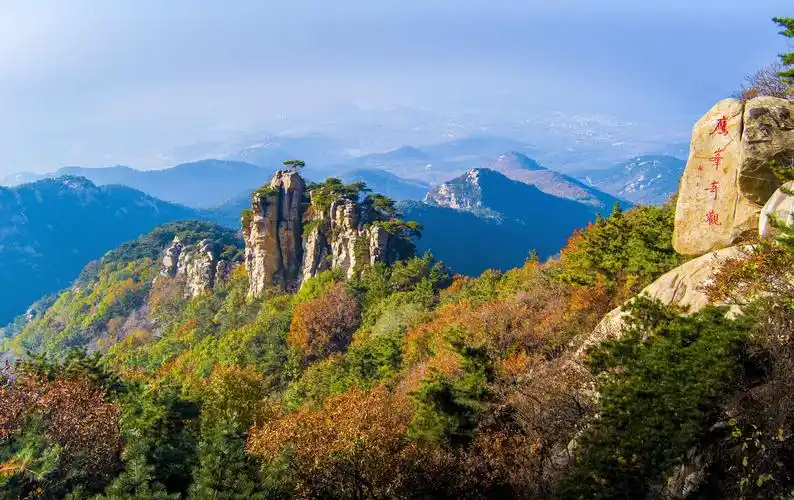 Yimengshan is a UNESCO Global Geopark in the truest sense, showcasing roughly 2.5 billion years of Earth's evolution. The territory includes China's earliest kimberlite-type primary diamond mine, which has yielded an astonishing 1.8 million carats since discovery—akin in scale to the historic diamond fields of Kimberley, South Africa. Equally remarkable are the Daigu formations: dramatic flat-topped mountains unlike anything else on the planet, geologically comparable to the tepuis of Venezuela or the mesas of the American Southwest. Together with Paleolithic cave systems and dinosaur trackways near Junan, the park reads like an open-air textbook on planetary history.
The crown jewel is Mengshan, the spiritual and scenic heart of the park. Its summit, Guimeng Peak, rises to 1,156 meters—second only in Shandong to the legendary Mount Tai—and commands views reminiscent of Scotland's Cairngorms or the misty peaks of Austria's Salzkammergut. Crowned by the world's largest mountain-side bas-relief sculpture depicting Shouxing, the Chinese god of longevity, the peak is reached via vertigo-inducing cliff walkways and a glass-bottomed bridge suspended over forested ravines. With forest cover exceeding 90 percent, Mengshan offers cool summer hikes and spectacular autumn foliage that rivals New England's woodlands.
To the south, the Daigu Scenic Area delivers the park's strangest spectacle: dozens of sheer-walled, tabletop mountains scattered across the countryside, earning the region the nickname "China's Township of Gu." This surreal landscape, unique on Earth, has also served as a cultural crossroads for millennia. Scattered among the cliffs are ancient Confucian, Buddhist, and Taoist sites, including the legendary spot where Confucius reportedly climbed to gaze over the State of Lu—linking Yimengshan to the same philosophical tradition that shaped Europe's classical antiquity.
Menglianggu Scenic Area adds a powerful historical layer. This was the site of the decisive 1947 Battle of Menglianggu, a turning point in the Chinese Civil War often compared in significance to the Battle of Stalingrad during the Second World War. A solemn memorial complex stands amid striking granite outcrops, offering visitors a rare blend of martial history and natural beauty. The juxtaposition of "red culture" and verdant hills embodies the enduring "Yimeng Spirit"—a legacy of sacrifice and resilience still revered throughout modern China.
Practical planning is essential, as the park spans six counties with five separately ticketed zones. A minimum of two days and one night is recommended, focusing on Mengshan for natural splendor and pairing it with either Daigu for geological wonder or Menglianggu for historical reflection. The best season runs from May through October, when wildflowers carpet the meadows or maples blaze crimson. Self-driving is by far the most convenient option, though mobile reception is patchy in the mountains—download offline maps before arrival and pack sturdy hiking shoes and rain gear.
Yimengshan is a UNESCO Global Geopark in the truest sense, showcasing roughly 2.5 billion years of Earth's evolution. The territory includes China's earliest kimberlite-type primary diamond mine, which has yielded an astonishing 1.8 million carats since discovery—akin in scale to the historic diamond fields of Kimberley, South Africa. Equally remarkable are the Daigu formations: dramatic flat-topped mountains unlike anything else on the planet, geologically comparable to the tepuis of Venezuela or the mesas of the American Southwest. Together with Paleolithic cave systems and dinosaur trackways near Junan, the park reads like an open-air textbook on planetary history.
The crown jewel is Mengshan, the spiritual and scenic heart of the park. Its summit, Guimeng Peak, rises to 1,156 meters—second only in Shandong to the legendary Mount Tai—and commands views reminiscent of Scotland's Cairngorms or the misty peaks of Austria's Salzkammergut. Crowned by the world's largest mountain-side bas-relief sculpture depicting Shouxing, the Chinese god of longevity, the peak is reached via vertigo-inducing cliff walkways and a glass-bottomed bridge suspended over forested ravines. With forest cover exceeding 90 percent, Mengshan offers cool summer hikes and spectacular autumn foliage that rivals New England's woodlands.
To the south, the Daigu Scenic Area delivers the park's strangest spectacle: dozens of sheer-walled, tabletop mountains scattered across the countryside, earning the region the nickname "China's Township of Gu." This surreal landscape, unique on Earth, has also served as a cultural crossroads for millennia. Scattered among the cliffs are ancient Confucian, Buddhist, and Taoist sites, including the legendary spot where Confucius reportedly climbed to gaze over the State of Lu—linking Yimengshan to the same philosophical tradition that shaped Europe's classical antiquity.
Menglianggu Scenic Area adds a powerful historical layer. This was the site of the decisive 1947 Battle of Menglianggu, a turning point in the Chinese Civil War often compared in significance to the Battle of Stalingrad during the Second World War. A solemn memorial complex stands amid striking granite outcrops, offering visitors a rare blend of martial history and natural beauty. The juxtaposition of "red culture" and verdant hills embodies the enduring "Yimeng Spirit"—a legacy of sacrifice and resilience still revered throughout modern China.
Practical planning is essential, as the park spans six counties with five separately ticketed zones. A minimum of two days and one night is recommended, focusing on Mengshan for natural splendor and pairing it with either Daigu for geological wonder or Menglianggu for historical reflection. The best season runs from May through October, when wildflowers carpet the meadows or maples blaze crimson. Self-driving is by far the most convenient option, though mobile reception is patchy in the mountains—download offline maps before arrival and pack sturdy hiking shoes and rain gear.