Zhongwei Old City
⭐ 3.20
Zhongwei Old City, Shapotou District, Zhongwei City, Ningxia Hui Autonomous Region, China
 Built during the Ming Zhengtong reign (mid-15th century), Zhongwei was one of hundreds of "wei" garrisons strung along the empire's northwestern frontier — comparable in role to the chain of Habsburg border fortresses in sixteenth-century Hungary or the Roman *limes* along the Danube. Its job was to lock down the strategic Qingtongxia narrows of the Yellow River and shield the caravan routes leading into the Hexi Corridor and ultimately Central Asia. Though the ramparts and most traditional courtyard houses have vanished, the cruciform street plan centered on the Drum Tower still reads like a military blueprint laid down five centuries ago.
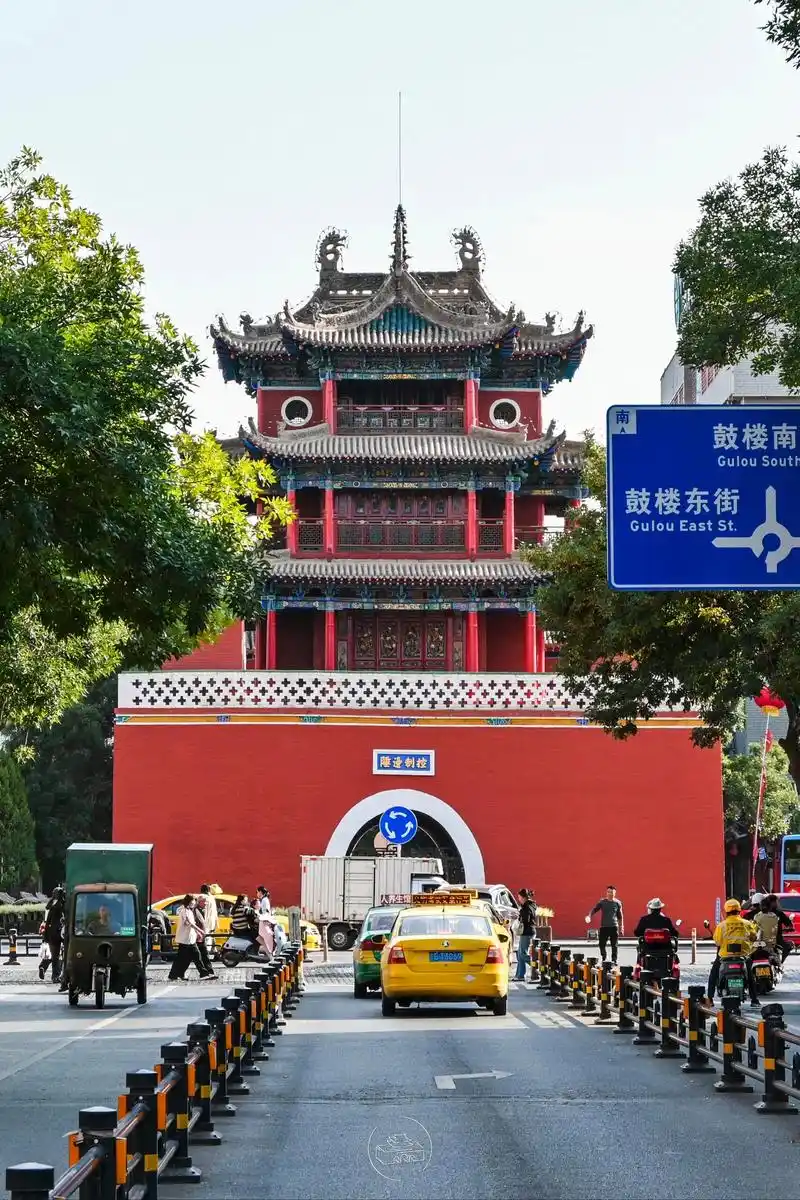
The Drum Tower, first raised in the Ming Chongzhen era and rebuilt during the Daoguang reign (roughly the 1820s–30s), rises about thirty meters in a three-tiered pavilion style. Its four flanking plaques — bearing phrases like "Locking the Qingtong Narrows" and "Facing the Singing Sands" — give even casual visitors a quick lesson in local geography. Climbing the tower offers the best vantage on the old city's grid and a distant glimpse of the Yellow River, and it remains a popular spot for photographers chasing period-dressed portraits.
A short walk away, Gao Temple (originally Baosheng Temple, founded in the Yongle period, early 1400s) is the cultural showstopper. Designated a national key cultural relic, it stacks nearly a hundred halls dedicated to Confucianism, Buddhism, and Taoism onto a single terraced platform — a syncretic ambition rare even in China, where religious blending goes back to the Tang dynasty. The interlocking rooflines, mixing hipped, pointed, and helmet-shaped forms, recall the playful silhouette of Moscow's St. Basil's Cathedral, though executed entirely in timber and brick. Entry to the main halls is free; only the underground "Eighteen Hells" grotto requires a separate ticket.
The surrounding streets feel refreshingly unpolished. Shops selling goji berries, jujubes, and aged vinegar line the lanes, and foot traffic is heaviest at dawn and dusk — when locals run errands rather than tour buses disgorge visitors. Restored cultural alleys such as Xinghe Lane display murals and intangible-heritage crafts, while the free Zhongwei Museum nearby fills in the regional backstory. The vibe is closer to a Moroccan medina than to a curated heritage quarter: real residents, real lives, very little performance.
Wear flat, non-slip shoes — the Gao Temple steps are notoriously steep and uneven. Half a day is plenty: start early at the temple for cooler air and softer light, then drift over to the Drum Tower area for lunch. Local specialties worth trying include *haozi mian* (mugwort noodles), *yang zhasui* (lamb offal soup), and *shou zhua yang rou* (hand-grabbed lamb). Pair the old town with the sand dunes and Yellow River scenery of Shapotou, about twenty kilometers west, for a full day that balances culture with landscape.
May through June and September through October offer the most comfortable temperatures; August brings fierce UV and sharp day-night swings, so pack sun protection and a warm layer. Zhongwei Old City is not a monument polished for tourists but a living district where the bones of a Ming frontier fortress still support daily life. For travelers interested in Silk Road history, comparative fortification studies, or simply the texture of northwestern China away from the usual stops, it is an honest, quietly rewarding detour.
Built during the Ming Zhengtong reign (mid-15th century), Zhongwei was one of hundreds of "wei" garrisons strung along the empire's northwestern frontier — comparable in role to the chain of Habsburg border fortresses in sixteenth-century Hungary or the Roman *limes* along the Danube. Its job was to lock down the strategic Qingtongxia narrows of the Yellow River and shield the caravan routes leading into the Hexi Corridor and ultimately Central Asia. Though the ramparts and most traditional courtyard houses have vanished, the cruciform street plan centered on the Drum Tower still reads like a military blueprint laid down five centuries ago.
The Drum Tower, first raised in the Ming Chongzhen era and rebuilt during the Daoguang reign (roughly the 1820s–30s), rises about thirty meters in a three-tiered pavilion style. Its four flanking plaques — bearing phrases like "Locking the Qingtong Narrows" and "Facing the Singing Sands" — give even casual visitors a quick lesson in local geography. Climbing the tower offers the best vantage on the old city's grid and a distant glimpse of the Yellow River, and it remains a popular spot for photographers chasing period-dressed portraits.
A short walk away, Gao Temple (originally Baosheng Temple, founded in the Yongle period, early 1400s) is the cultural showstopper. Designated a national key cultural relic, it stacks nearly a hundred halls dedicated to Confucianism, Buddhism, and Taoism onto a single terraced platform — a syncretic ambition rare even in China, where religious blending goes back to the Tang dynasty. The interlocking rooflines, mixing hipped, pointed, and helmet-shaped forms, recall the playful silhouette of Moscow's St. Basil's Cathedral, though executed entirely in timber and brick. Entry to the main halls is free; only the underground "Eighteen Hells" grotto requires a separate ticket.
The surrounding streets feel refreshingly unpolished. Shops selling goji berries, jujubes, and aged vinegar line the lanes, and foot traffic is heaviest at dawn and dusk — when locals run errands rather than tour buses disgorge visitors. Restored cultural alleys such as Xinghe Lane display murals and intangible-heritage crafts, while the free Zhongwei Museum nearby fills in the regional backstory. The vibe is closer to a Moroccan medina than to a curated heritage quarter: real residents, real lives, very little performance.
Wear flat, non-slip shoes — the Gao Temple steps are notoriously steep and uneven. Half a day is plenty: start early at the temple for cooler air and softer light, then drift over to the Drum Tower area for lunch. Local specialties worth trying include *haozi mian* (mugwort noodles), *yang zhasui* (lamb offal soup), and *shou zhua yang rou* (hand-grabbed lamb). Pair the old town with the sand dunes and Yellow River scenery of Shapotou, about twenty kilometers west, for a full day that balances culture with landscape.
May through June and September through October offer the most comfortable temperatures; August brings fierce UV and sharp day-night swings, so pack sun protection and a warm layer. Zhongwei Old City is not a monument polished for tourists but a living district where the bones of a Ming frontier fortress still support daily life. For travelers interested in Silk Road history, comparative fortification studies, or simply the texture of northwestern China away from the usual stops, it is an honest, quietly rewarding detour.