Moon Lake
⭐ 3.60
Da'an City, Baicheng, Jilin Province, China
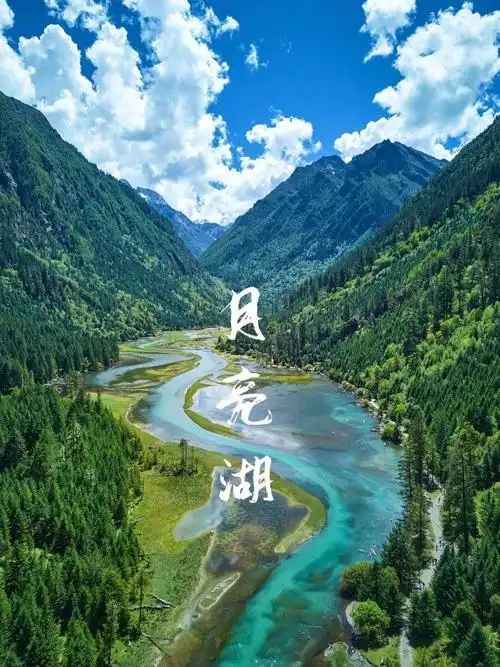 Historical visitors to Moon Lake walked in the footsteps of emperors. From the reign of Emperor Shengzong of the Liao Dynasty (around 983 AD), the lake—then called "Yuer Puo"—served as the imperial "Spring Nab," where Khitan and later Jurchen rulers broke ice with ceremonial axes, trained falcons, and hosted lavish court fishing expeditions. This tradition rivals Europe's medieval royal hunts at sites like France's Compiègne or England's Tudor hunting forests, yet it unfolded across open water rather than woodland. Stone marker sites, a thousand-year-old elm grove, and remnants of ancient shoreline shrines still dot the landscape, allowing visitors to trace this millennium-old angling heritage firsthand.
The reservoir itself is an engineering landmark of modern Northeast China. Completed in 1976 and renamed Moon Lake Reservoir in 2000, it stores nearly 1.2 billion cubic metres of water at the confluence of the Tao'er and Nen rivers. Its eleven natural islands rise like emerald beads from an expanse of reed marsh that recalls the great European fenlands such as Hortobágy in Hungary or the Camargue in France. The surrounding wetlands form one of the most important migratory bird corridors in East Asia, drawing photographers eager to capture red-crowned cranes lifting into the dawn mist.
Moon Lake's cultural heart beats strongest in its fishing traditions. The lake's renowned carp, crucian carp, and silver chub have earned the "Moon Lake Fish" designation as a celebrated Jilin regional brand. Summer brings carefree pleasures—swimming at the Langtoupao beach, drifting through reed channels by wooden boat, or angling from the kilometre-long fishing platform. But the undisputed highlight arrives each winter, between late December and mid-January, when the annual Moon Lake Winter Fishing Festival transforms the frozen surface into a stage for the age-old "Ice Lake Leaping Fish" spectacle, with shaman-led lake-worship ceremonies and single-net hauls weighing thousands of kilograms.
Practical planning rewards a little forethought. The scenic area lies about 30 kilometres from Da'an city and roughly 1 to 1.5 hours by road from both Changchun Longjia International Airport and Baicheng high-speed rail station; renting a car or hiring a private driver is strongly recommended, as public transport is limited. Opening hours generally run from 08:00 to 18:00, with seasonal adjustments, and two to three hours suffices for a focused visit. Summer evenings and the winter fishing festival window offer the richest experiences. Mosquitoes can be aggressive near the reeds, so repellent is essential, and visitors should bring their own water and snacks, as on-site commercial facilities remain modest.
For travellers seeking an authentic taste of northern China's vanishing cultural rhythms, Moon Lake delivers a powerful combination of imperial history, wetland wilderness, and living tradition. Pairing a visit here with nearby Chagan Lake—the more famous winter fishing destination—and the Momoge National Nature Reserve creates an unforgettable three- or four-day circuit through one of the country's most distinctive cultural landscapes, offering a refreshing counterpoint to China's better-known Great Wall and Forbidden City itineraries.
Historical visitors to Moon Lake walked in the footsteps of emperors. From the reign of Emperor Shengzong of the Liao Dynasty (around 983 AD), the lake—then called "Yuer Puo"—served as the imperial "Spring Nab," where Khitan and later Jurchen rulers broke ice with ceremonial axes, trained falcons, and hosted lavish court fishing expeditions. This tradition rivals Europe's medieval royal hunts at sites like France's Compiègne or England's Tudor hunting forests, yet it unfolded across open water rather than woodland. Stone marker sites, a thousand-year-old elm grove, and remnants of ancient shoreline shrines still dot the landscape, allowing visitors to trace this millennium-old angling heritage firsthand.
The reservoir itself is an engineering landmark of modern Northeast China. Completed in 1976 and renamed Moon Lake Reservoir in 2000, it stores nearly 1.2 billion cubic metres of water at the confluence of the Tao'er and Nen rivers. Its eleven natural islands rise like emerald beads from an expanse of reed marsh that recalls the great European fenlands such as Hortobágy in Hungary or the Camargue in France. The surrounding wetlands form one of the most important migratory bird corridors in East Asia, drawing photographers eager to capture red-crowned cranes lifting into the dawn mist.
Moon Lake's cultural heart beats strongest in its fishing traditions. The lake's renowned carp, crucian carp, and silver chub have earned the "Moon Lake Fish" designation as a celebrated Jilin regional brand. Summer brings carefree pleasures—swimming at the Langtoupao beach, drifting through reed channels by wooden boat, or angling from the kilometre-long fishing platform. But the undisputed highlight arrives each winter, between late December and mid-January, when the annual Moon Lake Winter Fishing Festival transforms the frozen surface into a stage for the age-old "Ice Lake Leaping Fish" spectacle, with shaman-led lake-worship ceremonies and single-net hauls weighing thousands of kilograms.
Practical planning rewards a little forethought. The scenic area lies about 30 kilometres from Da'an city and roughly 1 to 1.5 hours by road from both Changchun Longjia International Airport and Baicheng high-speed rail station; renting a car or hiring a private driver is strongly recommended, as public transport is limited. Opening hours generally run from 08:00 to 18:00, with seasonal adjustments, and two to three hours suffices for a focused visit. Summer evenings and the winter fishing festival window offer the richest experiences. Mosquitoes can be aggressive near the reeds, so repellent is essential, and visitors should bring their own water and snacks, as on-site commercial facilities remain modest.
For travellers seeking an authentic taste of northern China's vanishing cultural rhythms, Moon Lake delivers a powerful combination of imperial history, wetland wilderness, and living tradition. Pairing a visit here with nearby Chagan Lake—the more famous winter fishing destination—and the Momoge National Nature Reserve creates an unforgettable three- or four-day circuit through one of the country's most distinctive cultural landscapes, offering a refreshing counterpoint to China's better-known Great Wall and Forbidden City itineraries.