Zizhuyuan Park

⭐ 4.60

No. 35, Zhongguancun South Street, Haidian District, Beijing, China
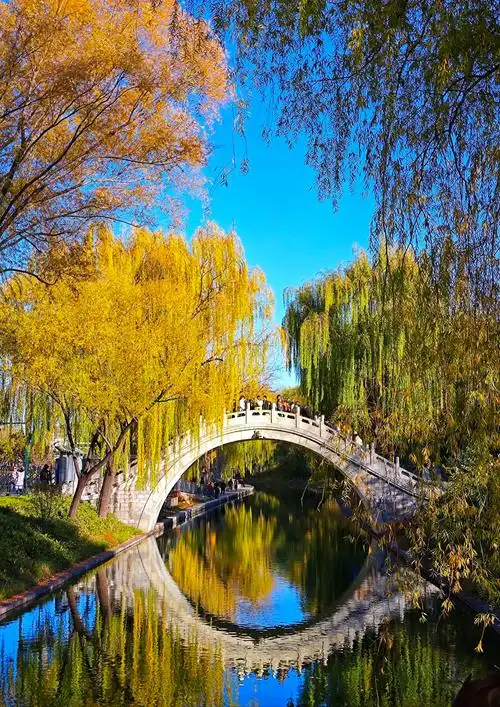
Zizhuyuan Park
Zizhuyuan Park takes its name from the Fuyin Zizhuyuan, a temple complex in the park's northwestern corner that once served as a discreet imperial retreat. Originally constructed during the Ming Dynasty (1368–1644) and lavishly refurbished by successive Qing emperors, the temple offered the imperial court a place of refined seclusion on the outskirts of the capital—much as the Petit Trianon at Versailles offered Marie Antoinette escape from Versailles' rigid ceremonial life. After the fall of the empire, the grounds fell into disuse until 1953, when they were transformed into a public park, followed by a comprehensive restoration in 1982 that shaped the landscape visitors enjoy today. Spanning roughly 45.73 hectares with water covering a full third of the property, the park unfolds in a clever "three lakes, two islands, one causeway" configuration, threaded by the South Long River and the Shuangzi Canal. Classical features such as the Junshi Garden, the Wenying Pavilion, and the Xiao Sheng Zui Yue sculpture blend the lyrical intimacy of Suzhou's classical gardens with the bolder horizons of northern lakescapes—reminiscent of how English landscape designers like Capability Brown married ornamental architecture to sweeping natural vistas. Bridges, zigzagging walkways, and strategically placed pavilions draw the eye through ever-shifting compositions of water, bamboo, and stone. Beyond its scenic pedigree, the park stands as Beijing's premier showcase of bamboo culture. More than one hundred species flourish here, including mottled bambusa, black-stemmed varieties, and the resilient moso, providing botanists and casual strollers alike with an extraordinary living collection. The historic temple hall also hosts rotating exhibitions of calligraphy and traditional flower arrangements, continuing a venerable Ming–Qing tradition of pairing scholarly pursuits with garden enjoyment—a practice Western visitors may recognize from European monastery gardens, where herbs doubled as study aids for monks. The park welcomes visitors year-round at no charge, with summer hours running 6:00–21:00 and winter hours 6:00–20:00. Reaching it is straightforward: take Metro Line 4, 9, or 16 to the National Library Station, exit through gates D or E, and walk five to seven minutes to the eastern entrance. While general admission is free, certain historical building exhibitions and paddleboat rentals require separate tickets, with boat service typically operating 8:30–17:00; the information line is 010-88412894. Comfortable shoes are recommended, as the park's bridges and lakeside paths invite plenty of wandering. For an unhurried visit of about 1.5 to 2 hours, enter through the East Gate and proceed to Hehuadu, the lotus crossing, especially magical from June through August when the flowers reach full bloom. Continue north to the North Wharf, where traditional sculling boats glide between the lily pads, before meandering through the Junshi Garden to admire the bamboo groves at their finest. End your circuit at the Fuyin Zizhuyuan temple complex in the northwest corner, where quiet courtyards reward those who wander off the beaten track. Early morning and dusk offer the softest, most flattering light for photography, while August—peak lotus and bamboo season—is the prime time to experience this gentle oasis at its most fragrant and serene.

Traveler reviews

Best time for autumn viewing at Zizhuyuan: mid-October to late November. Walking route: enter through the East Gate where you'll immediately see a gorgeous chrysanthemum garden (tons of people taking photos there), then loop around the South Small Lake to see the famous lakeside photo tree, plus ...
⭐ 5 · Parker Ellis Expand
Have you been to Zizhuyuan Park? If you go early in the morning, you're in for such a treat! Besides the usual singing and dancing, you've got people doing diabolo tricks that'll stop you in your tracks, and others doing calligraphy right on the ground that's mesmerizing to watch. It's this huge park with everything going on — dance troupe...
⭐ 5 · Reese Monroe Expand