Taoranting Park

⭐ 4.20

No. 19, Taiping Street, Xicheng District, Beijing, China
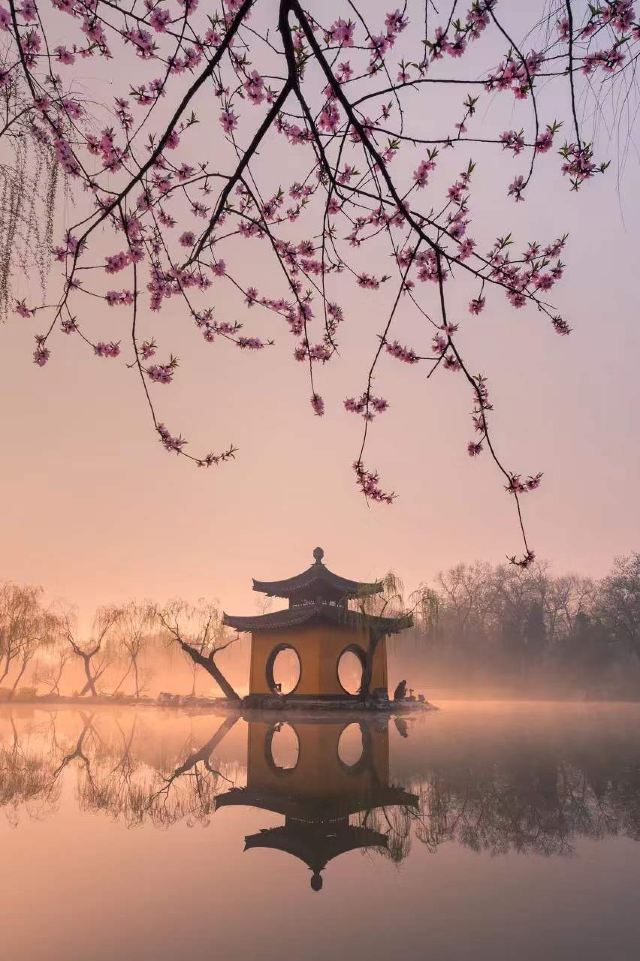
Taoranting Park
Founded in 1952, Taoranting is among the earliest historic-cultural parks established in the People's Republic, making it a significant chapter in modern Beijing's cultural landscape. The grounds encompass Ci'en Temple, a Buddhist sanctuary dating to the Yuan Dynasty (13th–14th centuries)—contemporaneous with Marco Polo's documented travels through China—and Taoran Pavilion itself, a Qing Dynasty structure whose nameplate bears the brushwork of Qi Baishi, one of modern China's most revered painters. The park also preserves the martyrs' tomb of Gao Junyu and Shi Pingmei, revolutionary intellectuals of the 1920s whose tragic love story remains a touchstone of modern Chinese literature, echoing West Europe's romantic-poet tradition. The park's signature feature is its devotion to "pavilion culture," a uniquely Chinese architectural genre that compares, in miniature ambition, to Europe's garden follies at places like Hellbrunn or Rousham. The ten-hectare Huaxia Famous Pavilion Garden within the park reproduces more than a dozen historically significant pavilions from across China, distilling centuries of wooden-frame building artistry. Taoran Pavilion itself rests gracefully against Ci'en Temple, its upturned eaves and flying rafters reminiscent of the ornate rooflines at Beijing's Temple of Heaven, while the relocated Qing-era Yunhui Lou and Qingyin Ge buildings rise waterside, their carved beams and painted brackets forming an ensemble reminiscent of an aged Tuscan villa cluster. The pavilion's poetic name derives from Bai Juyi, the Tang Dynasty poet-statesman sometimes compared to Horace or Pope: "When the chrysanthemums turn gold and our home-brew is ripe, let us share a cup and be wholly at peace." This literary heritage made Taoran a favored gathering place for literati, and visitors can admire surviving couplets by Lin Zexu, the Qing official whose destruction of British opium shipments at Humen preceded the First Opium War of 1839–1842. Today, the pavilion stands as a vital physical archive for studying the evolution of Chinese pavilion architecture and the scholarly aesthetics of imperial China. Spanning 56.56 hectares with 16.15 hectares of lake, the park offers dense groves of ginkgo, locust, and rose that provide seasonal color from spring through autumn. In summer, shaded areas register 3–5°C cooler than surrounding districts, making it a genuine urban refuge—comparable in summer function to Vienna's Prater or London's Hyde Park. Visitors can rent rowboats from the eastern and western docks, with sunset casting golden reflections onto the pavilion roofs in scenes reminiscent of Claude Monet's garden studies. Reaching the park is straightforward: Metro Line 4 reaches Taoranting Station directly at the South Gate, located at 19 Taiping Street, Xicheng District. Entry is free year-round, with boat rentals and special exhibitions individually priced; the park opens from 6:00 to 22:00 in summer. Signage is bilingual in Chinese and English, ticket windows accept foreign credit cards, and visitors over 60 enter free with passport identification—no reservation required. A recommended route enters via the East Gate, follows the lakeside path to the central island to view Taoran Pavilion and Ci'en Temple, continues to the Famous Pavilion Garden, and exits at the South Gate—a satisfying two to three hours. Weekday mornings and evenings offer the most serene experience, with minimal crowds and the best photographic light.

Traveler reviews

It's basically a science education park with little plaques everywhere identifying all the plants and birds...
⭐ 5 · Phoenix Lane Expand
Taoranting Park is over in south Beijing and has a lot of history. It was actually a meeting spot for early Communist Party activities — Mao himself took part in organizing events here — and there's a memorial to mar...
⭐ 4 · River Lane Expand